

Pam Bondi is out — and that is a good thing. She was Trump's lawyer, and DOJ paid the price.
Also: Florida will not kill James Duckett this week. And: What's next for conversion therapy bans after Tuesday's SCOTUS decision? Lastly: Law Dork in the media.

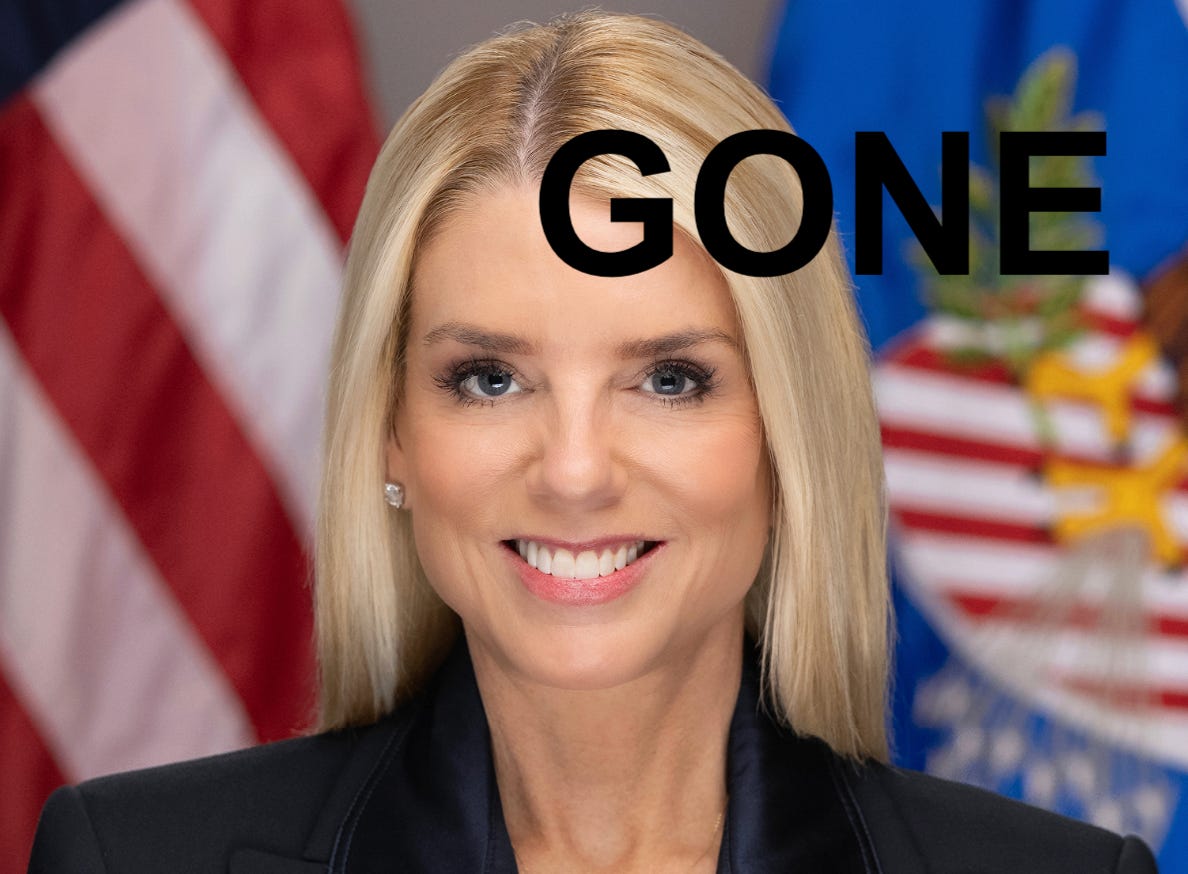
Attorney General Pam Bondi is gone, and that is a good thing.
From her first day in office on February 5, 2025, she made clear that her goal at the Justice Department was not justice, it was advancing Donald Trump’s policy aims. Taking the unitary executive theory out for a ride, she told DOJ’s lawyers that they were “his lawyers,” and spent the past 421 days acting on that principle.
She has caused incalculable harm to the Department, the rule of law, and the nation. All in service of Trump. That is, and will always be, her legacy.
Bondi sparked outrage over her treatment of the Epstein files — leading to the passage of the Epstein Files Transparency Act last fall — and then oversaw the delayed rollout of the files.
She oversaw U.S. Attorney appointments and political prosecutions — almost all of which have been strongly questioned if not outright rejected by courts and grand juries across the country.
Throughout her nearly 14-month tenure, Bondi — a former Florida attorney general who was working at the America First Policy Institute before joining Trump’s second administration — continually acted to advance Trump’s policy choices, often despite the Constitution, federal laws, or what would be best for the Justice Department itself.
In her first months in office, she reversed the Justice Department policy against subpoenaing journalists. Within a year, the FBI was raiding a journalist’s home and serving a subpoena on The Washington Post.
Bondi also aggressively moved to implement Trump’s anti-trans policies — a move that led to the over-aggressive subpoenas, quashed in whole or in part by courts across the country, issued against providers of gender-affirming medical care for minors.
In the fall, again advancing Trump’s policies, Bondi lashed out against opposition to ICE. Bondi’s Justice Department failed to convince the Supreme Court to allow Trump’s National Guard deployment in Illinois, however, and there is now a well-worn pattern of district court judges — appointed by presidents of both parties — questioning, and even holding in contempt, Justice Department lawyers regarding their defense of ICE and other Department of Homeland Security officials.
That, of course, is to say nothing of the Department of Justice’s actions on and surrounding March 15, 2025 as Trump and DHS began trying to use the Alien Enemies Act of 1798 to quickly deport people without any process to El Salvador’s CECOT prison. All of that eventually led Judge James Boasberg to find “probable cause” that someone in the Trump administration was in contempt of his March 15, 2025 order in the case — a process he sought to continue in November 2025 after delay from the U.S. Court of Appeals for the D.C. Circuit. (That effort remains on hold by the same appeals court as of this writing.)
Bondi has also overseen Assistant Attorney General Harmeet Dhillon’s destruction of DOJ’s storied Civil Rights Division. Just this past month, Law Dork reported on how one of the “senior counsel” in the Civil Rights Division now was a man who resigned from his then-longtime Alabama law firm over a Facebook post following George Floyd’s murder in 2020.
Those who support the rule of law will not miss Bondi at the helm of Justice.
And yet. Trump’s face remains plastered on the outside of the DOJ building, and Trump’s former criminal defense lawyer — Deputy Attorney General Todd Blanche — is now the acting attorney general. It’s not good news that Blanche is running things for now — his first day in office was similarly aggressive and Trump-focused, as have been many days since. And, doubtless, Trump’s next nominee will be a bad choice, too.
At the same time, though, it is good when people who show a disregard, or even disdain, for the rule of law leave this government — our government — and it’s OK to take a moment to appreciate that.
Florida is not going to kill James Duckett this week
Earlier this week, the Florida Supreme Court stayed the execution of James Duckett, who Florida had planned to kill on March 31, over ongoing DNA testing questions in light of Duckett’s continued claim of actual innocence.
After further developments at the lower court denying additional requests by Duckett, Florida officials asked on Thursday for the Florida Supreme Court to lift the stay of execution.
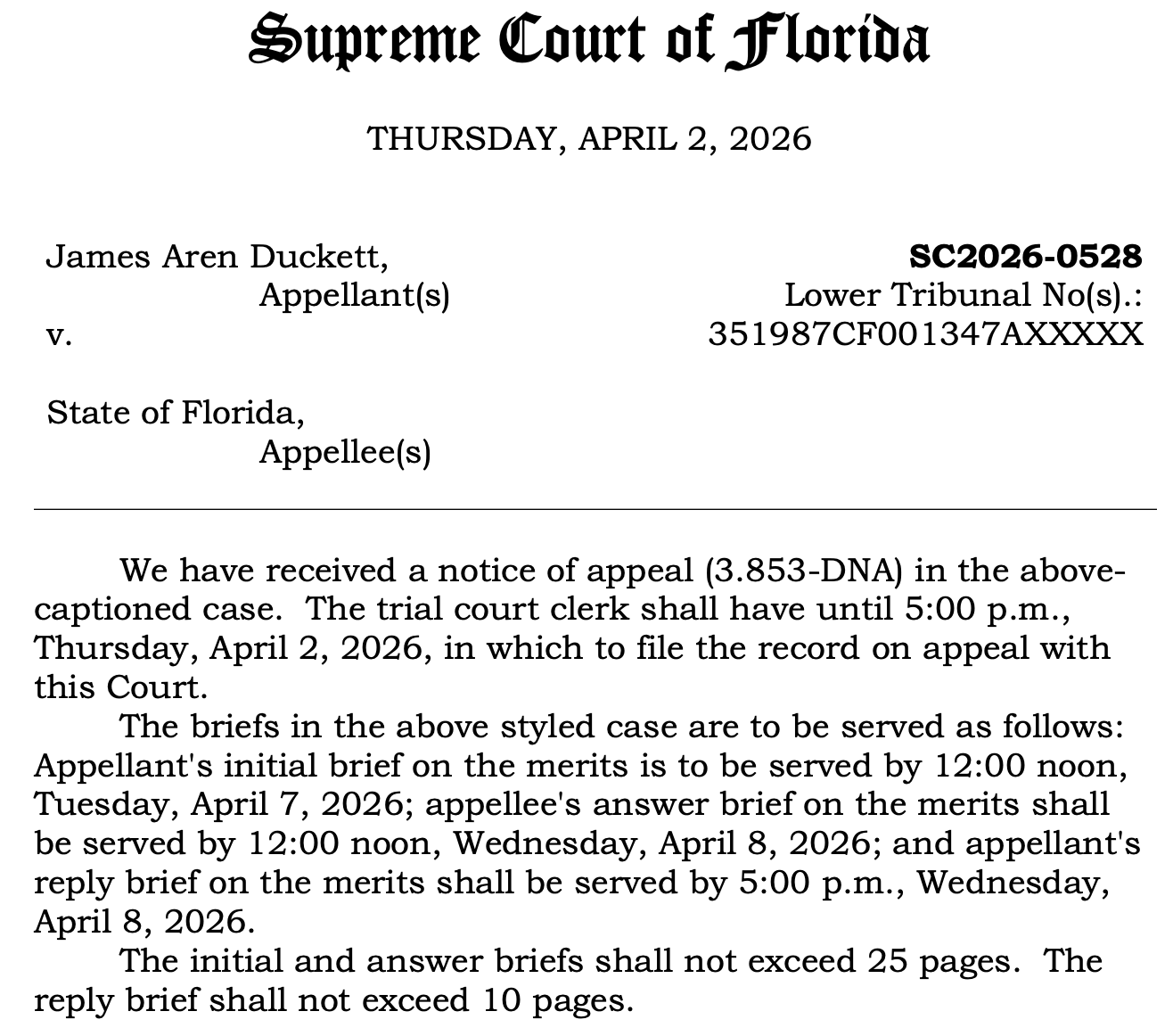
Instead, in a new appeal by Duckett’s lawyers, also filed on Thursday, relating to those recent lower court developments, the Florida Supreme Court issued a briefing schedule that is to go through April 8.
The current death warrant, as covered at Tracking Florida's Death Penalty, expires on April 7, so — unless something changes — it appears that Florida not only will not kill Duckett this week, but it would need to set a new death warrant before it could proceed after this warrant expires.
In a statement provided to Law Dork, Duckett’s lawyers said:
We are relieved that the court has intervened to halt this execution and allow time to consider Mr. Duckett’s request for the necessary analysis of the DNA results.
Let’s be clear: the delay occurred because the State chose to oppose efforts to allow the full analysis of the data that could provide conclusive evidence on the question of innocence or guilt. At a time when irreversible punishment was imminent, the State argued against taking steps to ensure the accuracy of the conviction. That position is deeply troubling.
Law Dork will have more on this case as it proceeds.
What’s next after the SCOTUS conversion therapy ruling?
I talked with Steve Morris about that question for his newsletter, The Long Run.
First, as to the Colorado law itself, because the court solely set a standard for how challenges to conversion therapy bans, as applied to talk therapy, are to be reviewed under the First Amendment, they didn’t “strike down” the Colorado law.
The case will go back down to lower courts, where its application to Kaley Chiles (and, more generally, to talk therapy) will almost certainly be found to be unconstitutional.
In any ongoing lawsuits related to other states’ laws, supplemental briefing will likely be ordered — with courts asking parties how Chiles v. Salazar affects their case.
Then, here’s what I told Steve about what will happen elsewhere:
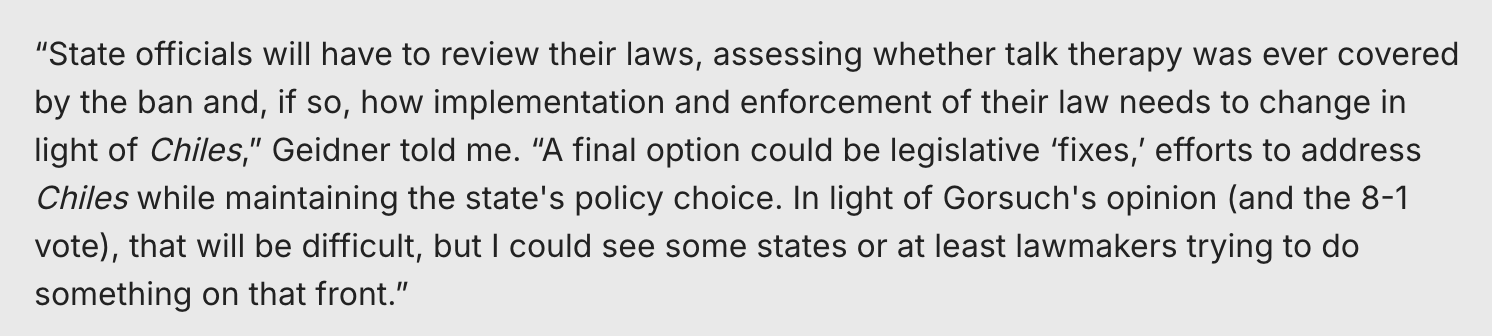
As to the bigger picture, Steve had a warning: “Where I feel the ruling could have the most impact is in eroding the social stigmatization of conversion therapy that the state bans had helped establish — an effect not easily remedied.“
Check out his whole newsletter for more about this — and much more.
Law Dork in the media
I spoke with Ken Schneck of The Buckeye Flame for their This News is So Gay podcast about the Buckeye state, Law Dork, covering the Supreme Court, and much more.
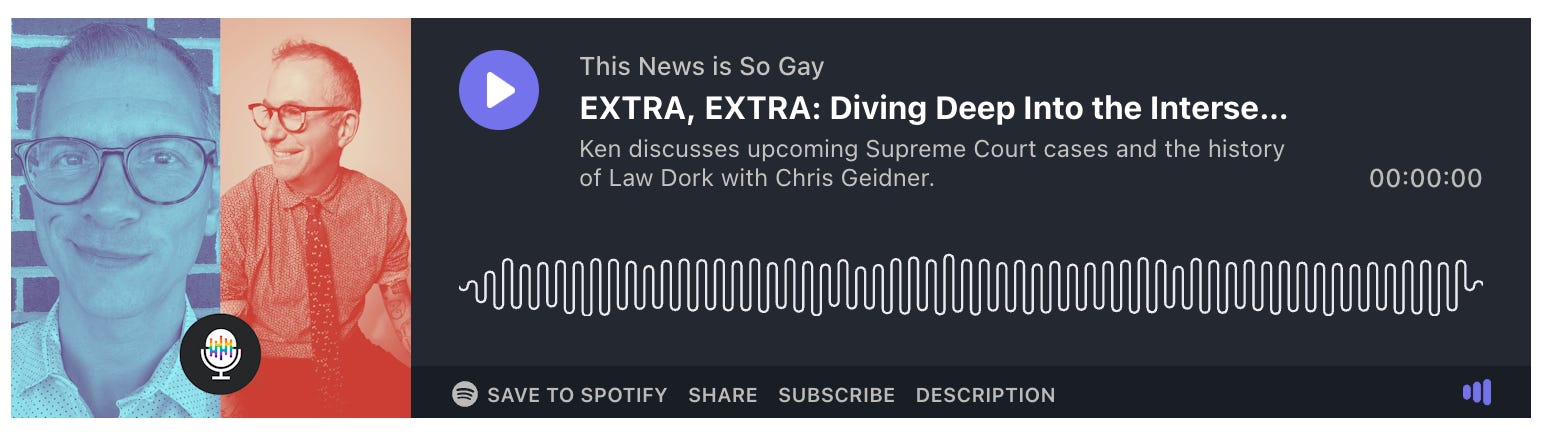
I was thrilled to join Ken and urge you to check it out!
A welcome dismissal! But probably just a change of scenery from the Barbies to “serious” menfolk … but is the damage to the DoJ reparable?
I am no lawyer, but i do not see barring conversion therapy as a free speech issue...at all. To me, it is an issue of professional standards of competence and do-no-harm, and needs to be firmly established and monitored by the professional organization(s) that license therapists. Surely there are words that a competent, responsible therapist cannot say to a client, i.e. maybe you should just kill yourself (to take an extreme example, but conversion therapy can result in suicide by clients). No one but a sadist would suggest that this is a "free speech" issue. Judges lack expertise in the therapeutic realm, and it seems completely wrongheaded for them to approach it as they are doing. The licensing boards for therapists have the research in hand about the harm conversion therapy can cause, and they need to stand up and make it clear that if a therapist does this, they will lose their license, like any professional healer who does malpractice.