

The Kennedy Center is a reminder that we can win, it will be messy, and Trump will be petty
The illegal effort to put Donald Trump's name on the Kennedy Center has always been a metaphor — but, this weekend, it became a story of how we get through this.

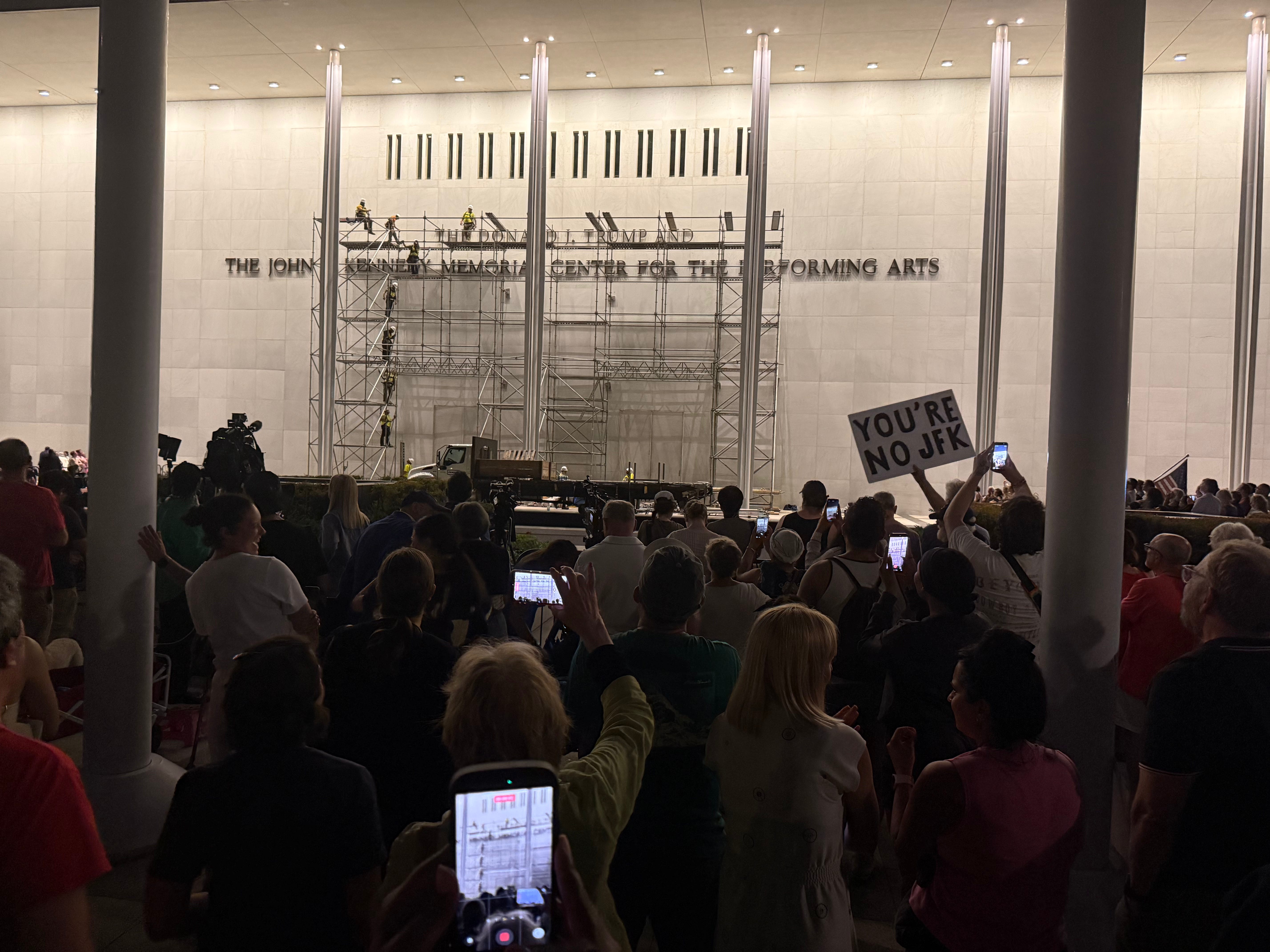
This is what it will mean to win.
It will be messy, it will take longer than it should, they’re going to be obnoxious and petty and cause needless harm, and — yeah — it will be a little cringe.
The fight over the lawless act of putting Donald Trump’s name atop the memorial to a slain president — The John F. Kennedy Center for the Performing Arts — has been unimaginably embarrassing in the run-up to “America 250.”
Everything about the six-month naming fight, though, is a perfect illustration of what the Trump administration does, what fighting back looks like, and how we win.
Even as Matt Floca — the then-vice president for facilities and operations at the Kennedy Center — was overseeing the installation of Trump’s name on the marble on December 19, 2025, the whole exercise already felt like a slightly too-obvious metaphor.
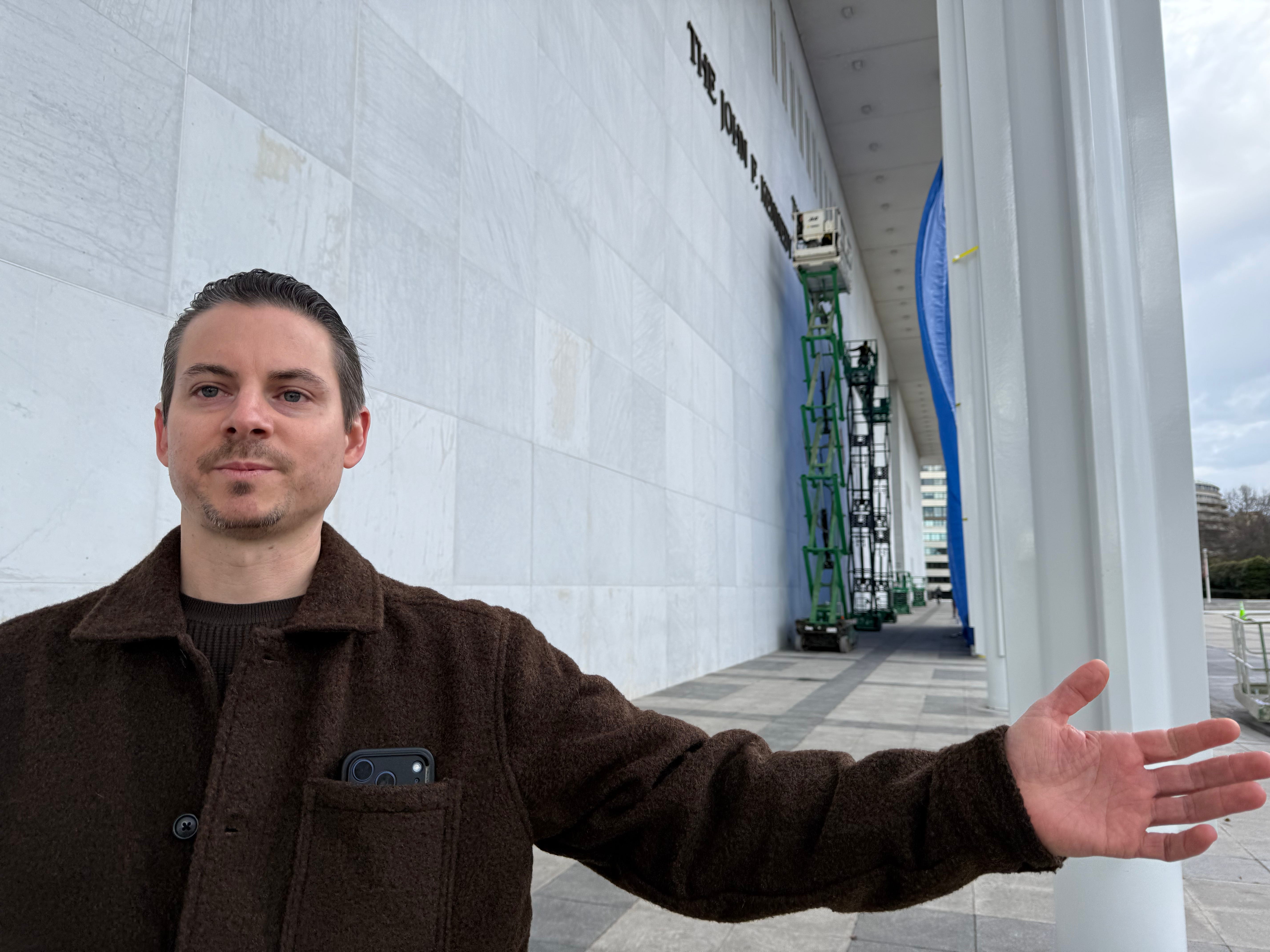
Floca was upset by people taking photos of the action that they would insist — up to Friday — “represented a saving of The Kennedy Center.” He was upset that people were upset at the actions he was overseeing. Whatever his reasons for doing so, he — then under the leadership of then-executive director Ric Grenell — was eager and willing to carry out the Trump-appointed board’s will with no apparent regard for the law.
Days later, Rep. Joyce Beatty, an ex officio Kennedy Center board member, sued. When Trump in February announced his plans to shutter the Kennedy Center for two years, Beatty raised questions to Trump and Grenell and soon thereafter amended her complaint to challenge those plans as well.
After U.S. District Judge Christopher Cooper issued an order ensuring that Beatty would have access to a mid-March board meeting and the materials relating to that meeting, Beatty on March 25 filed a motion for partial summary judgment as to the naming issue — essentially arguing that the naming dispute was a pure legal question that she should win.
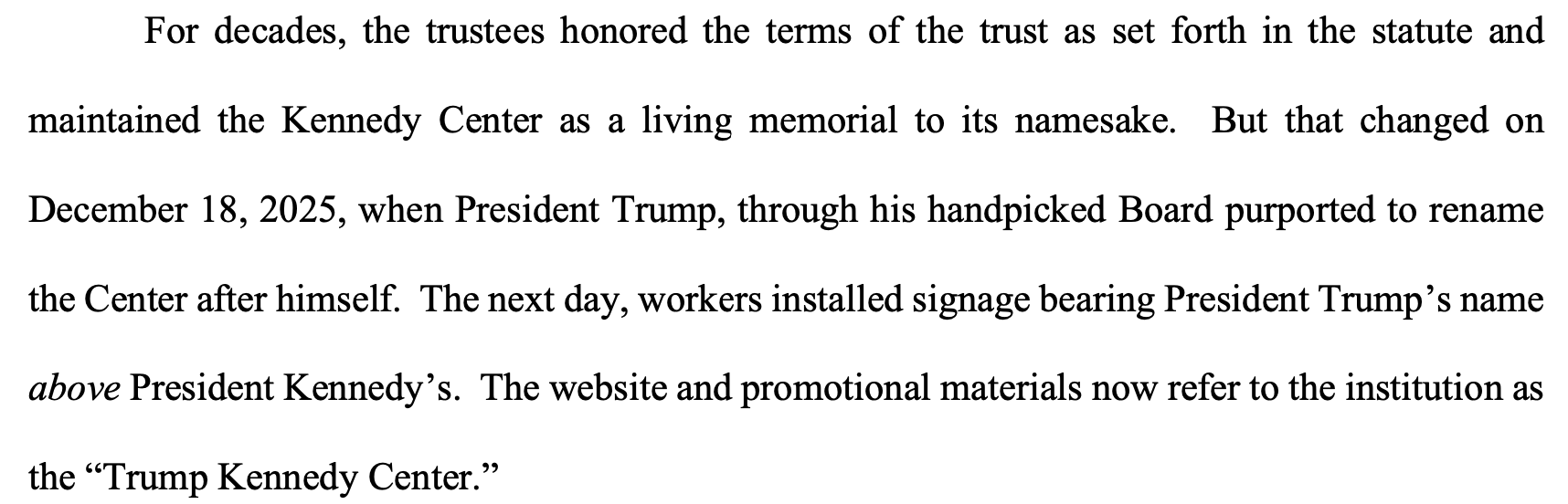
The filing then stated: “The Court should right this wrong.”
By time the Trump-appointed board responded on April 6 to that request and a preliminary request from Beatty seeking to block the closure plans, Grenell had left the Kennedy Center and Floca was promoted to executive director. In a declaration filed with that opposition, Floca called himself “the Center’s main steward“ — while also referring to it as the “Trump Kennedy Center.“ Primarily focused on the alleged need to close the center for renovations, he described described his role as “the primary lead for the Center’s operational backbone“ and concluded that “[a] full two-year closure is the only responsible path forward.“
After an April 28 hearing on the requests, Cooper issued his ruling on May 29. The Obama appointee sided with Beatty on virtually all fronts, permanently protecting her voting rights and permanently barring the claimed name change — “Congress gave the Kennedy Center its name, and only Congress can change it.” — while disagreeing with Floca and the board regarding its consideration of the need for closure and granting Beatty temporary relief blocking the closure.
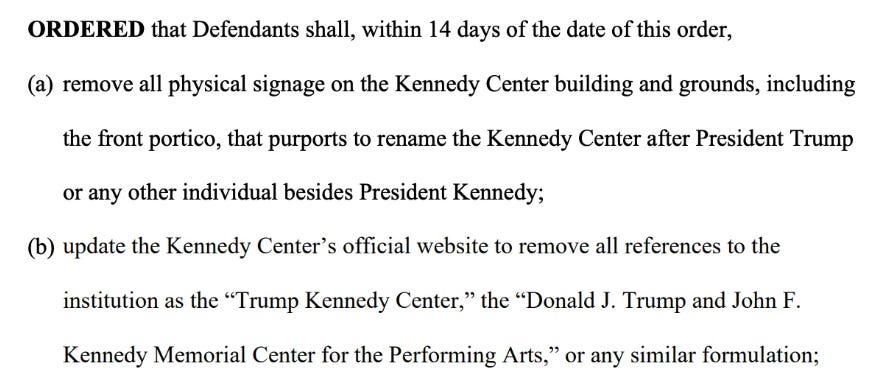
In his order, he gave the Kennedy Center two weeks — until June 12 — to remove the name of Trump “or any other individual besides President Kennedy“ from the building’s name.
Initially, there was nothing in response. But then, a day short of a week later, an unsigned memo to “STAFF” from “THE OFFICE OF THE GENERAL COUNSEL“ — published by The Washington Post — began implementing the order.
It made clear that the lawyers in the building understood precisely what was required of them:
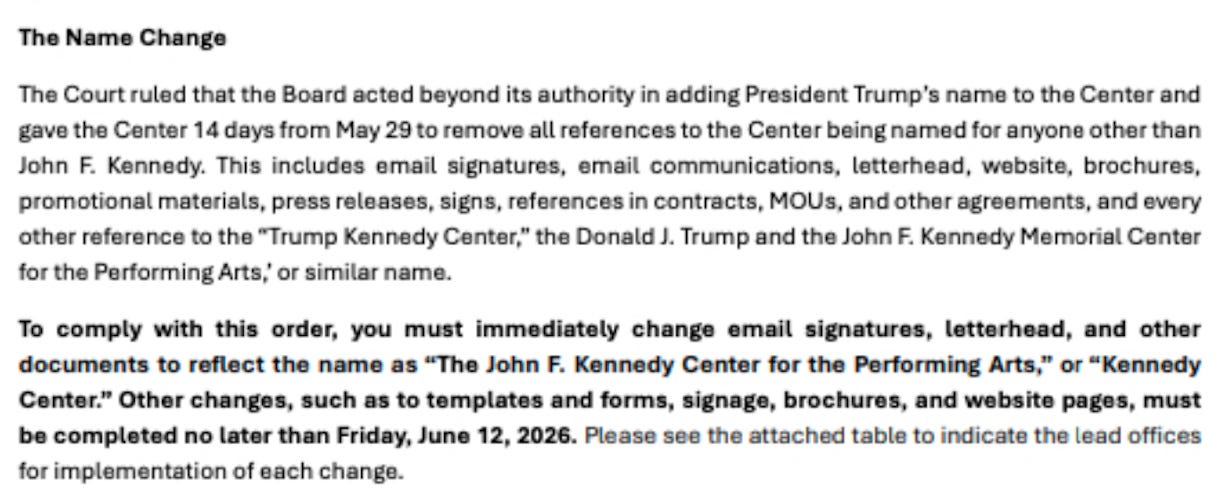
Among other changes, it directed the employees “must immediately change email signatures, letterhead, and other documents to reflect the name as ‘The John F. Kennedy Center for the Performing Arts,’ or ‘Kennedy Center.’”

It also made clear that “Outdoor Signage” was to be brought into compliance with Cooper’s order “[b]y 6-12-26.”
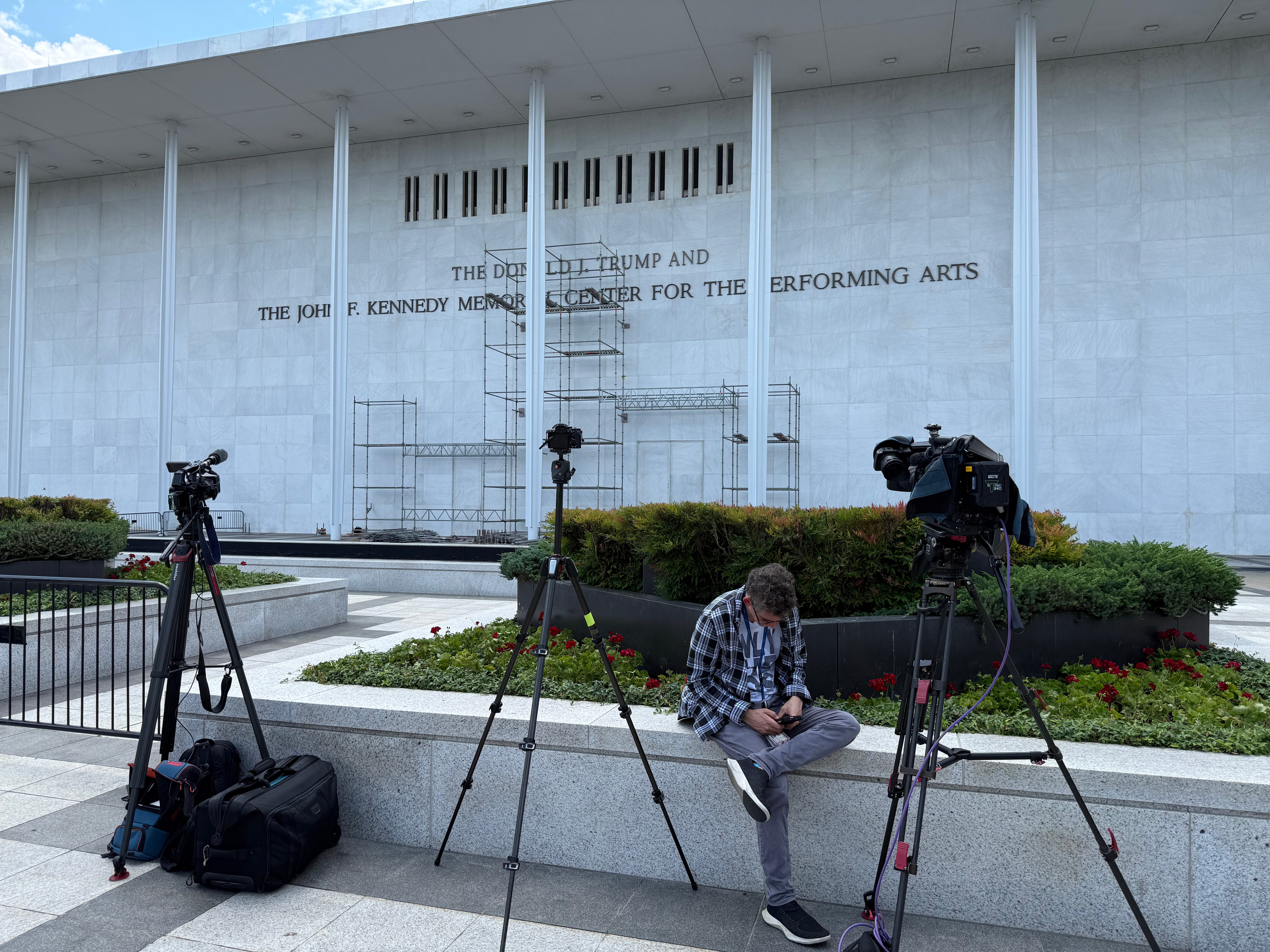
Nothing had changed to the front of the building by Thursday morning — less than 48 hours before Cooper’s deadline.
That day — 13 days after Cooper’s order — the Justice Department filed a notice it was appealing the ruling and requested that Cooper stay his permanent injunction regarding the naming while DOJ appealed. In the request, DOJ stated:
Earlier today, the Board of Trustees voted to appeal this permanent injunction and to seek a stay of the permanent injunction pending that appeal. Accordingly, Defendants now move for a stay pending appeal, to preserve the status quo until the D.C. Circuit has an opportunity to consider the novel issues raised by this case.
The request was signed by Assistant Attorney General Brett Shumate, head of the Civil Division; Deputy Assistant Attorney General Eric Hamilton; and Counsel to the Assistant Attorney General Brantley Mayers.
Beatty opposed the request, and Cooper denied it about 1:00 p.m. Friday. “Defendants have not ‘made a strong showing that [they] are likely to succeed on the merits’ of any appeal,” he wrote. “Nor have Defendants demonstrated that they ‘will be irreparably injured absent a stay.’“
As 2:00 p.m. approached, minimal scaffolding had been erected out front and no one was working to expand that scaffolding — and there had not been any filing for a stay at the U.S. Court of Appeals for the D.C. Circuit.
Livestreams — some of which had begun days earlier — had already begun picking up increasing numbers of viewers.
Tara Hoot, a D.C. drag queen who has regularly clashed with Trump, was doing more than any scaffolding crew when Law Dork showed up in the afternoon.
At 3:46 p.m., however, Shumate — alone — filed an “emergency motion for a stay pending appeal and an immediate administrative stay” at the D.C. Circuit.
Like the earlier April 27 ballroom case filing, it read at points more like a Truth social post from Trump than a legal filing from the Department of Justice. Shumate, a Senate-confirmed attorney who spent more than five years as a partner at Jones Day before returning to DOJ in January 2025, signed the D.C. Circuit request that opened as such:
Defendants respectfully seek a stay pending appeal of the district court’s permanent injunction requiring the removal, from the campus of the John F. Kennedy Center for the Performing Arts (the Center), of all physical signage reflecting the name of President Donald J. Trump. This appeal raises serious questions about Article III standing and about the powers of the Center’s Board. Major physical changes to the Center should await this Court’s resolution of those issues; as an equitable matter, it does not make sense to alter the Center’s name and signage now, only to potentially revert the name again after what should be a successful appeal. The District Court is not allowing us to close in order to properly fix up and repair the Building, including potentially life threatening structural damage like beams and parking garage ceilings that are rusted, and in serious danger of falling onto people below — Indeed, total collapse! Moreover, stripping President Trump’s name from the Center threatens to substantially undermine fundraising and financial viability at the most sensitive point in its history, a time when other such performing arts structures throughout the Country are in serious financial difficulty, many of them, like The Kennedy Center, losing hundreds of millions of dollars per year.
Before considering Trump-style unending paragraph structure — the opening paragraph went on for another 540 words — and Trumpian phrasing — “Indeed, total collapse!” — note how that first sentence misrepresented Cooper’s order, as the general counsel even clearly understood it in the June 4 memo.
The filing went on to declare that a bylaw of “The Trump Kennedy Center for the Performing Arts Foundation“ had “condition[ed]” donations on the illegal name change staying in place. Further, it insisted, “No one else other than President Trump would be in the position of both rebuilding the Building, and raising the money for its operation.”
Less than 30 minutes later, Beatty’s lawyers — from Democracy Defenders Action and Washington Litigation Group — filed her opposition.
At 7:09 p.m., the D.C. Circuit panel — Judges Patricia Millett (Obama), Robert Wilkins (Obama), and Gregory Katsas (Trump) — denied the request for an administrative stay, meaning Cooper’s order — and deadline — remained in effect. The panel set briefing over the rest of the month for the broader request for a stay pending appeal, meaning any order would come long past the June 12 deadline.
In the midst of all of this, thunderstorms temporarily stopped the scaffolding crew.
By time Law Dork was back on site at 10:00 p..m. — two hours before Cooper’s deadline — a substantial crowd had gathered, buoyed when the National Symphony Orchestra’s performance let out a little past 10:00 p.m.
It was a celebration, in part, but also just a very D.C. night of people wanting to be present for a moment that felt like it might also become A Moment. Time in D.C. among the many who have come to this city for politics is often marked by these Moments. Outside the Kennedy Center, I heard people talking about the night Barack Obama announced Osama bin Laden had been killed, the White House celebration the night of Obergefell v. Hodges, the impromptu celebration in the streets on the day Biden was declared victor in 2020.
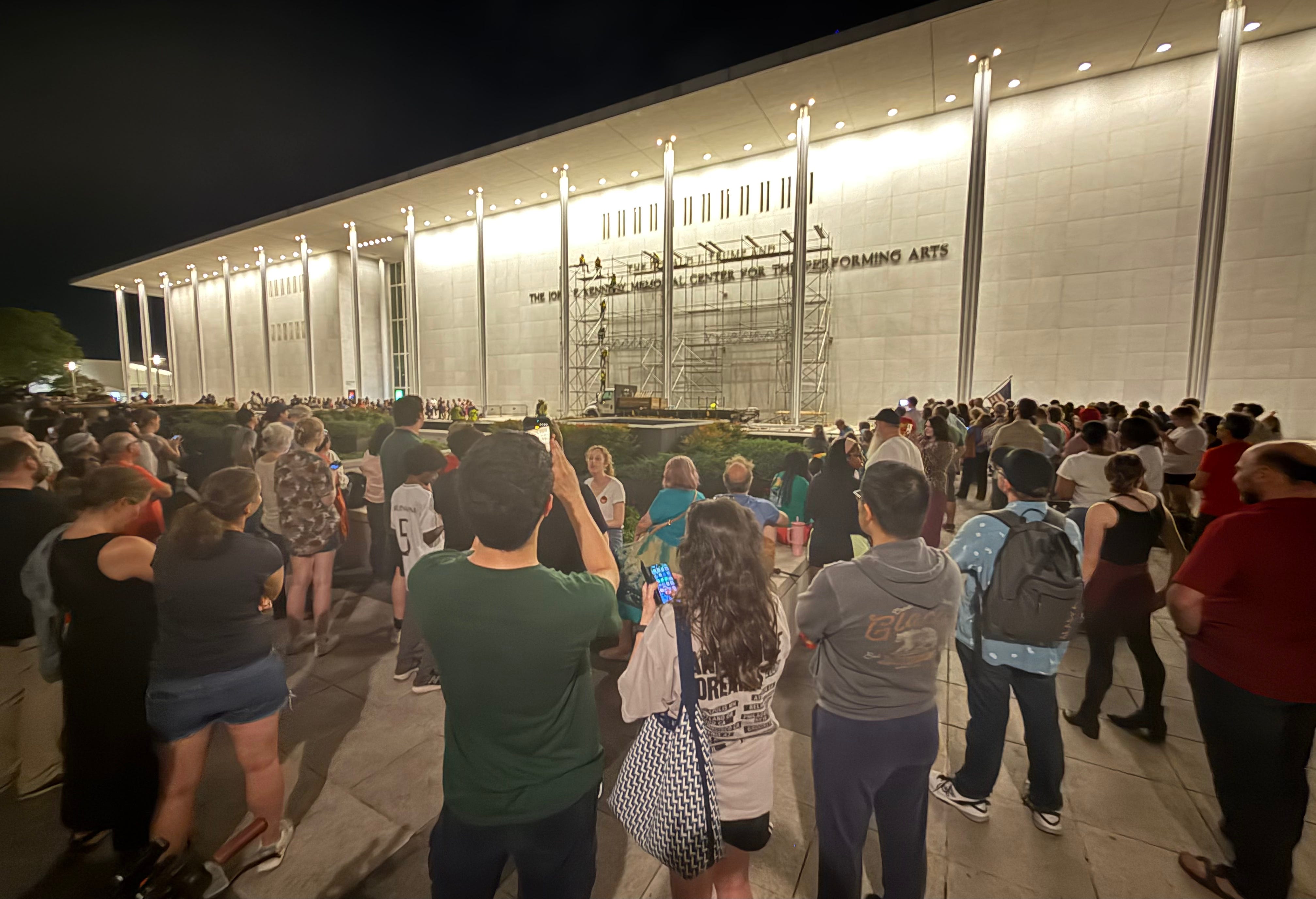
There were selfies, there were neighbors just stopping by, there was a spirit of hope. As midnight approached, however, the mood shifted and there was a desire for accountability, as it became clear the job would not be done in time.
As June 12 turned to June 13, no letters had been removed. A smattering of “Contempt of court!” cries rung out.
It turned out that DOJ, minutes before midnight, had asked Cooper for a 12-hour extension. In a declaration, Floca cited the couple of hours of “thunderstorms” — not their own 13-day delay — for the reason they needed the additional time.
Floca was not out front on Friday night and Saturday morning — at least not in any public way seen by Law Dork — to oversee the taking down of the name that had been illegally installed on the building with his oversight nearly six months earlier.
A little past 1:00 a.m. Saturday, a much-rumored tarp began being affixed to the top of the scaffolding and the mood among the dedicated crew that remained — still well over 100 people — shifted yet again, as cries of “Cover up!” and “Traitors!” rung out. Over the course of the next hour, the white tarp was extended to cover all of the scaffolding — and all of Trump’s name.
By 4:00 a.m., reporters still on site confirmed by looking along the wall beside the edge of the tarp that the name was down — and Beatty was there to declare victory.
As the sun came up, Cooper granted the extension, and, before noon, DOJ certified compliance — with a new Floca declaration.
As of Saturday afternoon, the tarp remained covering the front of the building where Trump’s name had been affixed 24 hours earlier. (Yes, Law Dork also confirmed that the name was down by looking along the wall.)
It was what a resigned, petty loss looks like.
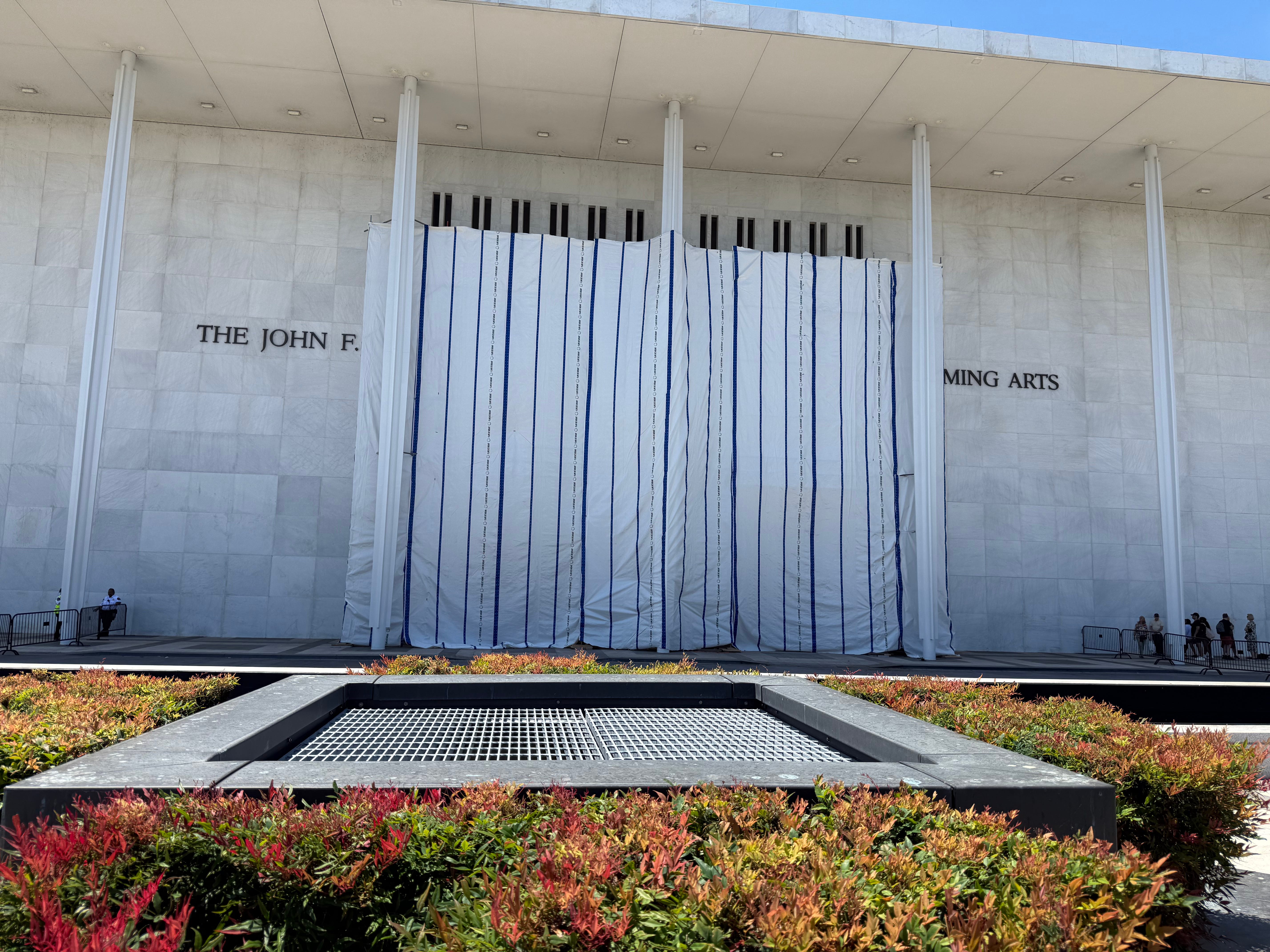
But, it was also what a win looks like.
The lessons to take from the Kennedy Center debacle — itself by no means over — are essential to understanding how we get out of this moment and, in particular, how we move forward while Trump remains in power.
First: Stand up, speak out, and challenge them. Beatty’s lawsuit, like so many over the past 17 months, was the result of a person who thought the Trump administration did wrong and lawyers willing to back that person up in that fight.
Second: Remember that this is not a quick process, especially not litigation. It took nearly six months for this clearly illegal act to be reversed.
Third: Realize they’re going to push back — and that they’re going to get more unhinged as you are closer to winning. Friday’s D.C. Circuit filing was embarrassing (at best), but, at this point, it should not have been unexpected.
Fourth: Support one another. From the support Beatty got for her effort to the guy going around offering pizza to people at the Kennedy Center on Friday night, Trump’s effort to destroy community is best combatted by simply not allowing it.
Fifth: Be ready for the fact that they’re not going to be nice about the losses — and that there will be malicious compliance and passive aggressive compliance (as well as, yes, noncompliance at times). But, as here, even the temporary noncompliance was a sign of how much this win mattered — and gave way to compliance by morning.
Sixth: Celebrate the wins. They purported to change the name, it was despised and also illegal, Beatty sued, the lawyers did their job, the judges did as well, and — after an absurd 48 hours — they took down his name. Take the W.
Seventh: Get up the next day, and start it all over again.
What is highly concerning is the lack of substantiation in Shumate’s claims. Where are the affidavits supporting the allegations? Where are the reports evidencing serious structural defects rendering the Center unsafe for occupancy? Trump’s lawyers appear to have this habit of making stuff up and putting it in pleadings in a manner that would embarrass a first year attorney and open a lawyer practicing in any court reprimand if not referral to an appropriate disciplinary committee.
I hope this time in our country can put the final nails in the coffin of "Rugged individualism." None of this change happens due to a single person. As mentioned, it's many people working together to strive, pick each other up, and celebrate. No one does anything worth doing alone, and we as a country need to remember that now more than ever.