

An ICE agent killed Renee Nicole Good. Judge Sara Ellis all but told us today would happen.
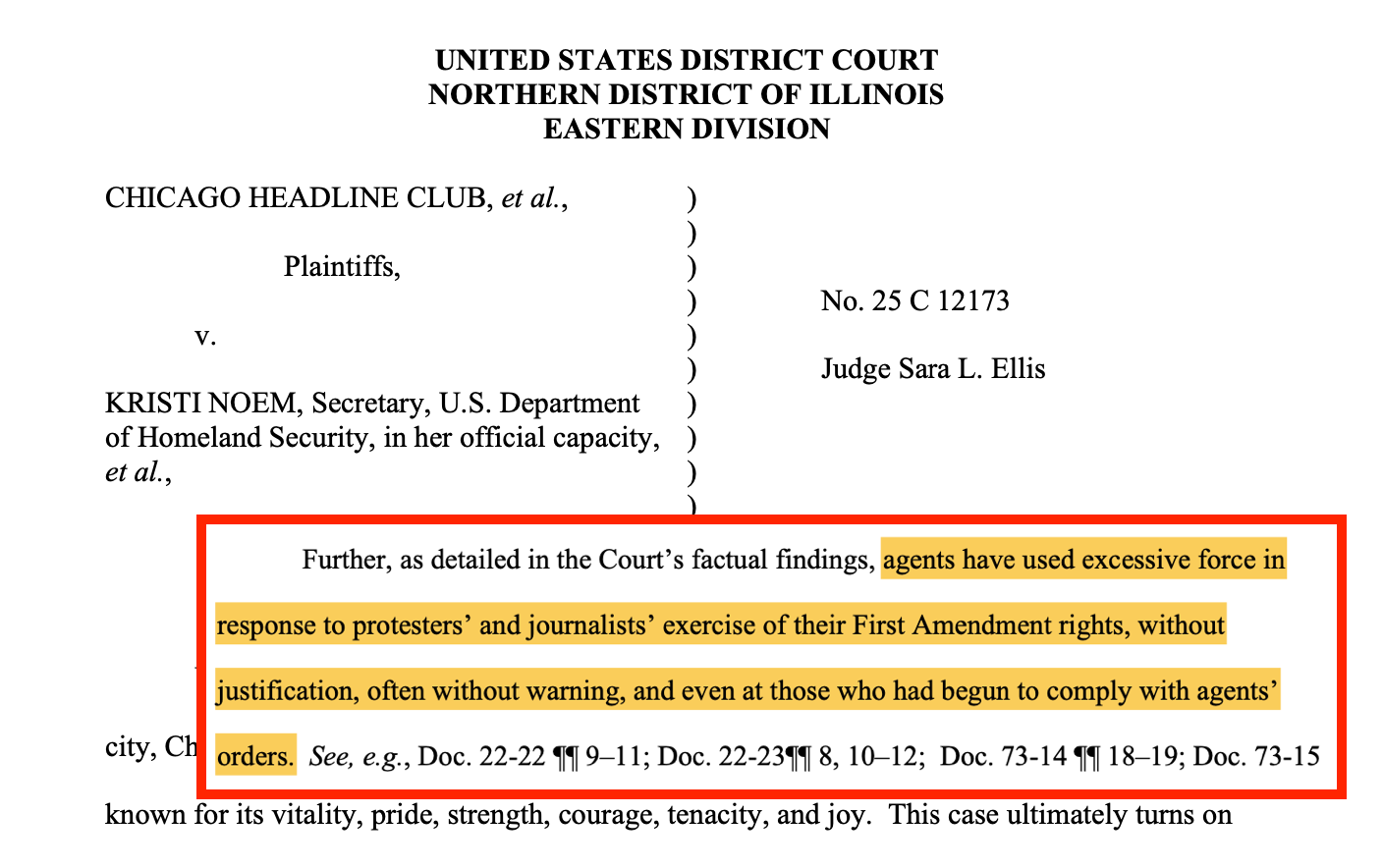
"[A]gents have used excessive force … without justification, often without warning, and even at those who had begun to comply with agents’ orders," Ellis wrote on Nov. 20.

The horror of Wednesday’s deadly ICE shooting was captured in The Minnesota Star Tribune’s headline on Wednesday night: Thousands gather to memorialize woman killed by ICE agent in Minneapolis.
The killing of 37-year-old Renee Nicole Good, with her wife on the scene, was captured on video from multiple angles,1 with Good appearing to ask federal agents how to maneuver her minivan to leave the scene moments before one agent tried to stop her and another agent shot her repeatedly.
Local reporting from eyewitnesses appears to reflect the clear reality that, as Minnesota Public Radio quoted one person as saying, Renee Good posed “no threat” to ICE agents.
The Sahan Journal covered several eyewitnesses’ statements, including from Trevor Heitkamp, who confirmed what appeared to happen in the videos:
The driver appeared to be trying to turn her vehicle around, Heitkamp said. He said she was going no more than 5 miles an hour and was receiving direction from multiple federal agents.
The fallout from Wednesday’s deadly shooting is still unfolding, and Law Dork will have further reporting as appropriate.
Tonight, however, I want to highlight the ways in which U.S. District Judge Sara Ellis, in her November 20 opinion in a case over the federal government’s treatment of protesters and press in Illinois, warned us — warned America — that today was coming.
In the 233-page opinion backing up her earlier orders in the case, Ellis, an Obama appointee, noted throughout the opinion how often federal immigration agents were drawing guns in Illinois and ultimately concluded that “agents have used excessive force … without justification, often without warning, and even at those who had begun to comply with agents’ orders.“
In the November 20 opinion, Ellis found — in the case that led to Border Patrol official Gregory Bovino’s deposition — that the plaintiffs were likely to succeed in their claim that the Trump administration’s actions at the protests in front of the Broadview ICE facility outside Chicago and at other places in the area violated the First and Fourth Amendments.
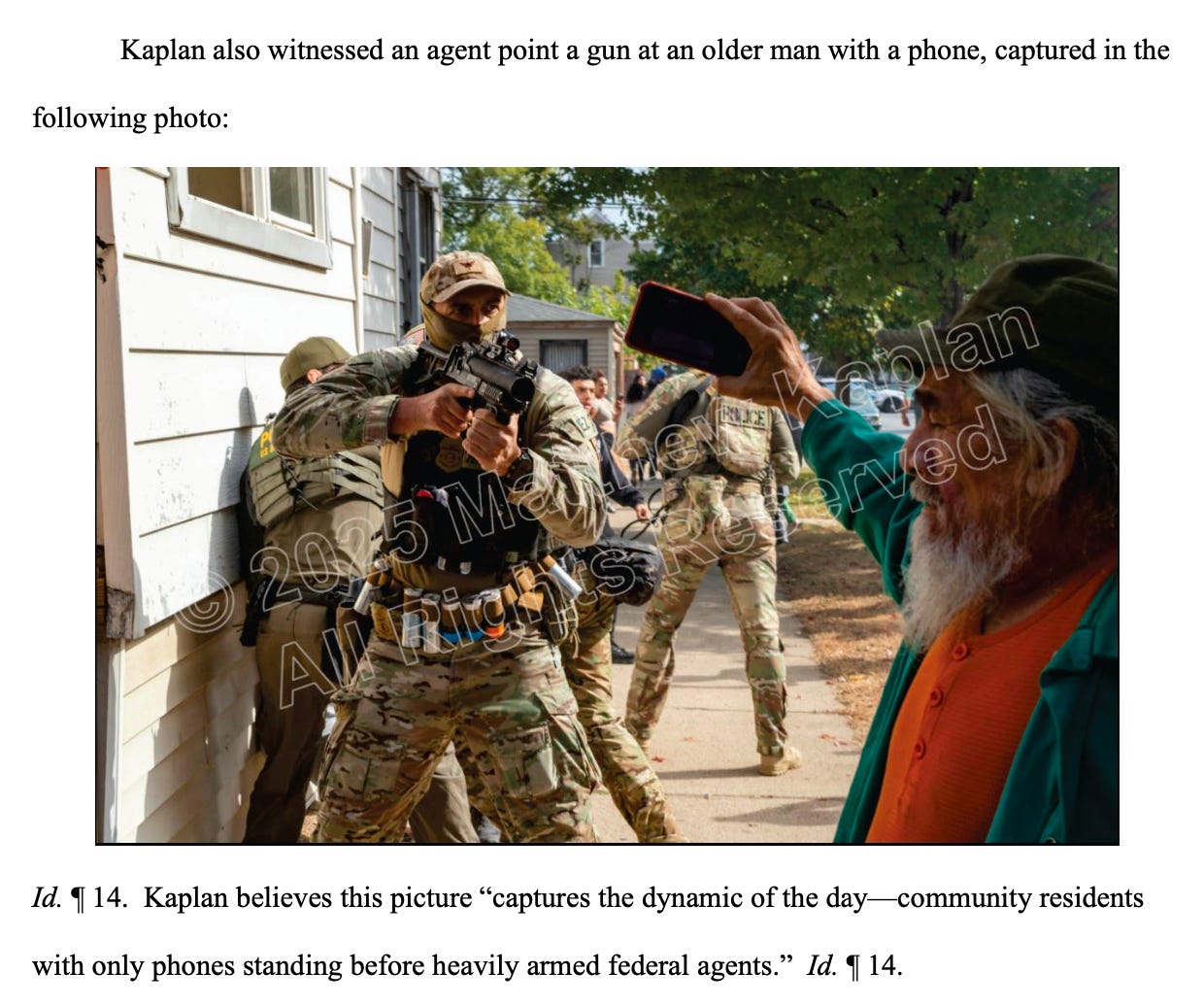
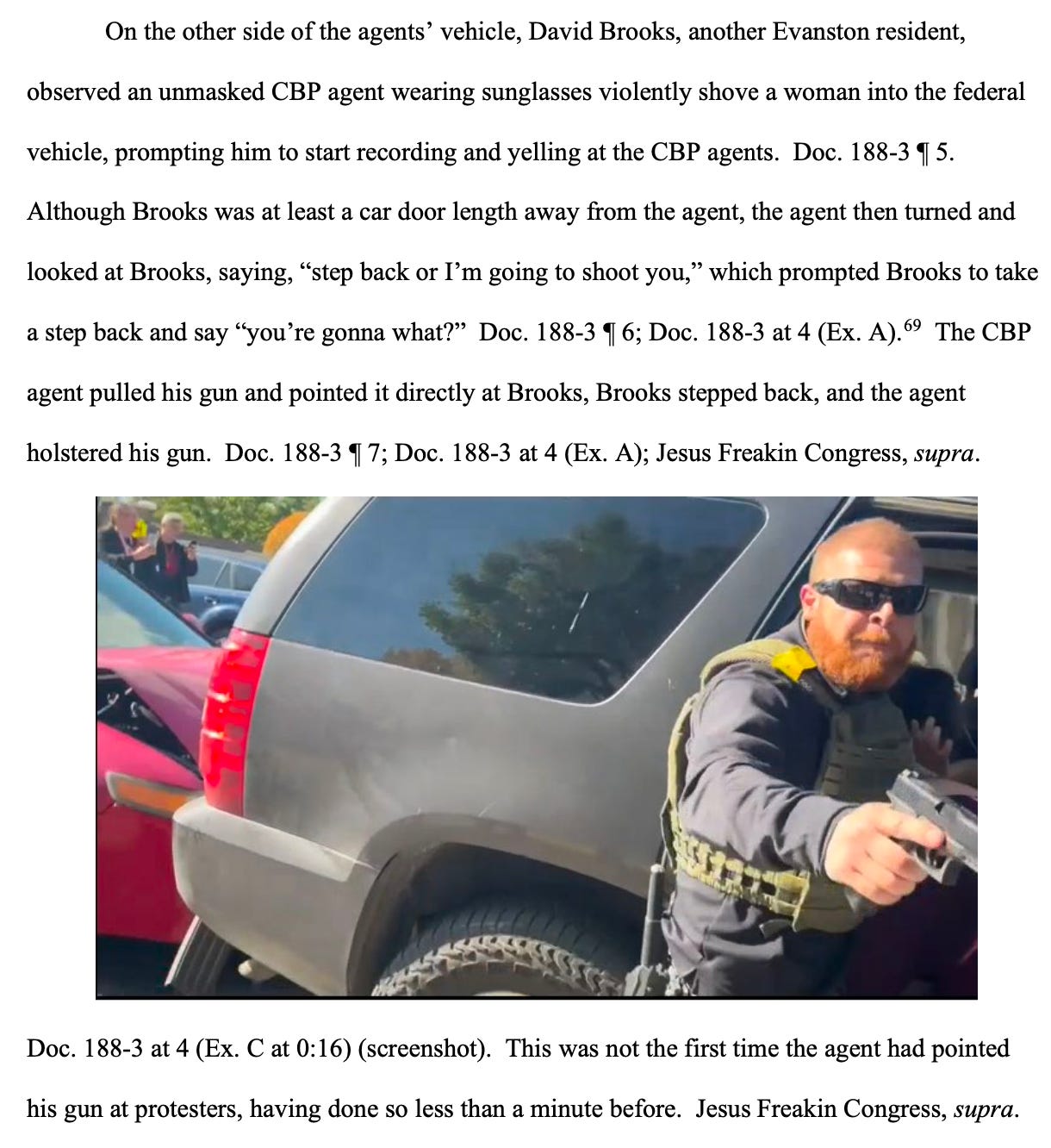
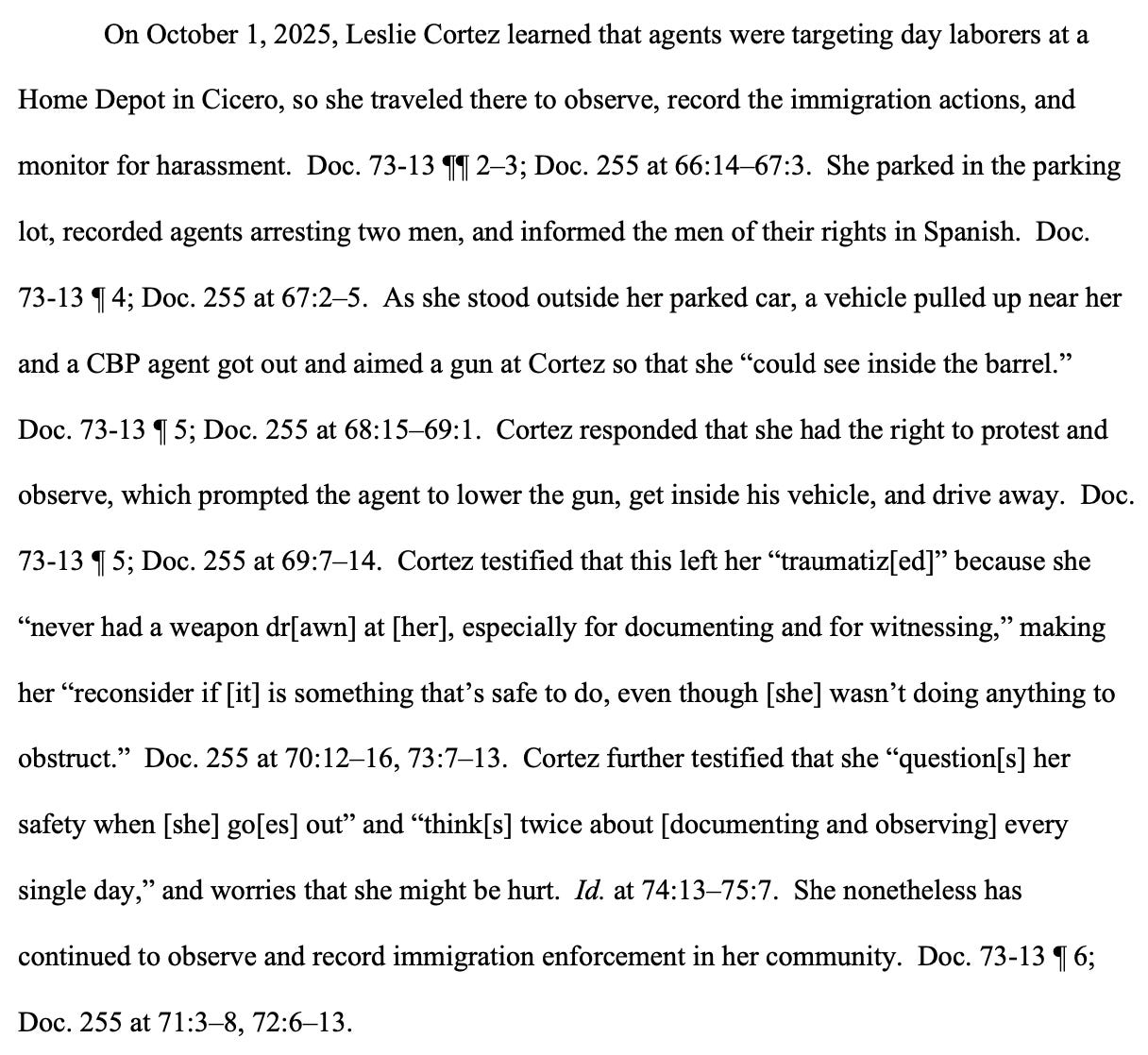
Throughout the opinion — issued less than two months ago — Ellis highlighted how guns were being drawn repeatedly and in questionable-at-best circumstances in Chicago.
Here was one such example:
Here was another:
Ellis also detailed this encounter, which sounds notable in light of Wednesday’s fatal shooting:
Ultimately, Ellis found that the plaintiffs were likely to succeed in their claim that the Trump administration’s actions constituted excessive force in violation of the Fourth Amendment:
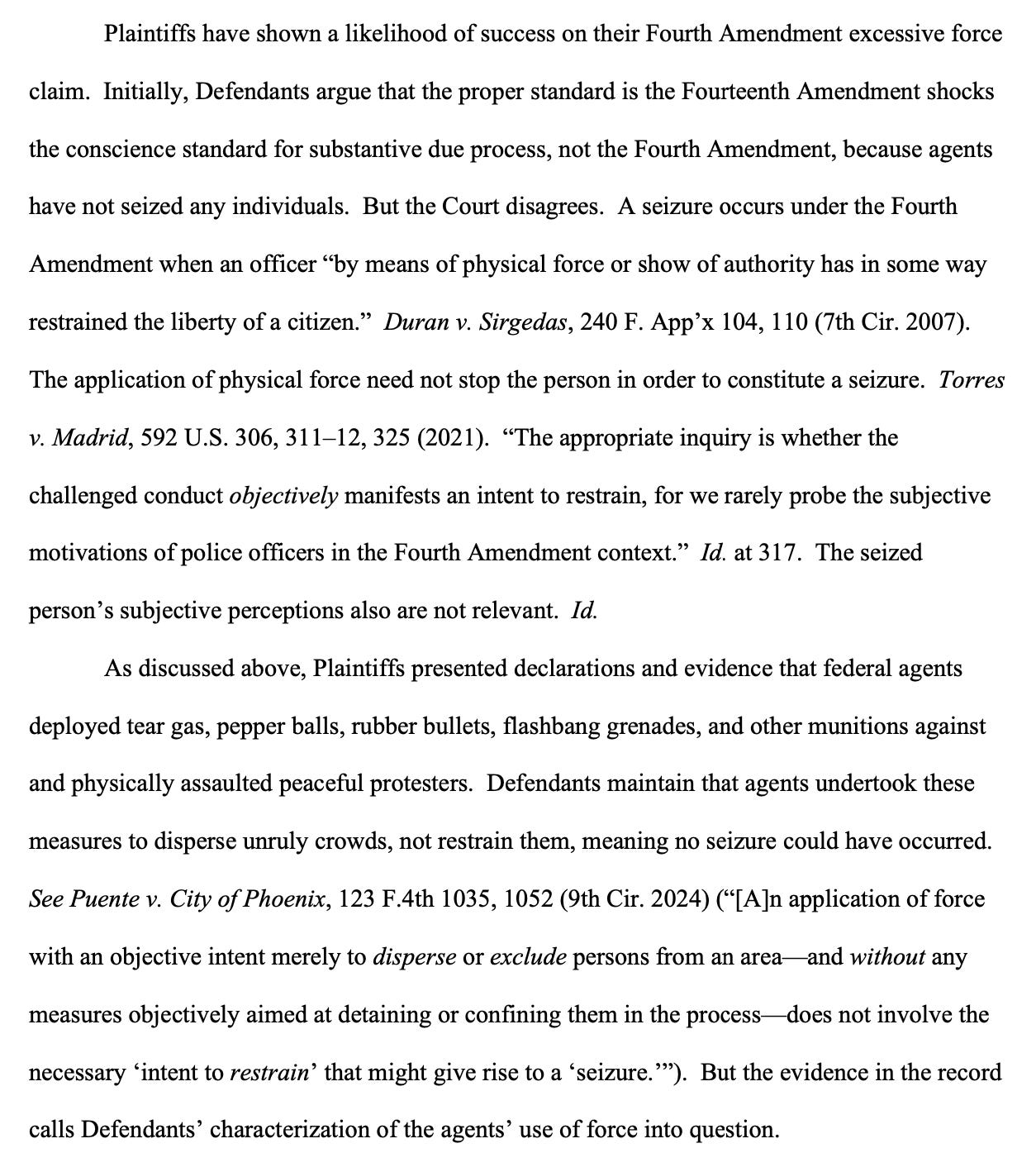
“[T]he Court see little justification for the extent of the use of force that federal agents have used,” Ellis concluded on that front.
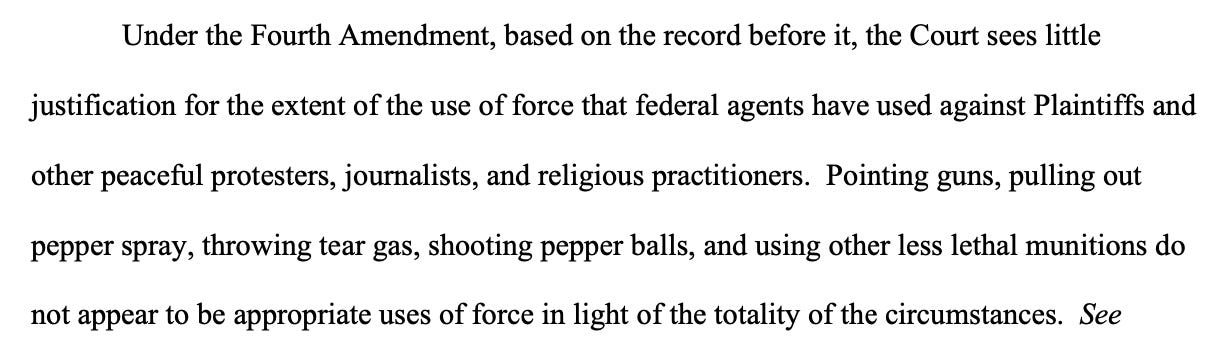
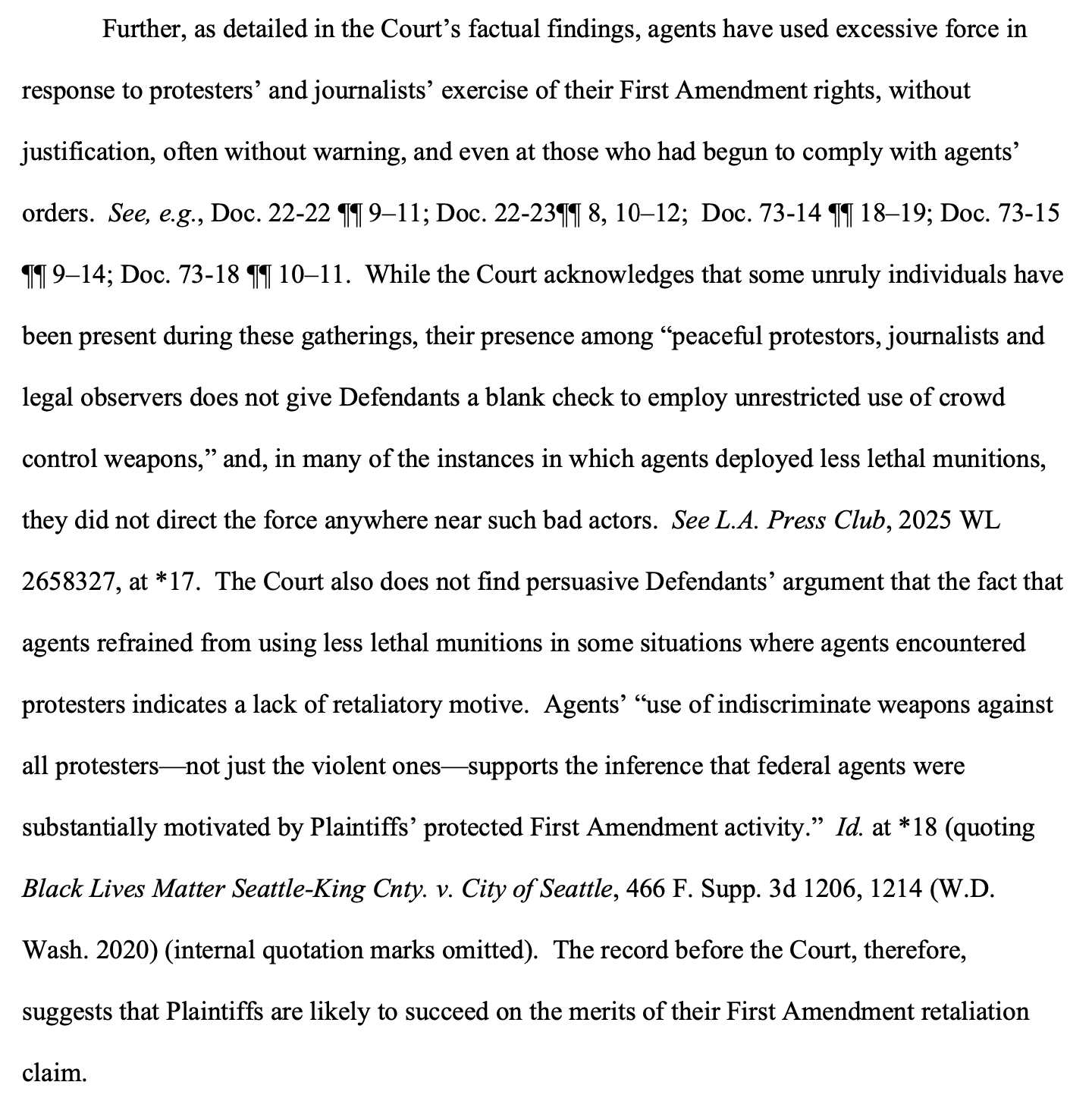
Ellis also found that the excessive force questions bled over into the First Amendment claims. Here, Ellis wrote, that “agents have used excessive force in response to protesters’ and journalists’ exercise of their First Amendment rights, without justification, often without warning, and even at those who had begun to comply with agents’ orders.“
That wasn’t all.
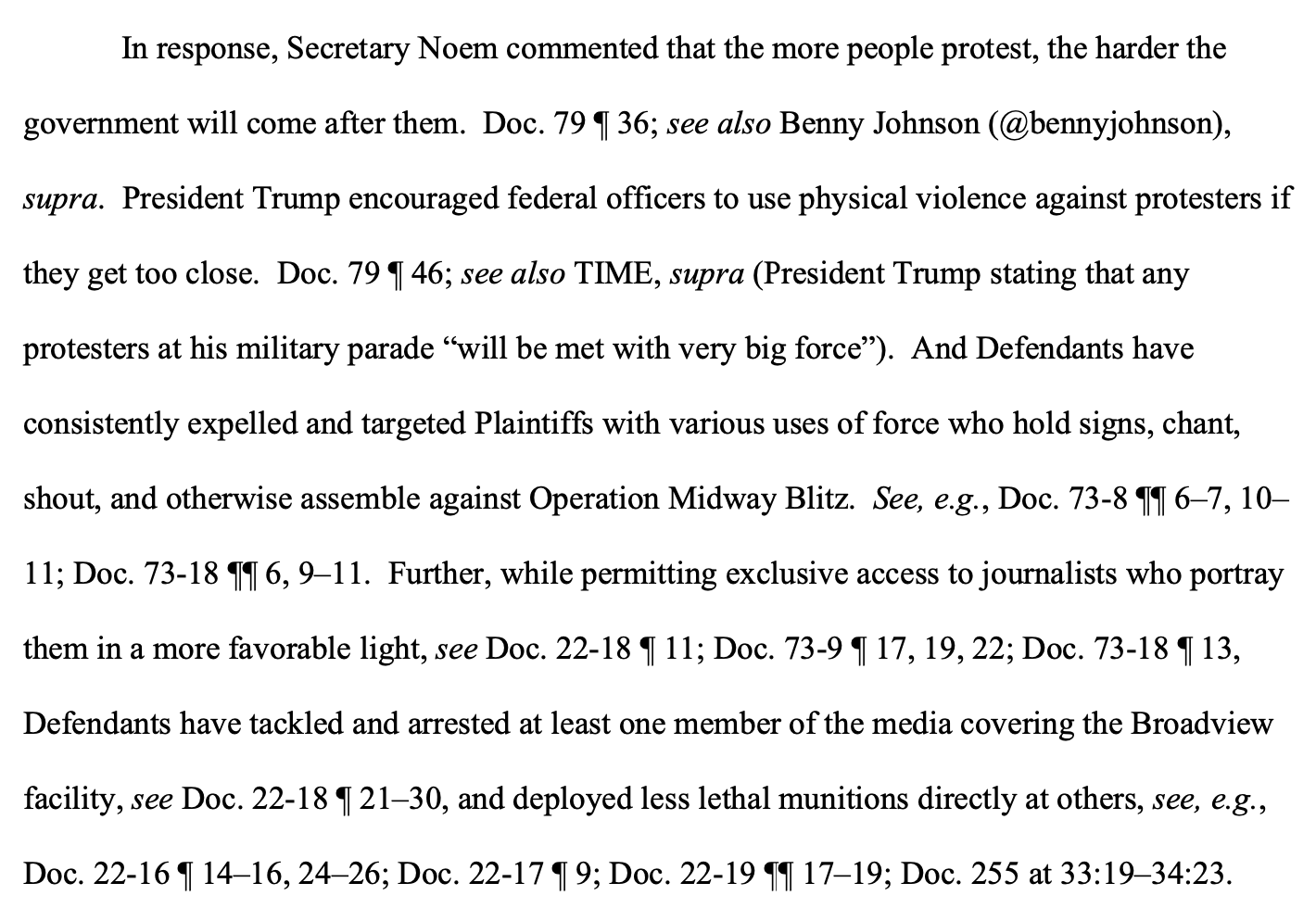
Earlier in her opinion, Ellis highlighted how President Donald Trump and Homeland Security Secretary Kristi Noem had encouraged aggressive tactics in response to protests.
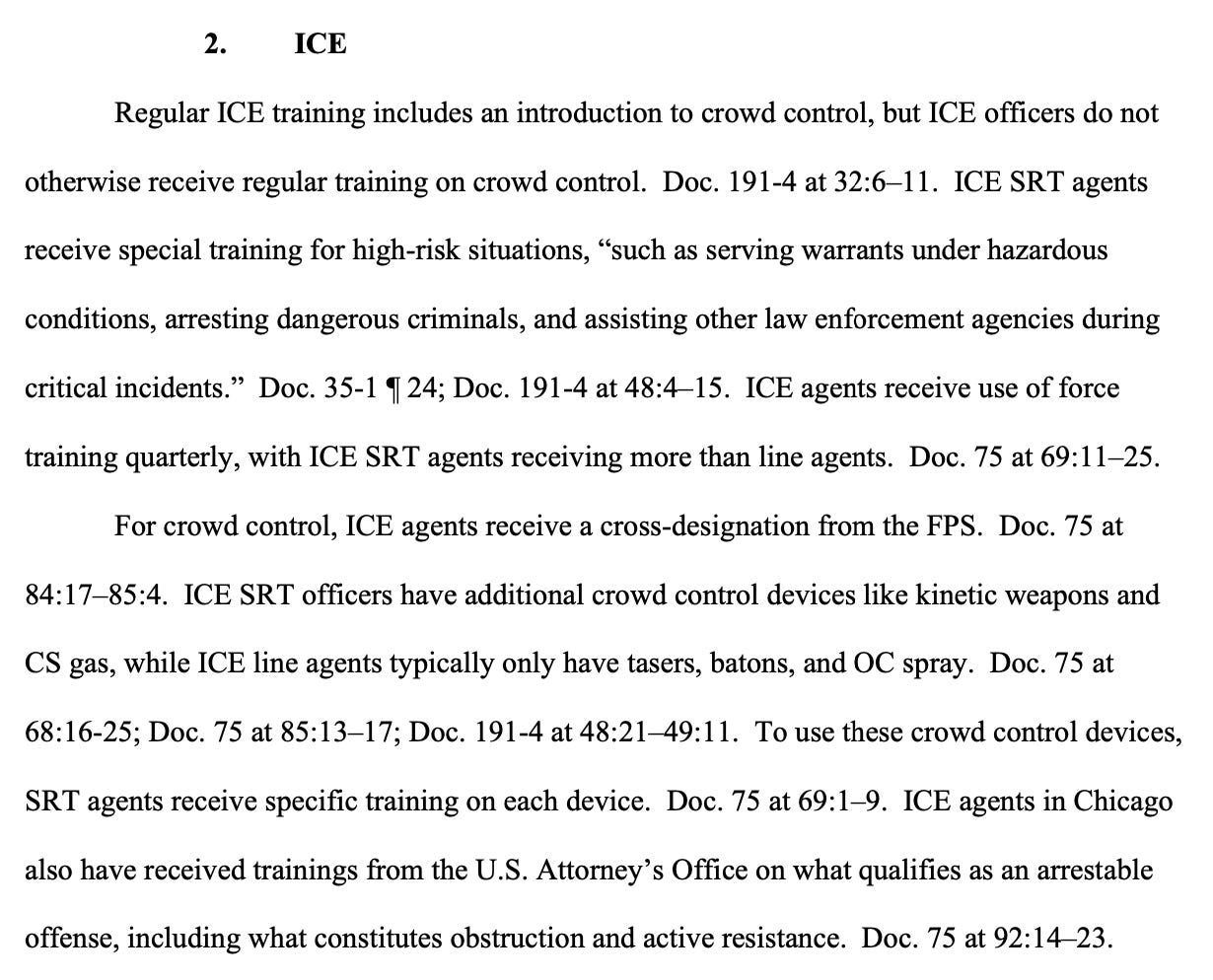
Ellis also highlighted the dearth of training given to ICE and other agents for operating as the Trump administration and Noem have demanded:
The day before Ellis issued her in-depth opinion, the U.S. Court of Appeals for the Seventh Circuit issued a stay of Ellis’s preliminary injunction order, finding that it was overbroad in scope and was “too prescriptive” by setting specific standards for the use of force.
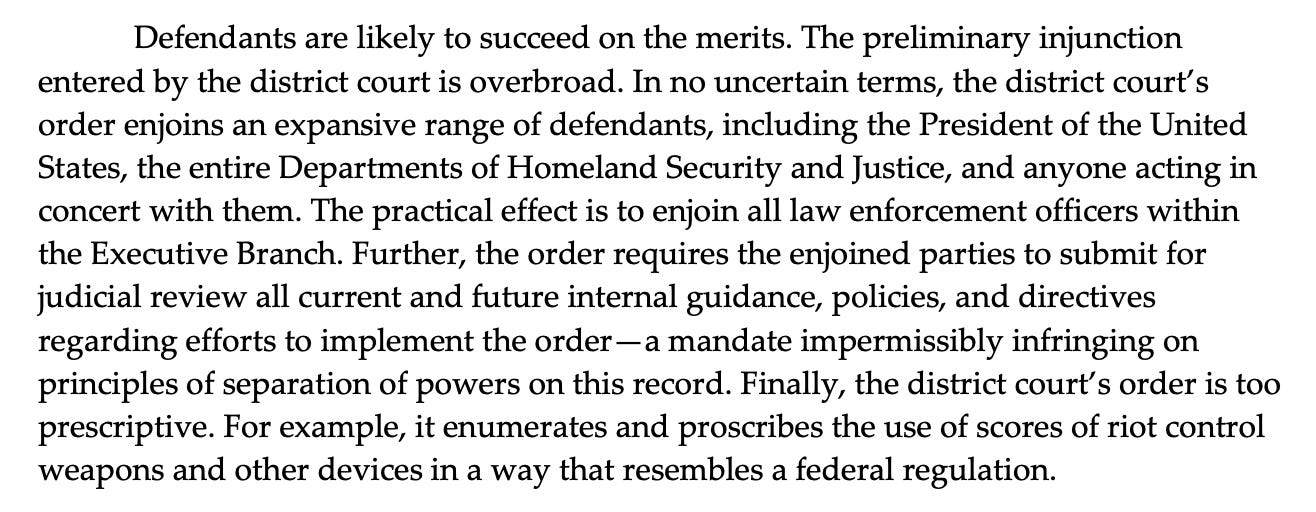
The three-judge panel that issued the stay consisted of Chief Judge Michael Brennan and Judge Michael Scudder, both Trump appointees, and Judge Frank Easterbrook, a Reagan appointee.
Notably, even that panel stated, “Do not overread today’s order.“
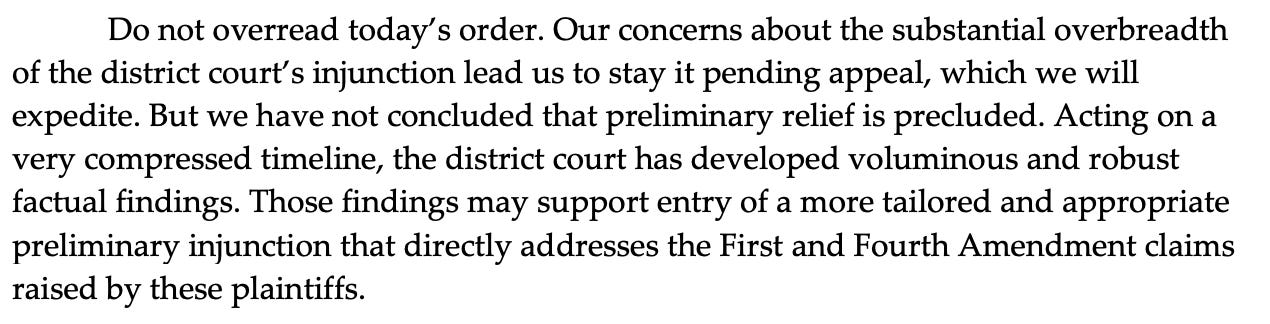
Highlighting the “voluminous and robust factual findings“ developed by Ellis, the panel noted that more tailored relief could be appropriate following the appeal that “directly addresses the First and Fourth Amendment claims raised by these plaintiffs.“
When Bovino and his immigration agents moved on to Charlotte, however, the plaintiffs sought to stay the appeal and dismiss the case — stopping any further developments.
But, Ellis’s opinion (and the voluminous evidence in the case) remains — and stands as a document of clear warning that must be part of our larger understanding as efforts to hold the Trump administration accountable for Wednesday’s fatal shooting and stop more Trump administration violence get underway.
I am not linking to the videos here, but they are readily available elsewhere.
Prosecute the shooter(s). They have violated the victim's civil rights, egregiously.
What makes stories like this so alarming is not only the individual tragedy, but the broader pattern they reveal: escalating state power exercised without clear accountability, transparency, or meaningful public consent. When policies are implemented through force rather than democratic legitimacy, the risk of violence and instability rises—for communities, for institutions, and ultimately for national security.
History shows that once situations reach this level of confrontation, options narrow quickly. The only real chance to prevent further escalation is earlier—when citizens are still able to clearly articulate priorities, demand guardrails, and require public accountability before policy failures harden into irreversible harm.
If we want fewer tragedies and less chaos, civic engagement can’t wait until after the damage is done. Public priorities must be visible, documented, and impossible to ignore—at home and abroad.
One Voice, One Vote Count & Deliver: it's free, quick, & easy. But it can only be effective if a majority of our citizens engage & participate. It takes a village, but we can do it!
https://countanddeliver.org/