

DOJ's defense of Trump's Fed firing effort falls flat at SCOTUS
Fed Governor Lisa Cook looks safe in her job for now. No justice was eager to back Solicitor General John Sauer's arguments for Trump on Wednesday.

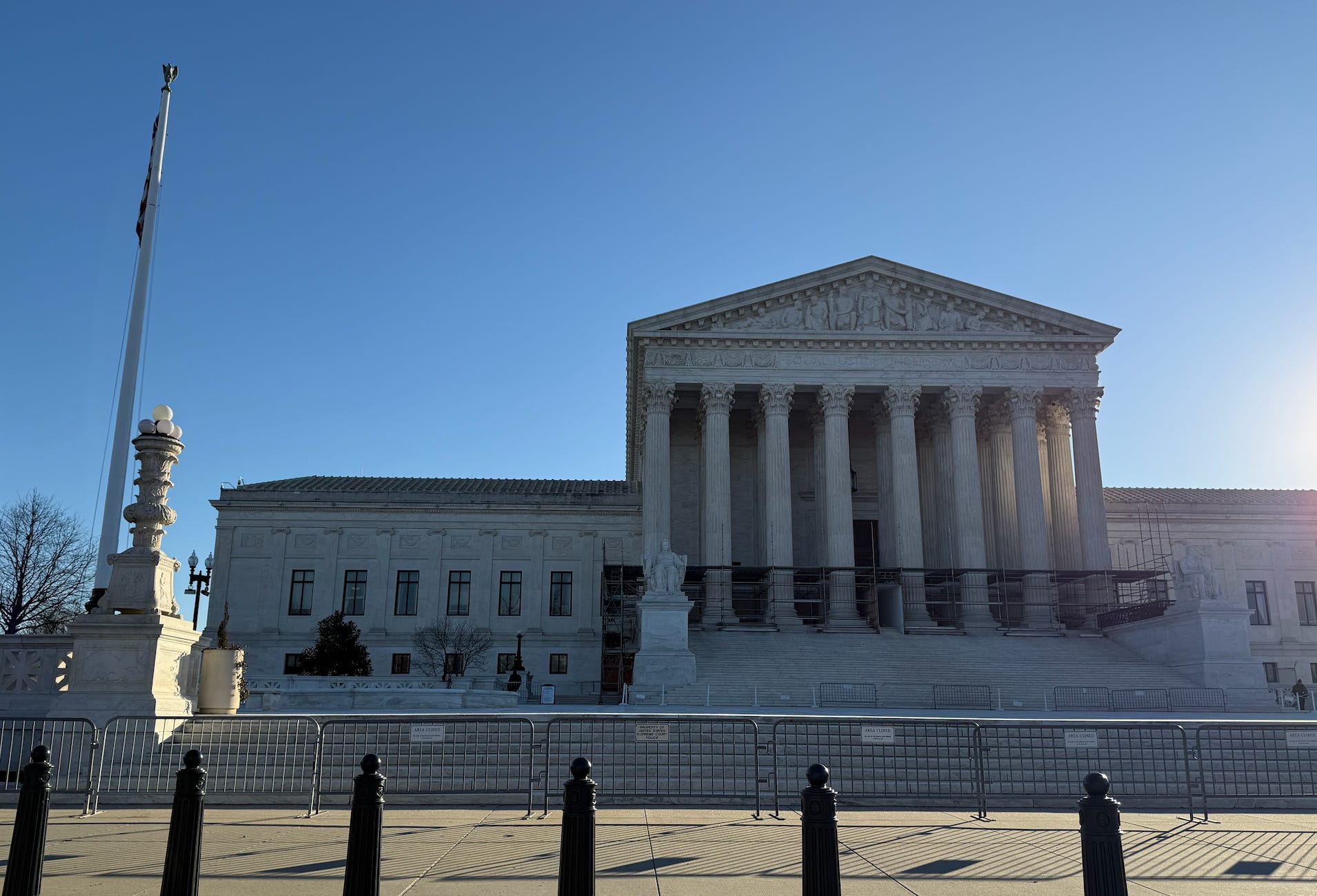
President Donald Trump doesn’t like rules.
Last May, in a shadow-docket order, the U.S. Supreme Court essentially told Trump, “Fire anyone you want, but not governors of the Federal Reserve Board.”1
Announcing that “the Fed is different“ carve-out was all but a dare to a man like Trump, and, on August 25, he tried to fire Lisa Cook as a governor of the Federal Reserve Board, via a letter in a Truth social post.
As her lawyers wrote in filing a lawsuit to stop Trump’s effort, “This case challenges President Trump’s unprecedented and illegal attempt to remove Governor Cook from her position which, if allowed to occur, would the first of its kind in the Board’s history.“
After two quick hours of arguments on Wednesday, the Supreme Court appeared almost certain to allow Cook to remain in office at this time — although it could send the case back down to let lower courts to fully consider Cook’s case while she remains in office or to require Trump to provide Cook with an opportunity to respond to the president’s purported reasons for firing her.
It was “an extraordinary application” as Cook’s lawyer, Paul Clement, told the justices at one point of DOJ’s request.
With this president, many have been saying that a moment like this was inevitable. More than that, though, it was the combination of a president like Trump with this court’s recent executive authority expansion that brought us to Wednesday.
Despite that expansion, though, it was an extraordinarily difficult argument for Solicitor General John Sauer — due to the pushback and skepticism he faced from across the bench.
The moment, and questions raised, were made all the more stark not only by Cook’s presence in the courtroom, but also by the presence of Fed Chair Jerome Powell — another target of Trump’s ire and the subject of a highly questionable Justice Department investigation.
In the matter before the justices, two lower courts backed Cook in preliminary rulings — blocking Trump’s firing from being given any effect during litigation.
Then, the Justice Department, as it had done in other firing cases, ran to the Supreme Court seeking a stay of the lower-court orders. Unlike in those other firing cases, however, the Supreme Court here did not grant the requested stay — instead deferring a ruling on the shadow-docket request in an October 1 order and setting it for oral argument in January.
Those arguments happened on Wednesday morning, and, it turns out, the Supreme Court appears to have meant what it said last May: The Fed is different.
If the May order detailing the Fed carve-out (regardless of how unprincipled it might be) was strike one and the October order deferring a ruling on the stay request was strike two, then Sauer’s time at the podium on Wednesday was strike three.
Sauer, Trump’s former personal lawyer, was aggressive in argument, combative in tone, and eager to repeatedly speak over justices (all women justices, by my count) trying to ask questions. After Sauer did this with both Justices Sonia Sotomayor and Amy Coney Barrett, this behavior eventually led Chief Justice John Roberts to step in and tell Sauer to let Justice Ketanji Brown Jackson speak.
“Counsel,” Roberts said, “please allow the Justice —”
At which point Sauer said, “I’m sorry.”
It was an unusual moment for any advocate before the Supreme Court, but almost unheard of for the Chief Justice to have to step in and correct the behavior of a Justice Department lawyer — let alone the solicitor general. (Notably, there were two former solicitors general also at argument on Wednesday: Justice Elena Kagan and Clement.)
Sauer’s interruptions, though not substantive, were, in their way, an echo of the reason we were in court on Wednesday.
What are rules for an administration that doesn’t let rules control its actions?
On Wednesday, the court appeared to have reached a similar point with Trump as Roberts had reached Sauer: Trump’s behavior has led the court to step in.
Sauer’s failure to convince the justices of his and Trump’s position as to the president’s effort to fire Cook was clear throughout the arguments.
Unlike the other firing cases, the Trump administration is not in court challenging the for-cause removal requirement for Fed governors. Instead, they are arguing that Trump has cause to fire Cook based on allegations of mortgage fraud (that Cook’s lawyers have questioned). Those allegations, Trump wrote in his firing letter, amount to “deceitful and potentially criminal conduct” or, at least, “gross negligence in financial transactions.“
Sauer was attempting to argue three main points: (1) Cook has no right to a hearing to counter the allegations or standards applied; (2) courts have no authority to review Trump’s cause determination; and (3) courts can’t order reinstatement by way of a preliminary injunction and can’t issue final relief by way of mandamus against the president.
Justices across the board were skeptical of all three points, and, on top of that, questioned whether the Trump administration could show it would face irreparable harm necessary to get the “emergency” relief sought here, what the public interest is, or even why the case was being rushed forward in this way.
It was, in so many ways, an upside-down world when it came to the Republican appointees. On Wednesday, they understood the problems with the expansive executive powers they’ve been advancing with gusto throughout the time of Trump, they understood that not everything that the federal government does is “executive,” and they understood the need to let lower courts actually consider cases before the Supreme Court upsets the apple cart with a shadow docket order.
Most directly, of course, it was a sharp contrast the arguments over Trump’s effort to fire Rebecca Kelly Slaughter as a member of the Federal Trade Commission back in December. While Sauer had strong support from the justices that day, arguing that the president must be able to fire the heads of virtually any agency because “democratic accountability” is more important than Congress’s decision that an agency’s leaders should be protected from being fired by the president for no reason — particularly under the “unitary executive theory” advanced by many on the right.
All of that, the Republican appointees made clear on Wednesday, goes out the window when “monetary policy” is at issue. They were joined by the Democratic appointees, who have questioned the expansion of presidential power in many areas — and in all of these removal cases.
Roberts, early on, questioned both the facts before the court and the implications of that record — or, more precisely, the lack of implications in light of DOJ’s unreviewability argument.
“You began by talking about deceit. Does what you said … apply in the case of an inadvertent mistake contradicted by other documents in the record?” Regardless of how significant the mistake is, Roberts continued, “I gather, under your position, it doesn’t make a difference, right? In other words, the determination of cause is unreviewable, right? So it doesn’t make a difference whether this was an inadvertent mistake or whether it was a devious way to get a better interest rate.”
If a hearing is needed — an opportunity for Cook to respond to the allegations and cause claimed by Trump for her removal — Justice Neil Gorsuch asked about what sort of hearing would be needed. Kagan picked up on Sauer’s answer, asking, “Do I understand you, General … to continue to maintain that, in fact, there is no requirement for notice and opportunity for a hearing? Is that right?”
Sauer responded, “Absolutely. Yes.”
Gorsuch also questioned Sauer’s arguments against a remedy being available, asking, “[I]f you think mandamus doesn’t apply to the president at all, ever, how could you ever test the things you say can be tested?” — noting that Sauer had acknowledged, “[The president] has to remove for cause. He can’t remove for policy disagreements.”
Roberts had already challenged this even more bluntly: “It seems to me that if there is any level of cause, and you indicate that there is some level of cause, right, well then you can’t be right about the idea that courts can’t order anybody who’s been removed to be reinstated.”
When Sauer insisted that the law’s limits that he was arguing for — a “hard-fought compromise” he claimed — meant that this was a “removal standard that protects [Fed] governors from removal for a policy disagreement,” Jackson pushed back.
“But it only protects them insofar as the president’s determination about cause is reviewable and based on actual evidence that has been established,” she told him. “It doesn’t protect them if the president can just make it up.“
Barrett, later joined by Jackson, raised questions specific to the stay request posture — how the public interest and irreparable harm figure into the court’s decision.
“[W]e have amicus briefs from economists who tell us that if we grant you your stay, that it could trigger a recession,” she noted. “How should we think about the public interest in a case like this?” — later suggesting that such a risk should “counsel … caution” on the court’s part at this stage.
Following up on Barrett’s questions, Jackson asked about the harm if a stay isn’t granted here. Sauer said that the irreparable harm would be “grievous irreparable injury to the public perception to the Federal Reserve of allowing her to stay in office,” prompting Jackson to respond, “You have evidence related to the public perception, or is this just the President’s view?“
Sauer’s reply: “The President has made that determination.“
This eventually led to one of the more absurd, only-in-the-Trump-era exchanges of recent Supreme Court memory — looping back to the question of what opportunity Cook should be given (if any) to challenge Trump’s allegations against her.
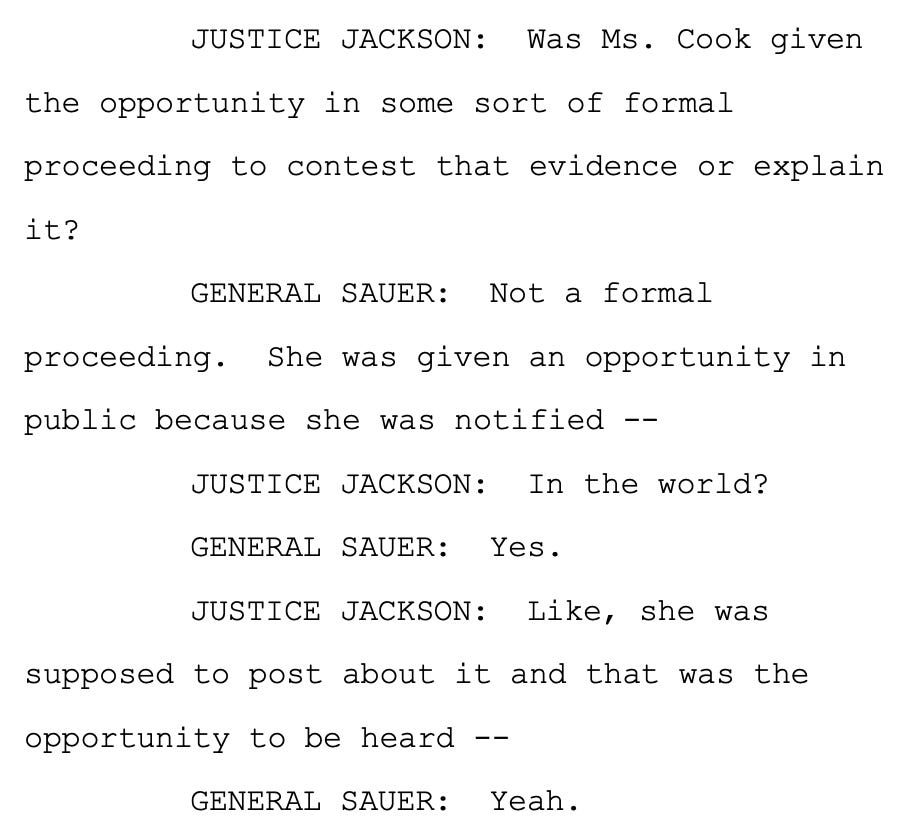
“Yeah.”
That wasn’t all. After all of the cases to have led to orders on the shadow docket in 2025, Justice Sam Alito questioned the speed here.
“Is there any reason why this whole matter had to be handled by everybody, by the executive branch, by the district court, by the D.C. Circuit, in such a hurried manner?” he asked Sauer. “[Y]ou began by laying out what you claim to be the factual basis for the for-cause removal. But no court has ever explored those facts. Are the mortgage applications even in the record in this case?”
In another Trump-era-only response, Sauer told Alito:
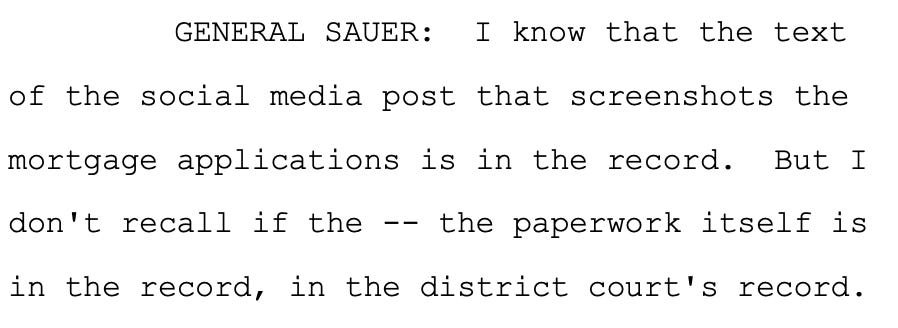
It was not persuasive.
Throughout it all, an exchange with Justice Brett Kavanaugh was perhaps the most striking sign of where things stood on Wednesday. Noting that DOJ wasn’t challenging the constitutionality of the for-cause removal protections here, providing independence for the Fed, he asked Sauer, “What, in your view, is the purpose of that independence?”
After some pushing, he got Sauer to acknowledge that, undisputed by the government here, amici argue that “there is … a long tradition of having this exercise of monetary policy be exercised independent of executive influence.“
Ultimately then, and pulling together the other points made by his colleagues throughout Sauer’s time at the podium, Kavanaugh concluded, “[Y]our position that there’s no judicial review, no process required, no remedy available, a very low bar for cause that the president alone determines, I mean, that would weaken, if not shatter, the independence of the Federal Reserve that we just discussed.”
The best Sauer could muster to that was, “We disagree with that.“
Even in the first question of the morning, Justice Clarence Thomas asked a question that — regardless of where he comes out on the case — showed an understanding that everything that Congress puts into place needn’t be a part of the executive branch.
“On what basis,” he asked Sauer, “are we to conclude that the Federal Reserve is an executive branch agency and, hence, that the President does have removal authority?”
But, throughout his hour of arguments, that open-ended moment was as good as it got for Sauer.
In a sign of how far the argument had gotten away from Sauer, most of Clement’s time at the podium was spent in friendly debate with the justices over the contours of how the case should proceed, backup arguments, and — in one instance — “the backup to the backup” argument.
And while there was certainly pushback on some of Clement’s arguments, it was not overarching skepticism he was facing. It was, for the most part, an effort to figure out how his argument that Cook needs notice, an opportunity to provide evidence, and “some effort to keep the final decisionmaker from prejudging the issue” would work in practice.
The former solicitor general in the George W. Bush administration, Clement was regularly engaged in joking laughter with the justices.
There was no laughter during Sauer’s argument.
The Supreme Court’s Republican appointees did this on the shadow docket even though the court only heard arguments over whether it should overturn a 90-year-old precedent to make the first part of that statement — “Fire anyone you want” — true in December. It has not yet ruled on that case.
I listened to the whole thing, and you've perfectly captured all the facts, nuance, and hilarity that I heard! Thank you for a great summation!
I thought it was notable that Roberts kept returning to the merit of the case against Cook. Not sure if this will find its way into the opinion, but seemed like he was clearly pointing out the absurdity of defining the mortgage application error as gross negligence.