

SCOTUS appears ready to give Trump greater firing powers, over sharp liberal warnings
The Republican appointees are almost certain to overturn a 90-year precedent, as Trump wants. Pushing back, Sotomayor told DOJ: “You’re asking us to destroy the structure of government.”

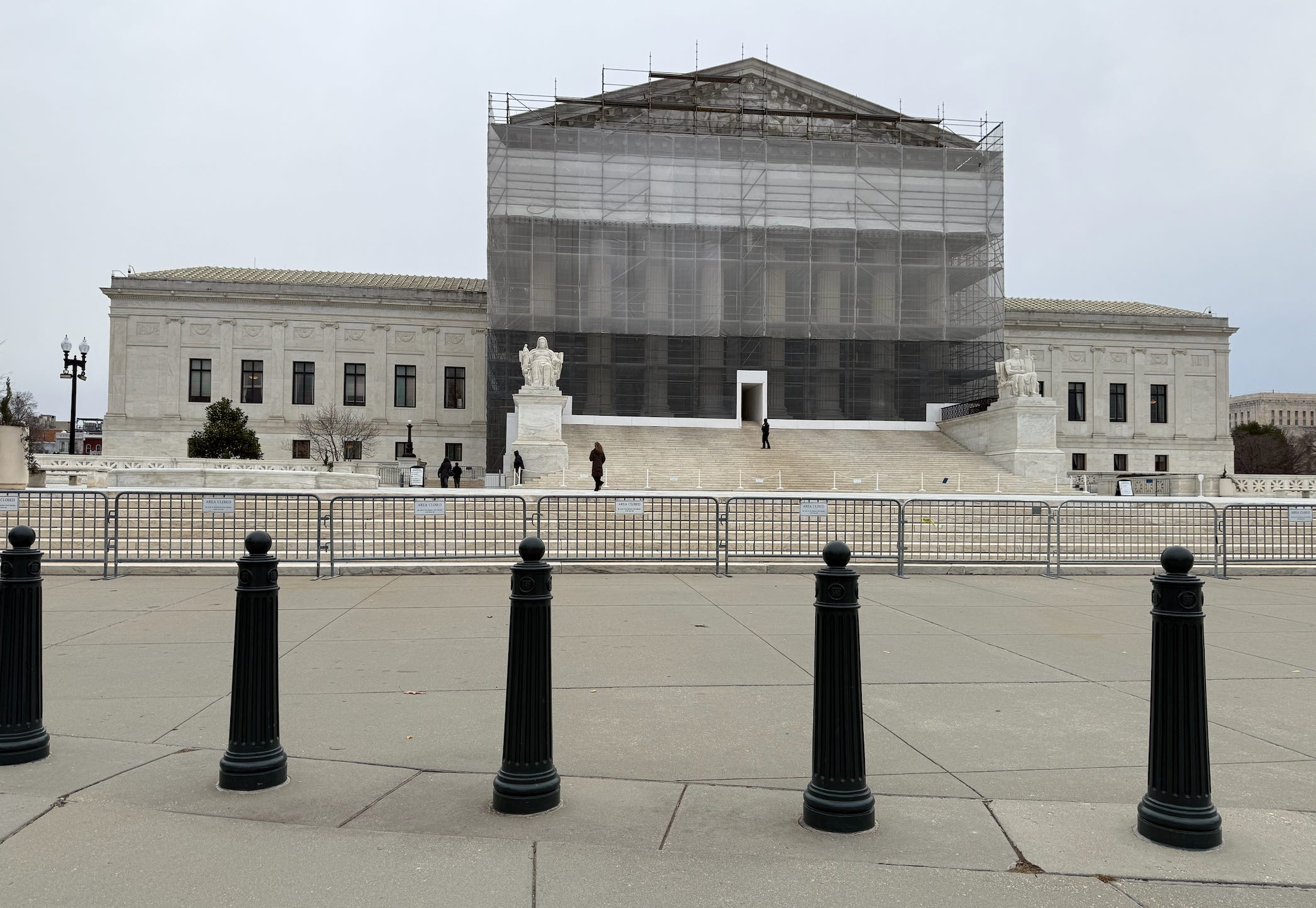
The outcome of Monday’s oral arguments at the U.S. Supreme Court has been fairly clear since the summer: Humphrey’s Executor, a unanimous 1935 decision upholding Congress’s power to restrict the president’s ability to fire independent agency heads, is going to be overturned.
Justice Elena Kagan put the matter bluntly toward the end of Solicitor General John Sauer’s argument for the Trump administration, telling him that “the real-world reality” of his argument to overturn the precedent — given all of the laws passed since 1935 under the belief that such firings could be limited — would be “a President with control over everything, including over much of the law-making that happens in this country.“
It is, as described at Law Dork recently, that big of a deal.
Nothing that happened on Monday changed the almost certain precedent-destroying, government-changing outcome, telegraphed over the past months in a series of shadow docket rulings that allowed President Donald Trump’s firings of members of several multi-member independent agencies to take effect during litigation.
What did happen on Monday, however, represented an important move by the Democratic appointees at the court. The three liberal justices were on a mission: The public needed to know the extreme implications of the Trump administration’s argument that the president should be able to fire anyone he wants for any reason regardless of what the law says.
“You’re asking us to destroy the structure of government,” Justice Sonia Sotomayor told Sauer, who was previously President Donald Trump’s personal lawyer, minutes into his argument. “Where else have we so fundamentally altered the structure of government?“
Sauer had no specific response.
Although the case before the Supreme Court on Monday related specifically to Trump’s effort to fire Rebecca Kelly Slaughter as a member of the Federal Trade Commission, the same agency at issue in Humphrey’s Executor, Kagan noted, “[I]f you take your logic at face value, it seems to include a great many things. … Once you’re down this road, it’s a little bit hard to see how you stop.“
Kagan pointed to Article I courts, protections provided for inferior officers and civil service laws protecting federal employees across the government. When Sauer repeatedly said the Trump administration wasn’t challenging this or that hypothetical, Kagan eventually pressed him, “I know what you don’t challenge. You’re missing the point.“
After Justice Sam Alito followed up, asking about how the Supreme Court could distinguish certain non-Article III courts — he named the Tax Court, the Court of Claims, and the Court of Appeals for the Armed Forces — Kagan dropped back in, telling Sauer (and, indirectly, Alito), “Once you use a particular kind of argument to justify one thing, you can’t turn your back on that kind of argument if it also justifies another thing in the exact same way. … [P]utting a footnote in an opinion saying we don’t decide X, Y, and Z because it’s not before us doesn’t do much good if the entire logic of the opinion drives you there.“
The 90-year-old precedent Sauer asked the court to overturn, Humphrey’s Executor, has been scaled back over time, including in 2020’s 5-4 decision in Selia Law v. Consumer Financial Protection Bureau holding that the single-leader structure of the CFPB was unconstitutional. But, as Amit Agarwal argued for Slaughter, the court has never held that Congress couldn’t choose to include removal protections limiting the president’s ability to fire members of a multi-member, bipartisan commission — like with the FTC.
Justices Clarence Thomas and Brett Kavanaugh, joined by Alito, sought to push back on the liberal justices’ arguments about other implications of Sauer’s argument by challenging Agarwal on, as Thomas put it, “the logic“ of his argument. Thomas asked about single-member agencies, then Kavanaugh asked whether “Congress [could] convert” Cabinet agencies like the Commerce Department, Environmental Protection Agency, and others “into multi-member commissions“ — a question later picked up by Alito.
While those justices were pressing Agarwal on future hypotheticals, Sauer’s argument is, essentially, that Congress, the court before this year, and past presidents have all gotten it wrong.
Humphrey’s Executor, Sauer said, is an “indefensible outlier” that has led to a “headless fourth branch” of independent agencies. “Democratic accountability,” he argued, requires that the president, as head of the executive branch, be allowed to fire Slaughter for any reason — or no reason at all.
Justice Ketanji Brown Jackson — as she often does — stepped back the most, looking to constitutional structure and noting Congress’s power to create federal agencies and “determine their structure” in contrast to the fact that “[t]he Constitution does not speak specifically to” the president’s removal power.
“I’m trying to understand why you think that Congress is somehow less democratically accountable for the way in which it constructs these agencies and determines the term of office of the officers?” Jackson asked Sauer, pondering why the president needs to “control everything.“
This is the argument, and Sauer did not hide from it.
“Congress has a broad authority in structuring the federal government, but what it lacks authority to do is to create these headless agencies, agencies who have no boss and are not answerable to the voters,” he told her.
Talking about the real-world effects, however, Jackson told Sauer at the end of his arguments that she saw “Congress’s policy decision” in setting up independent agencies having been to prevent “having a President come in and fire all the scientists and the doctors and the economists and the Ph.D.s and replacing them with loyalists and people who don’t know anything” because that “is actually not in the best interest of the citizens of the United States.”
After some back and forth, Sauer responded in a way that made clear the limitlessness of his argument, saying that “Congress cannot violate the separation of powers and threaten all of our liberties in the way that it structures the government and has done so here.”
The two-and-a-half hours of arguments operated on three levels on Monday — about broad constitutional principles, about the Trump administration, and about the justices themselves.
At one point, referring to opinions of a century ago from Justices Oliver Wendell Holmes, Louis Brandeis, and Joseph Story, Sotomayor told Sauer, “You’re suggesting that we have a better view than either Congress or all of those previous justices about what absolute executive power means. That’s basically your argument. All those justices in the past have been wrong and the current ones are right or at least the current ones of the Seila Law majority.”
It was as sharp a challenge to today’s six-justice Republican appointee majority as I can recall seeing in arguments.
Ultimately, though, the six-justice majority is just that — the majority — and the FTC’s independence is likely coming to an end 111 years after it was formed and 90 years after Humphrey’s Executor.
The main question will be what legal rationale controls the opinion.
Both Chief Justice John Roberts and Justice Amy Coney Barrett asked questions suggesting that — Kagan’s “footnote” comment notwithstanding — that they might seek a way to limit the fallout from the opinion.
Roberts focused on function — describing how certain cases and areas of the federal government might not be directly affected by a decision overturning Humphrey’s Executor — and Barrett focused on what executive authority would be involved — the Vesting Clause, Take Care Clause, or Appointment Clause — to describe limits that could be built into an opinion.
But, that would just be this decision. And Sauer was absolutely unwilling to say that no future challenge would seek to go even further.
When the independence of Article I courts was being discussed, for example, Sauer told Sotomayor, “As to the non-Article III courts, we haven’t challenged the removal restriction as to the non-Article III courts in this case.“
Sotomayor’s response served as the warning for the day: “Not yet. Not yet. Not yet.”
This is not even the last case on the president’s removal powers currently before the court, as came up repeatedly at arguments.
In January, the Supreme Court is set to hear arguments over Trump’s effort to fire Lisa Cook as a governor on the Federal Reserve Board, which the court has suggested it might treat differently. Additionally, and as Roberts noted, there is the case of Shira Perlmutter, the head of the Copyright Office who the Trump administration is seeking to fire. That case — which includes the added wrinkle that the Copyright Office is a part of the Library of Congress — has been put on hold while the Supreme Court decides the Slaughter and Cook cases.
There is a simple clause in article I that grants congress the power “To make Rules for the Government” that the current majority thinks doesn’t apply to the rules they have made regarding hiring and firing rules. It takes pretty arrogant mendacity to claim there is a way around that simple clause. The Executive is required to execute the rules. Congress makes the rules. There is a clear intent to this structure. These fools are trying to wreck that structure.
Justice Sotomayor is exactly right—Trump (and his rubber stamp SCOTUS) have assumed that their self-interests override nearly a century of Supreme Court decisions … without any justification whatsoever. The Right is right eternally?