


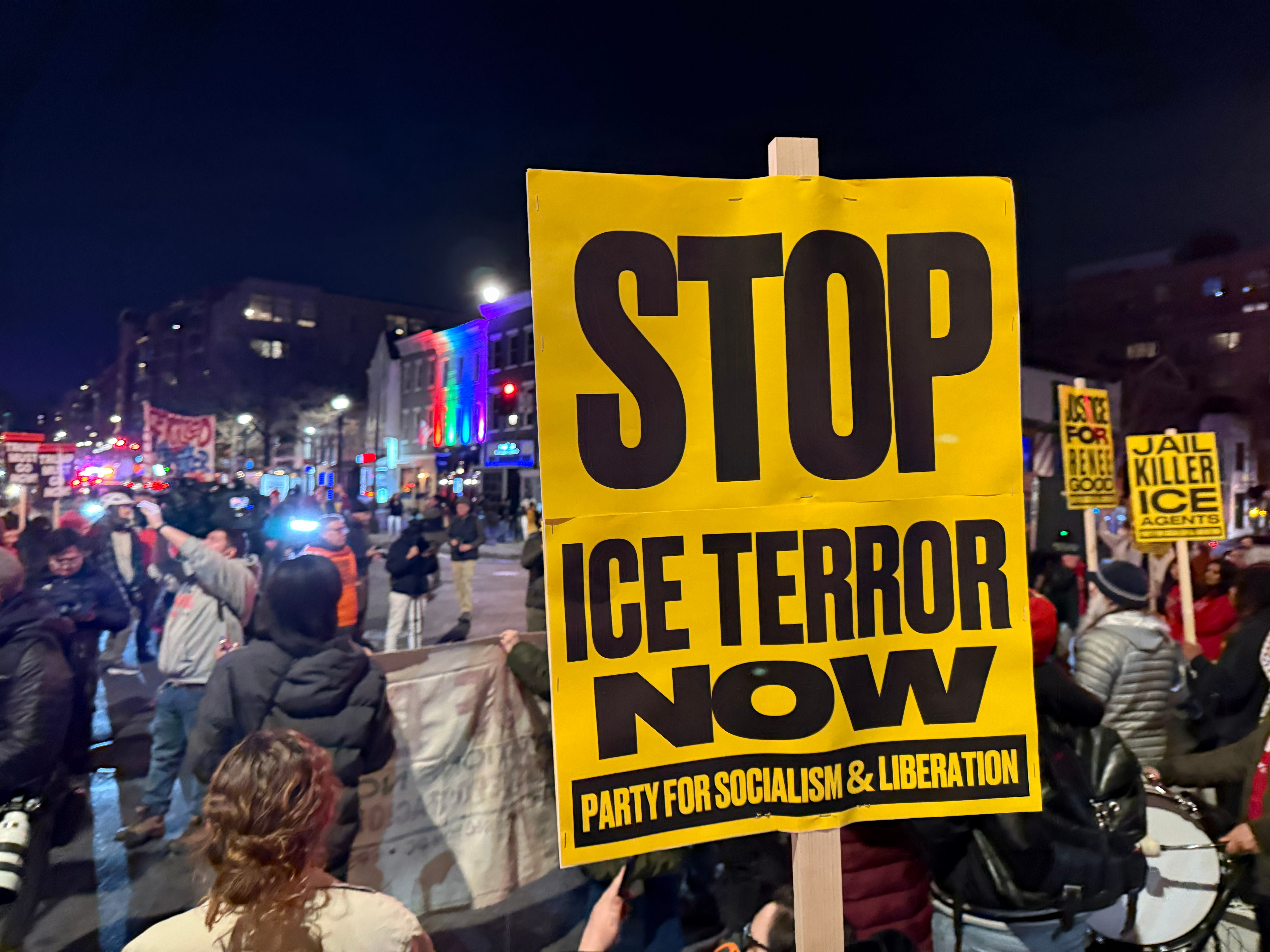
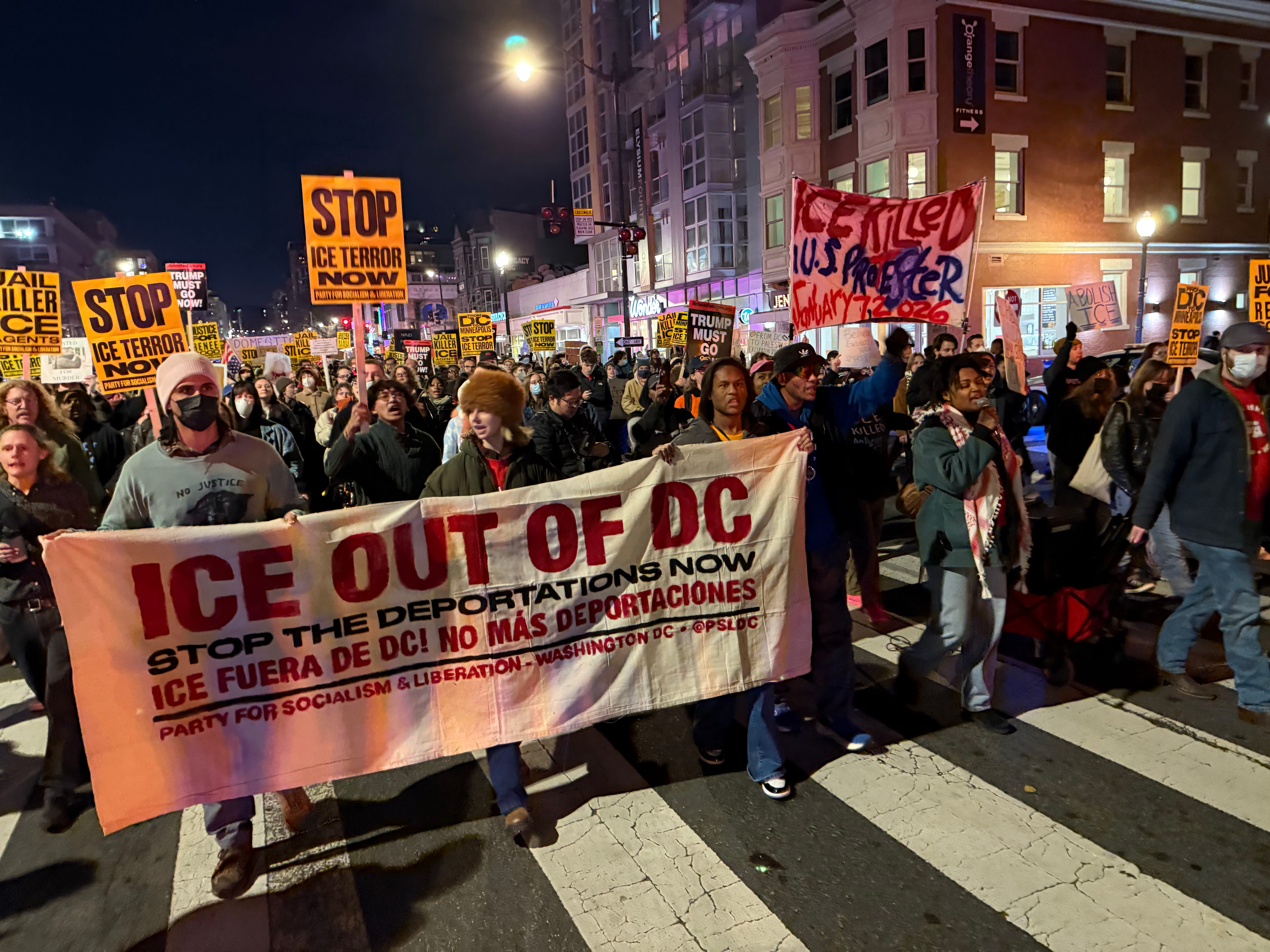
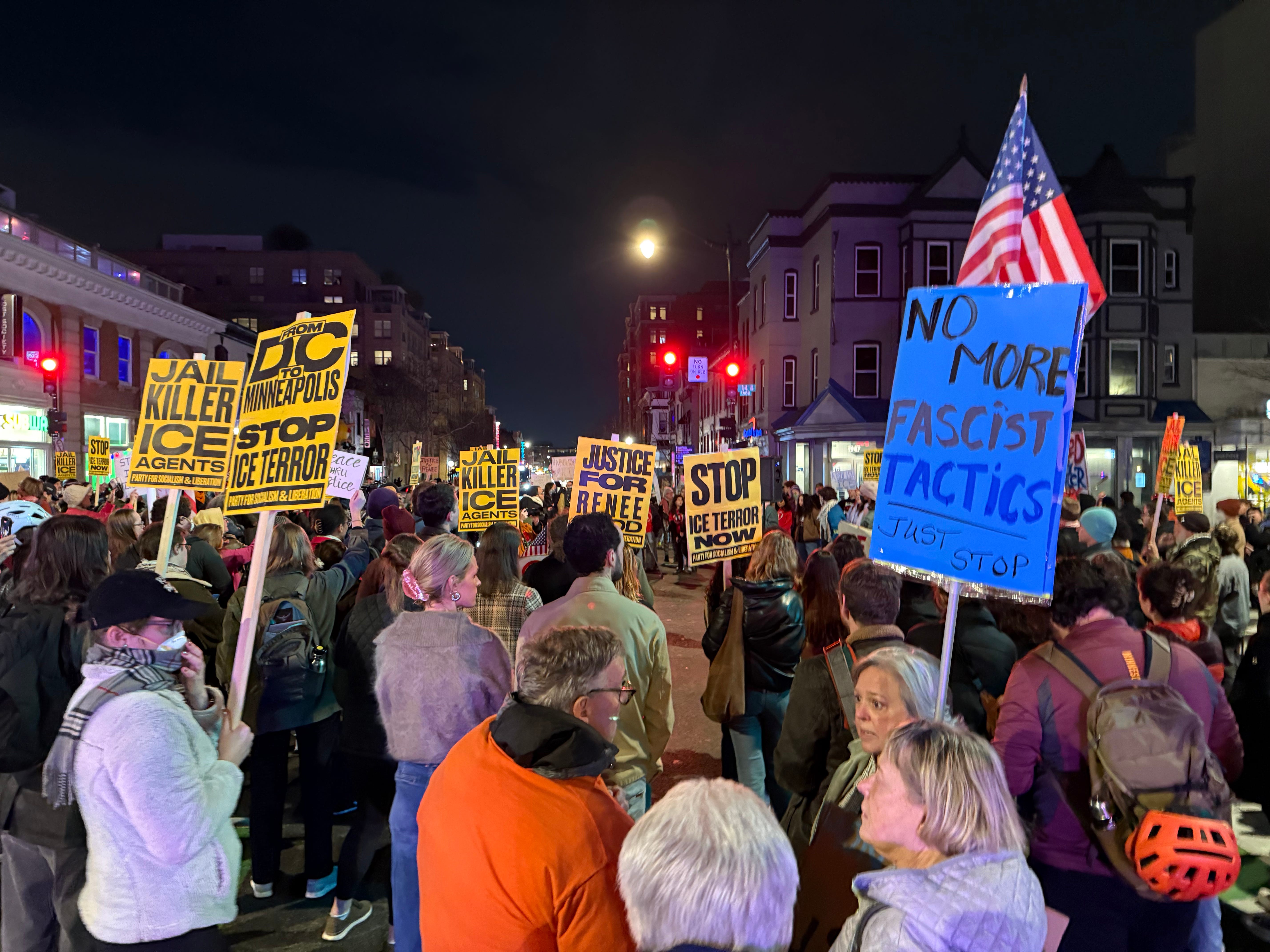
A day after an ICE agent killed Renee Nicole Good in Minneapolis, protesters in Washington, D.C. closed down the busy intersection at 14 and U streets for roughly an hour — with the crowd regularly chanting “ICE out now” in between short speeches from a handful of activists — before marching down 14th Street.
The historic corner, the center of so much of D.C.’s modern history — civil rights protests, celebrations, and riots; tough times, community growth, and gentrification; and so much more — is captured well in Marisa Kashino’s 2018 Washingtonian story on “The Reinvention of 14th Street.”
In Kashino’s sprawling story, she quotes Courtland Cox, one of the Student Nonviolent Coordinating Committee organizers who co-founded the Drum and Spear bookstore at 14 and Fairmont streets: “Fourteenth Street was the incubator for people thinking much differently about the world.”
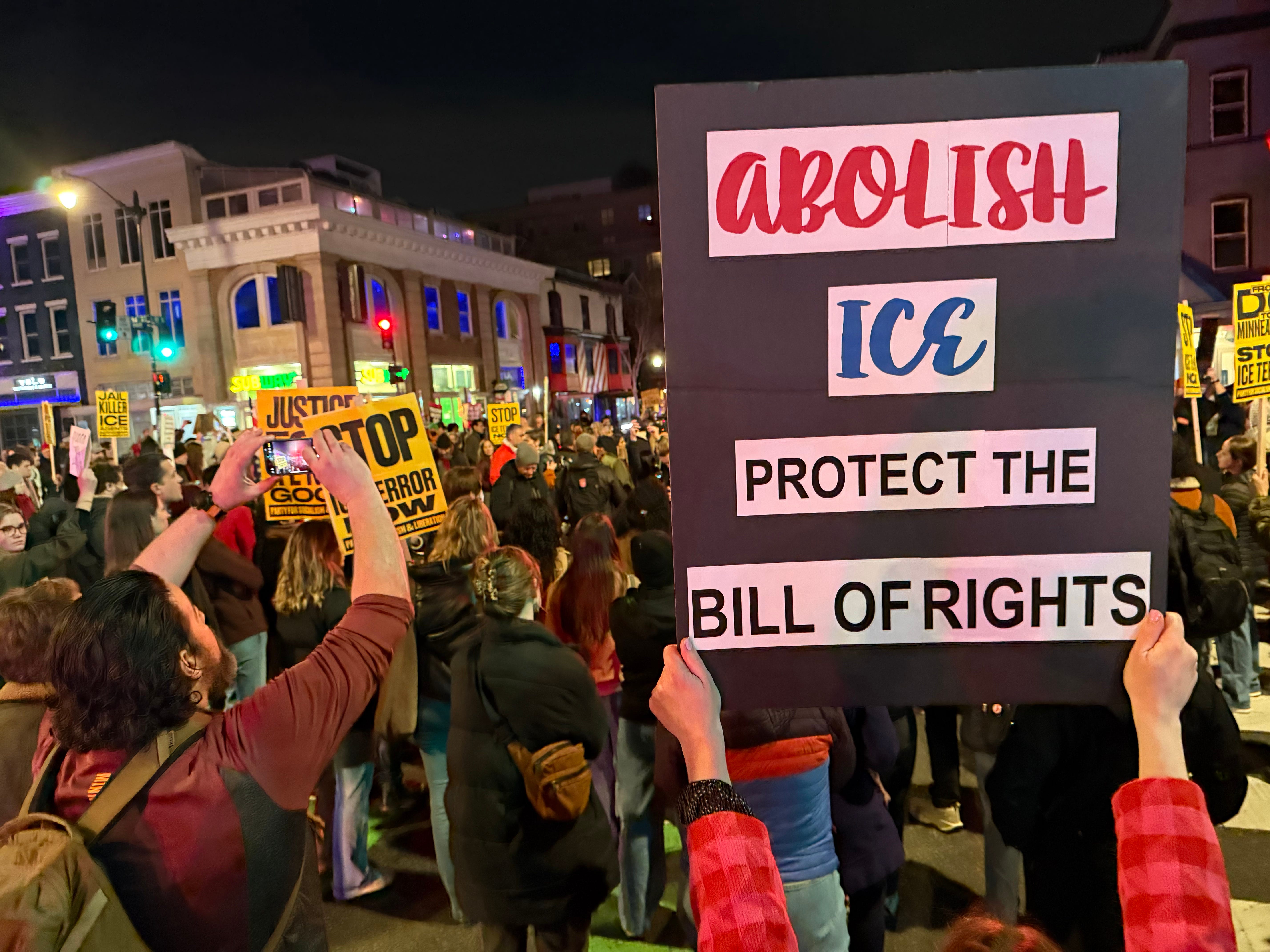
That spirit remains — and was front and center on Thursday evening — as speakers demanded change and questioned America’s leaders, all while the crowd chanted about how immigrants are and will remain an essential part of this community.
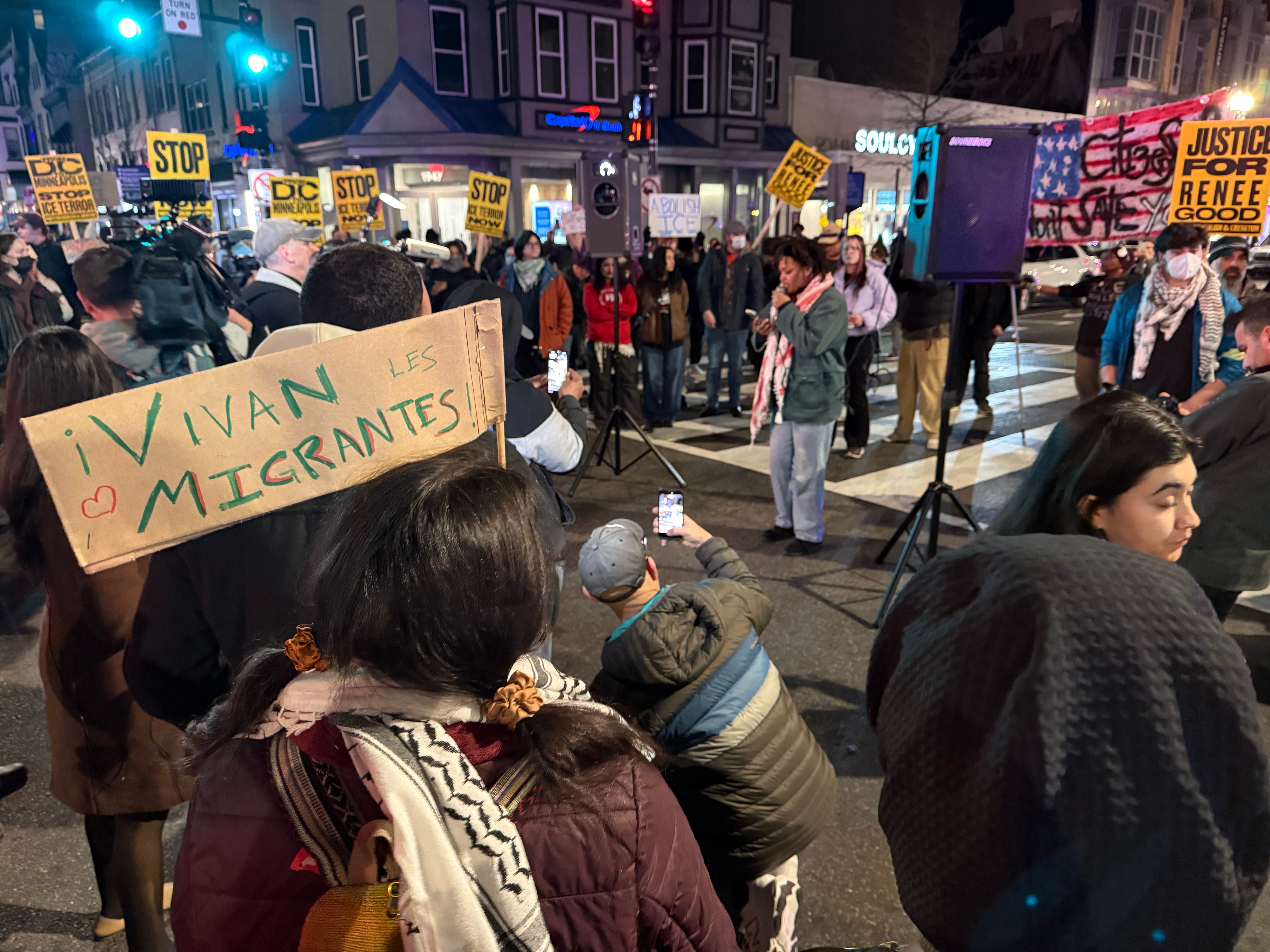
“No hate, no fear,“ the crowd shouted. “Immigrants are welcome here.”
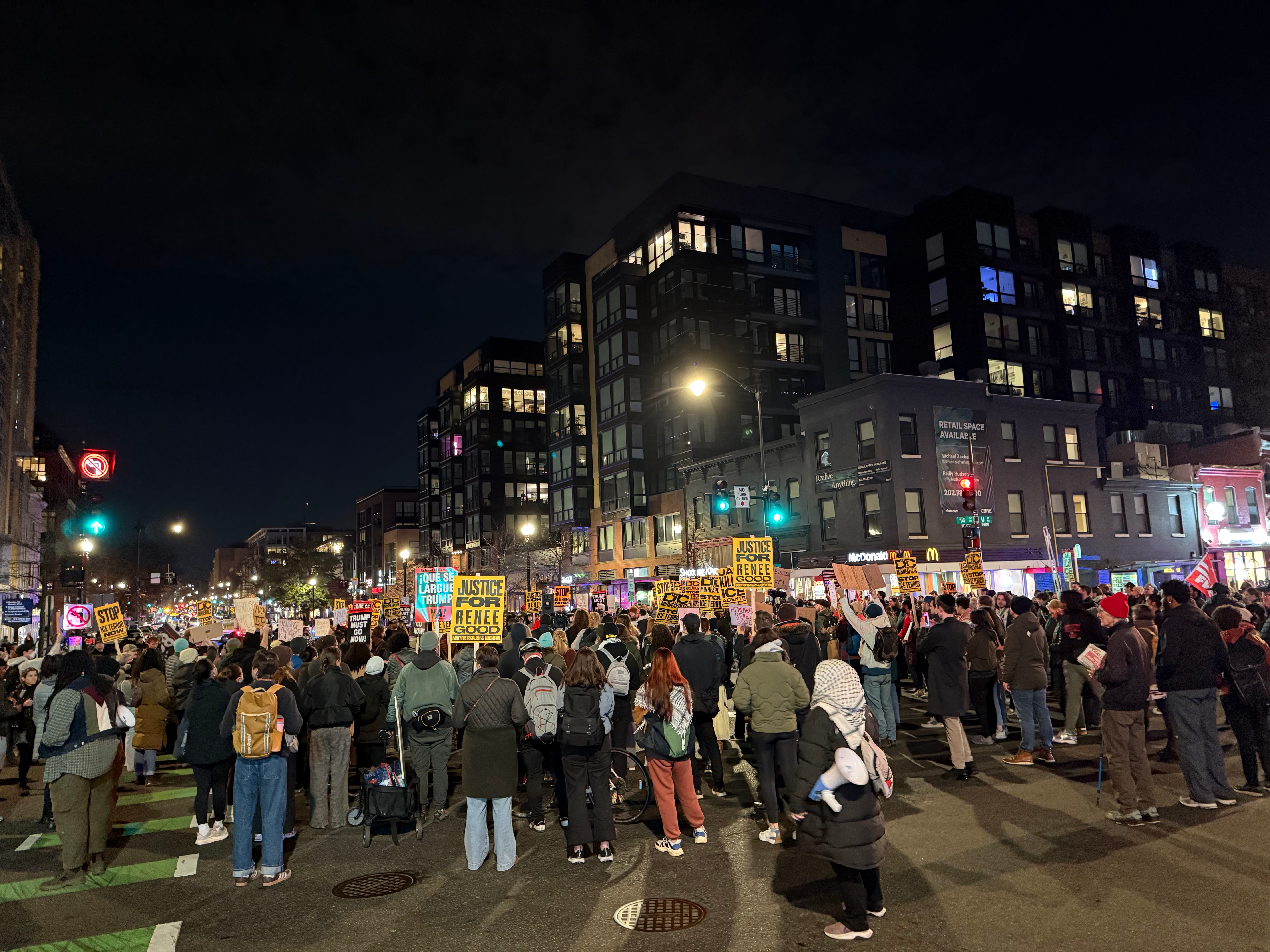
As the crowd headed down 14th Street, another chant summed up a reason why people gathered across the country on Wednesday and Thursday — in Minneapolis, to be sure, but also in other cities near and far.
“The people, united, will never be defeated.“
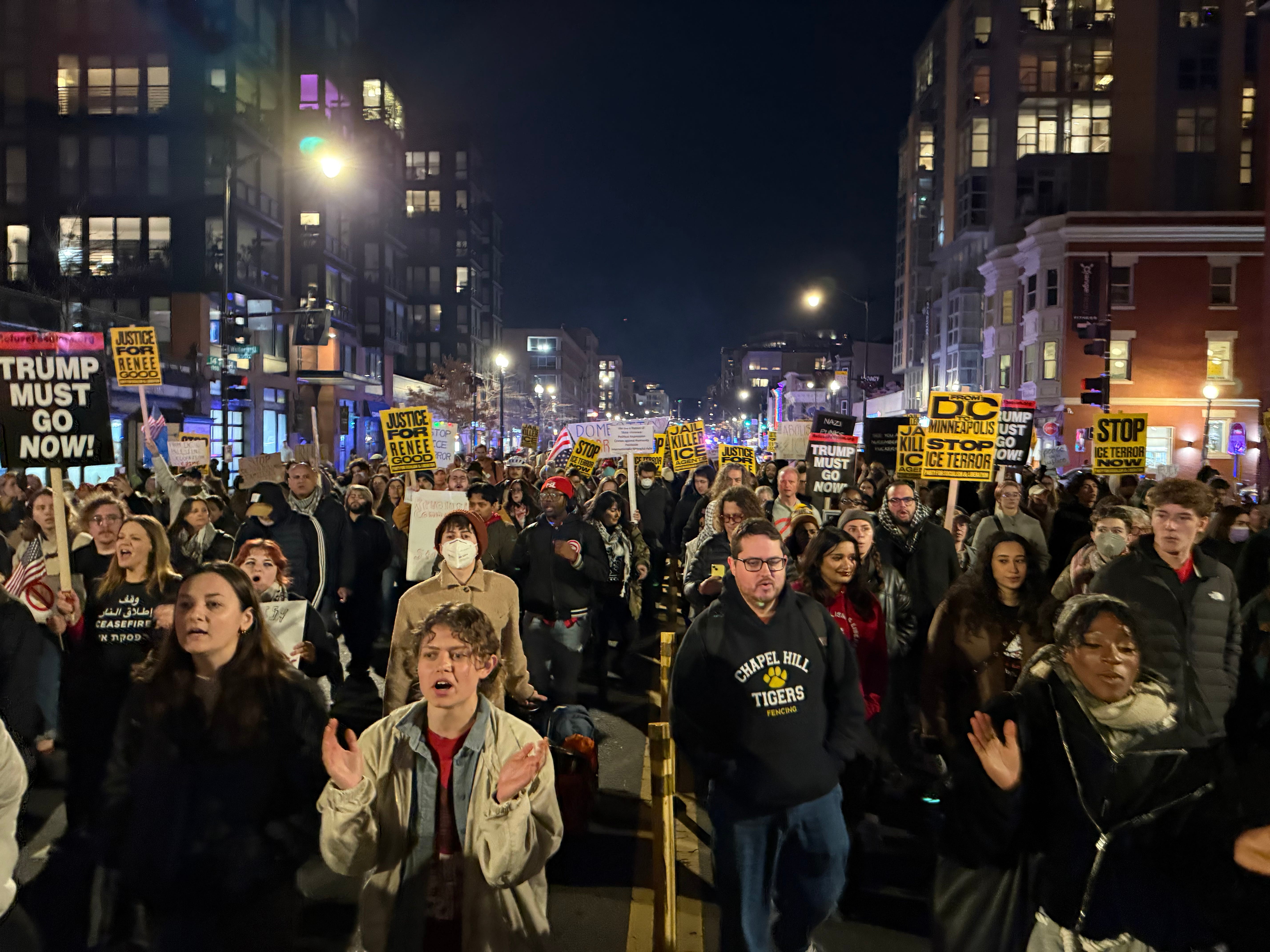
Despite that power, however, the precarious reality of this moment could not be escaped.
As the crowd marched down 14th Street, news was breaking about another shooting — Thursday’s shooting by U.S. Customs and Border Protection agents of two people in Portland, Oregon.
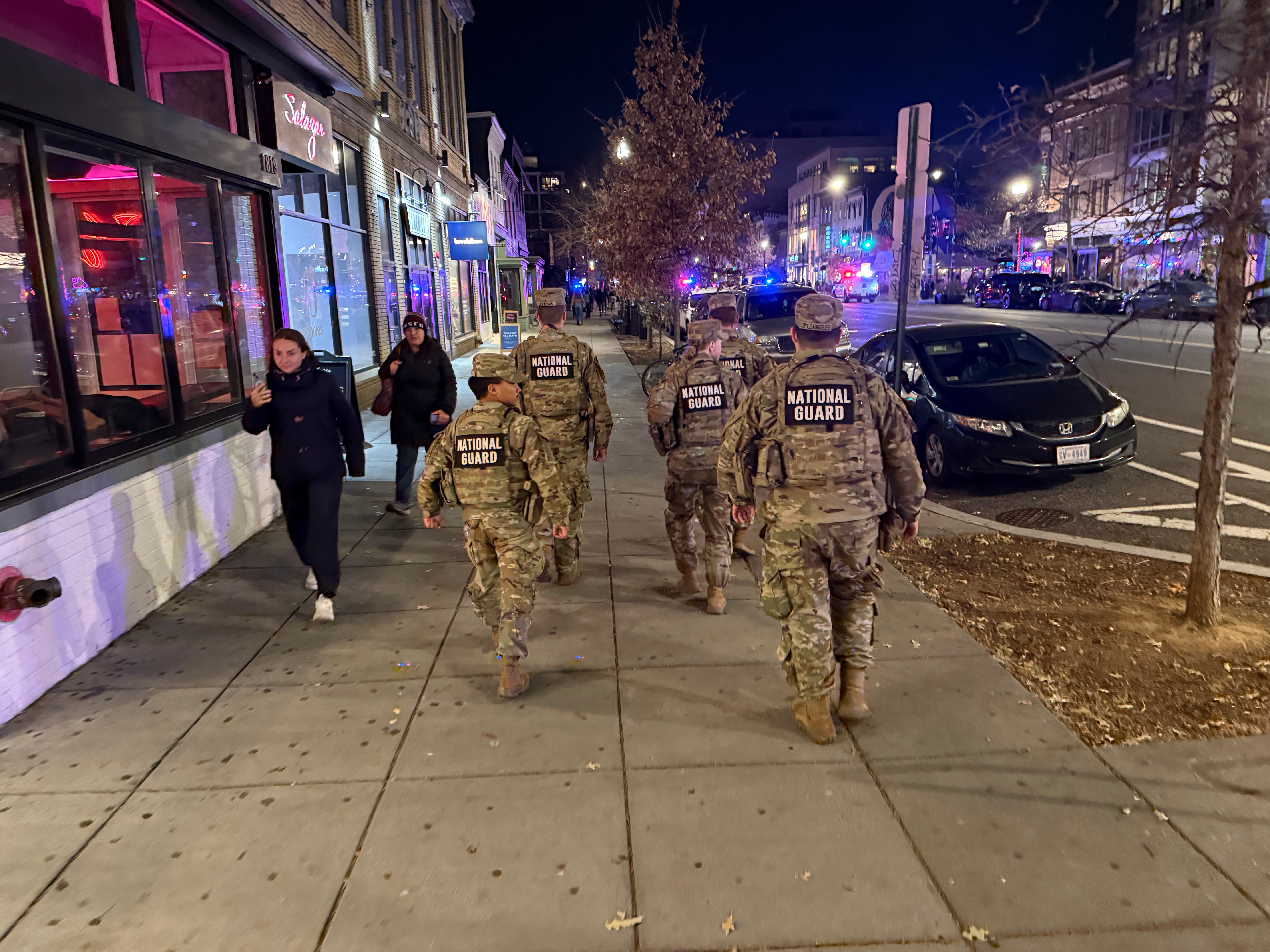
And, right in D.C., as the protesters headed south, several National Guard troops walked down the the sidewalk on 14th Street, still patrolling the neighborhood nearly five months after President Donald Trump announced their deployment — and after the U.S. Court of Appeals for the D.C. Circuit blocked a district court order that would have ended the deployment in December.
D.C. residents are not new to protests or marches, and as they continued down 14th Street, they passed by Nia Keturah Calhoun’s mural of Justice Ketanji Brown Jackson, the first Black woman justice, and Judge Constance Baker Motley, the first Black woman federal judge.
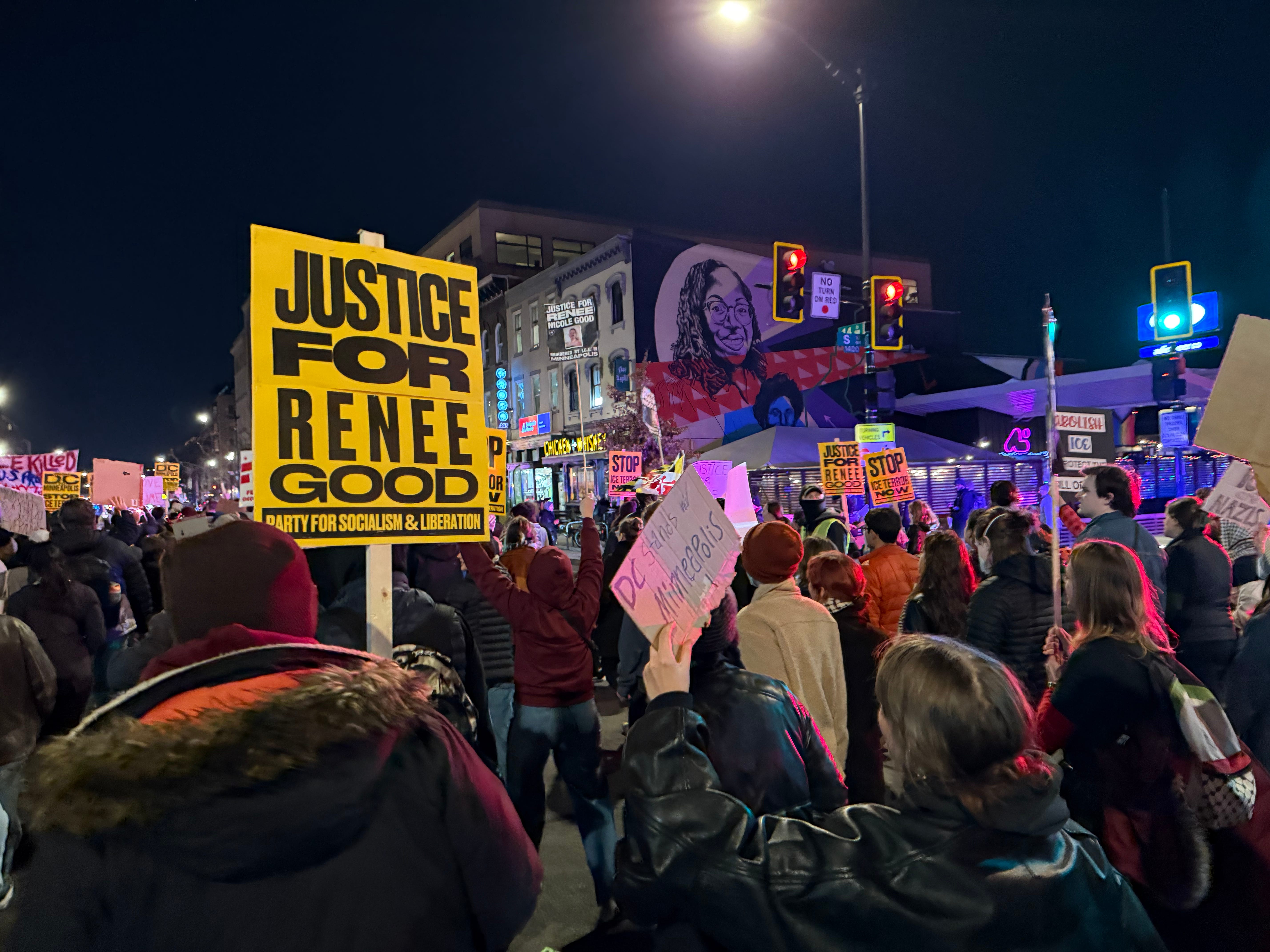
It was a moment in time that captured a constant, complicated reality of this city.
In D.C., the past and the present, the personal and the political, the national story and residents’ daily lives seamlessly, unapologetically, and often unavoidably intermingle. And they do so in a city that is both home to America’s government and to residents who lack many rights that others across that nation take for granted.
Protests are spreading to every major city tonight.
Thank You, Chris Geidner. Needed to see this, especially tonight.