

As the Trump admin begins a new prosecution in Minnesota, the "Broadview Six" fallout continues
Fifteen people were charged Tuesday as part of the Trump admin's effort to go after its “antifa” boogeyman. Also: The "Broadview Six" aren't going away.

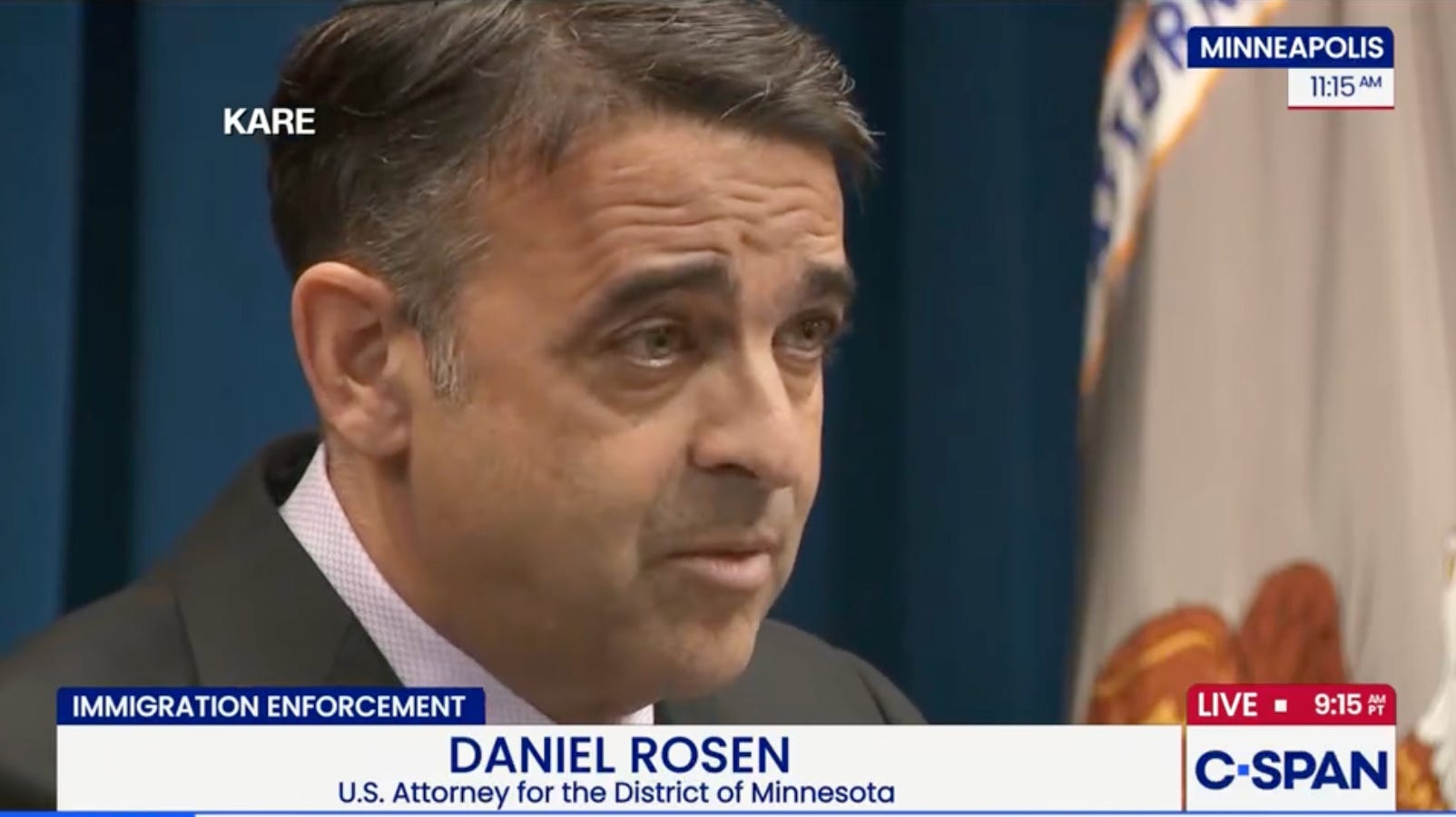
The Trump administration brought a new mass-indictment on Tuesday, charging 15 people for what Minnesota U.S. Attorney Daniel Rosen described as a “conspiracy to impede or injure federal officers” in those officers’ immigration enforcement duties as part of Operation Metro Surge and its aftermath.
The indictment from the federal prosecutor’s office that has lost many lawyers and faced court pushback describes events unfolding over several months, conveniently beginning on January 11 — four days after a federal officer killed Renee Good in the midst of the administration’s extremist immigration enforcement.
The indictment never names Good or mentions her killing, instead beginning the timeline laid out with, “On or about January 11, 2026, DAVIS moderated an event called ‘Emergency Meeting on Resistance to ICE Operation’ on Central Avenue Southeast in Minneapolis.”
There is no mention of why an “Emergency Meeting” might have been needed or called. When asked why these charges were being announced when no charges have been brought relating to the killings of either Good or Alex Pretti, Rosen simply said those investigations are ongoing.
This indictment, both Rosen and the unsealed indictment itself made clear, is an effort to go after the “antifa” boogeyman that members of the Trump administration have sought to turn into both an identifiable organization and a massive conspiracy — finding a handful of people to scapegoat with charges out of the mass protests that took over the Minneapolis-St. Paul region during that time. It also appeared to be an effort to find some new prosecution — any new prosecution — in the wake of the misconduct-related dismissal of the case against the Broadview Six in Chicago. (More on that below.)
The result appears to be a slipshod indictment that combines — even if as alleged — a handful of low-level disturbances to law enforcement (that could have been individually charged) with effective organizing and mass protest and throws in a bunch of MAGA fever-swamp paragraphs to create a 94-page indictment that was filed either with the prosecutor’s name redacted or the line left unsigned.
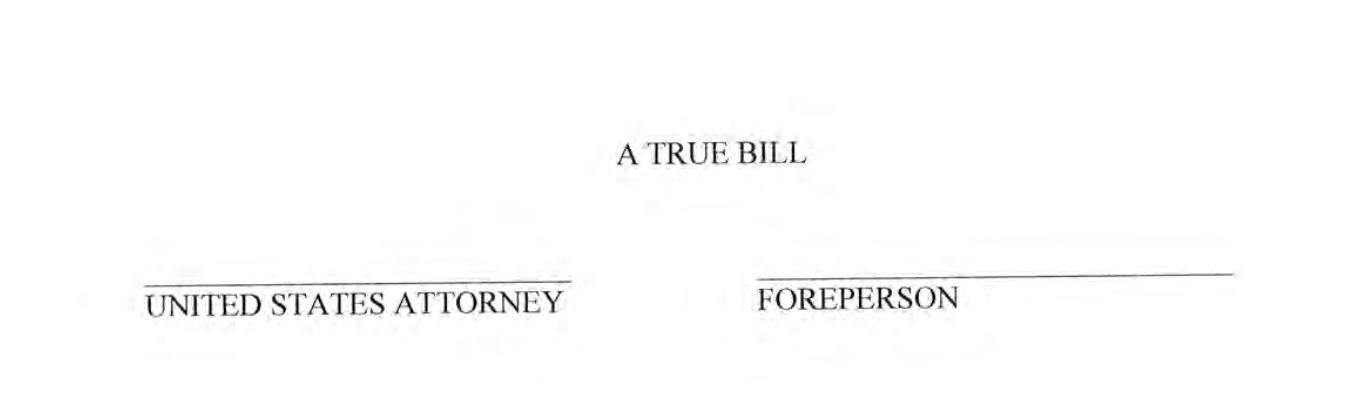
The alleged “conspiracy“ largely consisted of Signal chats identifying federal officials — who often were unidentified — and where those federal forces were going to violently take people off the streets and even out of their homes (regularly using unconstitutional methods) and related protests at the Whipple Federal Building that served as a primary ICE facility during Operation Metro Surge.
The indictment fails to note that the federal government’s actions at Whipple — the subject of the protests — were likely unconstitutional. A temporary restraining order was issued against the Trump administration on February 12, with a preliminary injunction issued on March 26. “Defendants chose to operate a detention facility, so ‘they must meet constitutional standards,’” U.S. District Judge Nancy Brasel wrote in issuing the TRO.
As Aaron Rupar noted, a part of the indictment that Rosen highlighted was a Facebook post that included the oft-used phrase, “[B]ecome ungovernable.”
Four of the 15 people face additional charges, but they, too, are less than they might appear. One person is charged with solicitation to commit a crime of violence and interstate threats; a person is charged with interstate stalking, assault on a federal officer, and destruction of government property; another person is charged with interstate stalking; and another person is charged with assault on a federal officer.
To highlight what these charges look like when examined more closely, here is what appears to be the entire foundation for one of the interstate stalking charges:
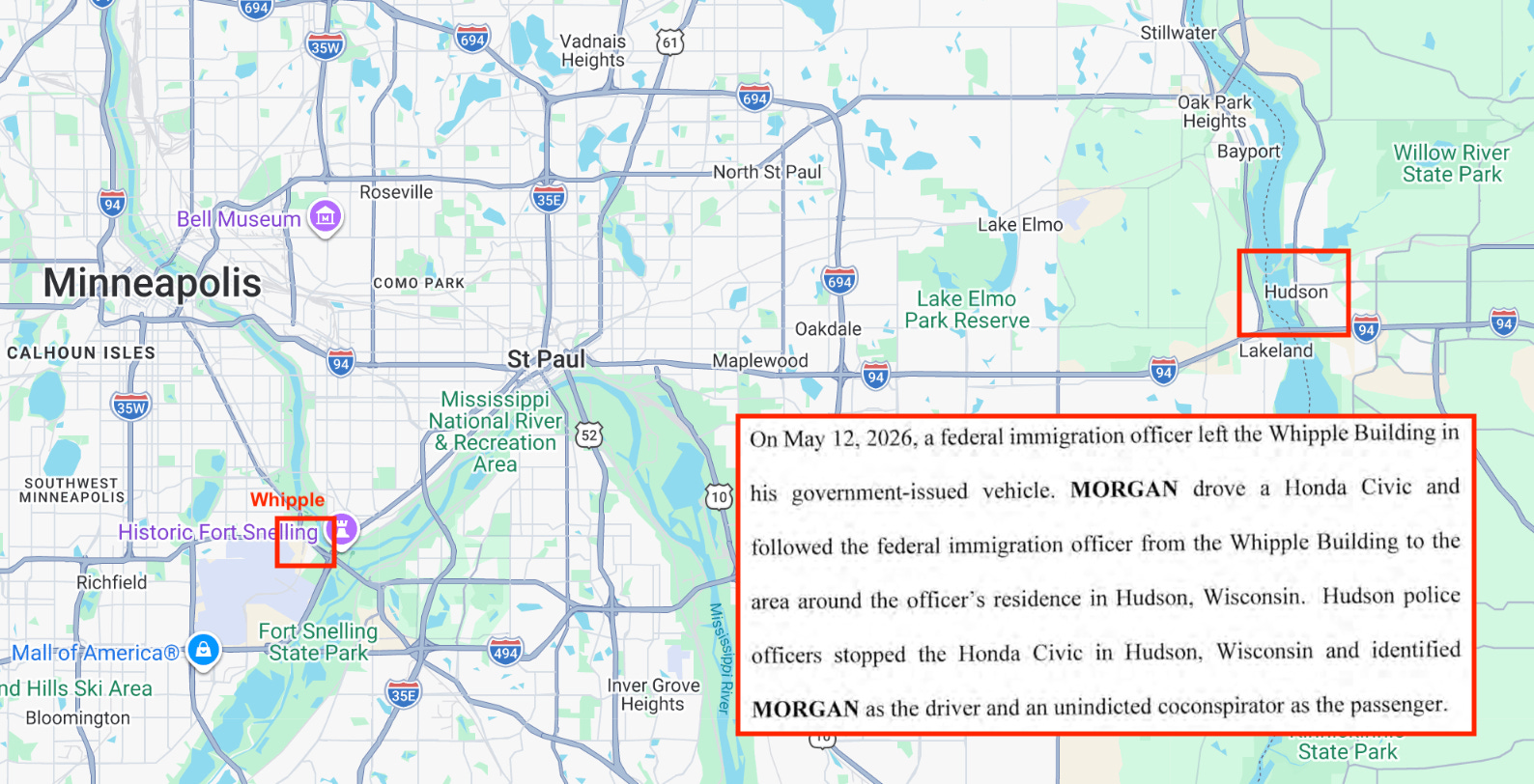
The destruction of government property charge, meanwhile, appears to be premised on a person having “kicked Government Vehicle 2 twice, causing dents.“
At the news conference announcing the charges, Rosen was asked if any law enforcement were injured in relation to the allegations in the indictment.
He had no answer.
Now, however, another group of defendants will have to secure lawyers and face down the federal government to contest these charges.
Already, though, the government effort to overcharge and overprosecute has faced its first pushback.

The government sought detention hearings for the defendants, and that was denied for all defendants who appeared before Magistrate Judge John Docherty on Tuesday, with personal recognizance bond being set instead.
Probing the “Broadview Six” misconduct
Even as the Trump administration brought its new charges in Minnesota, the fallout from the grand jury-related misconduct that led to the dismissal of the charges against the Broadview Six — relating to protests outside the ICE facility outside Chicago — continued.
In a series of filings on Tuesday night, the former defendants made clear they are not done trying to hold the government accountable.
First, they revealed in connection with their request for attorneys’ fees and litigation expenses from the federal government (under the Hyde Amendment, which allows such payments where a government prosecution was “vexatious, frivolous, or in bad faith“) that the federal government “had decided it would not contest that Defendants are entitled to their legal fees, albeit ‘without admitting or conceding to the fact.’“
As criminal defense lawyer and former federal prosecutor Ken White put it bluntly, “Holy shit. The government is conceding it willl pay some amount of fees to the Broadview Six. They are DESPERATE to stop further inquiry into the case. Never heard of such a thing.“
More legally, he followed up: “Seriously, though, it’s VERY hard to make the showing to win fees on a Hyde Amendment motion, it’s very winnable for the government even when there’s bad misconduct, and it suggests that there is even WORSE stuff that hasn’t come out that they are willing to do ANYTHING to keep quiet.“
As the filing made clear, though, the former defendants did not think that admission should end matters — even as to the Hyde Amendment request. In their request, they had been seeking significant discovery about the misconduct at issue. This decision from the government shouldn’t be an end to that, they wrote:
[A]s noteworthy and rare as it is, the government’s acknowledgment that Defendants are entitled to recover their legal fees does not end the issue of discovery that is authorized under the Hyde Amendment. If anything, the government’s recognition that Defendants are entitled to their legal fees supports the need for fuller discovery.
Further, they filed two additional requests — seeking a hearing on the misconduct and asking for a special counsel to be appointed by the court to investigate matters.
In a statement provided to Law Dork, Christopher Parente, the lawyer for former defendant Brian Straw, said that the effort “is not just about six protestors who were targeted at one immigration facility.“
He continued:
It is about protecting our collective Constitutional rights, ensuring we understand the full scope and nature of the corruption within the Department of Justice at this time, and sending a signal to U.S. Attorney's Offices across the country that there will be consequences when they engage in corrupt actions. The transparency and accountability we seek today will be the foundation of a stronger democracy tomorrow.
Law Dork will follow both matters — in Minnesota and Illinois — as they develop.
It's interesting reading this after reading about the federal government not fighting legal fees for the Broadview Six...supposedly because the DOJ doesn't want discovery in relation to these fees.
But until courts finally get off their butts and start sanctioning the DOJ players, this will keep happening.
Thank you, Chris. I was following the discussion on BlueSky but your explanation puts it all into layman context.