

SCOTUS majority lets shadow docket order justify tossing out Texas redistricting case ruling
The GOP appointees reversed a 160-page ruling that found Texas's mid-decade redistricting map likely unconstitutional. Also: SCOTUS arguments over geofence warrants.

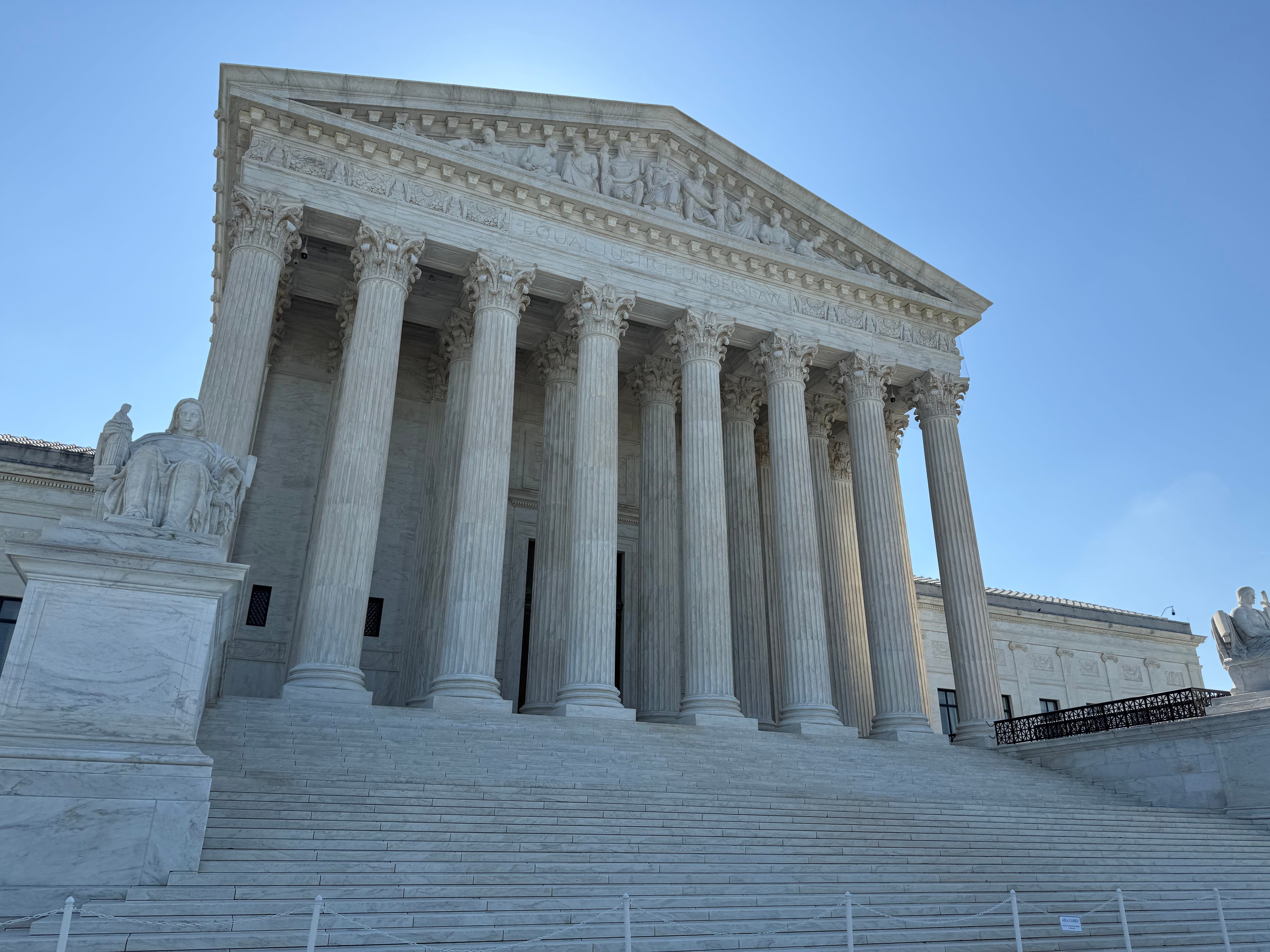
On Monday morning, the U.S. Supreme Court ended the challenge to Texas’s mid-decade redistricting — with all Republican appointees voting to summarily reverse the three-judge district court’s earlier decision finding that the redistricting included likely unconstitutional racial gerrymandering.
A summary action means the court has resolved a case based on the initial briefing asking the Supreme Court to review the case — without receiving full briefing or hearing arguments.
The three Democratic appointees noted their dissent from the court’s action.
No justice wrote anything beyond the order’s one-sentence statement that the majority was acting “[f]or the reasons set forth in” the Supreme Court’s shadow-docket decision granting a stay pending appeal in the same case this past fall.
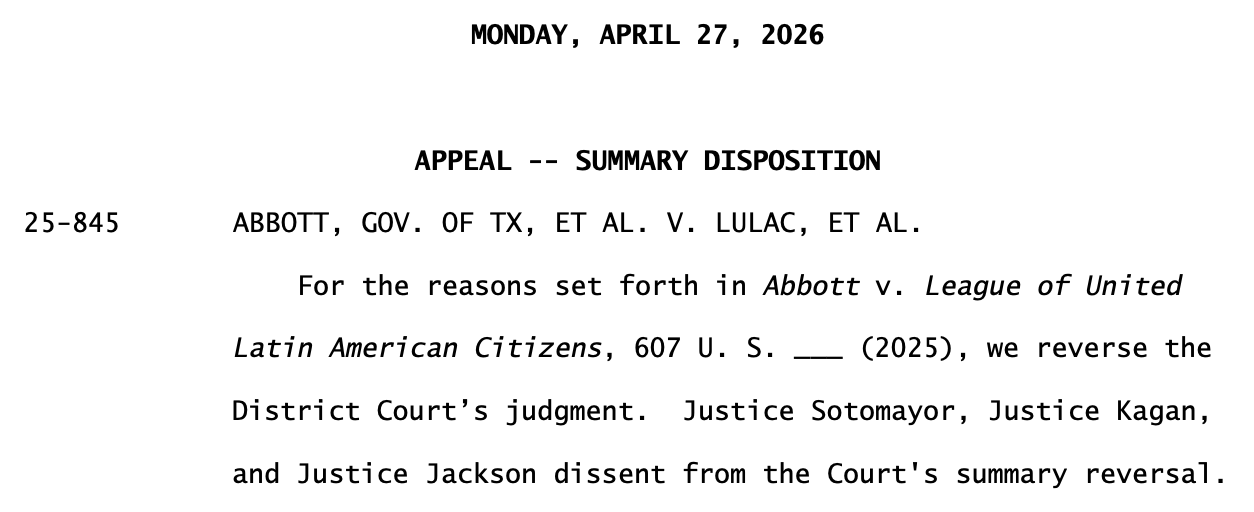
Yes, the Supreme Court’s Republican appointees on Monday let a five-paragraph shadow-docket ruling from December 2025 serve as the only “reasons” for a summary reversal of a 160-page district court decision.
This hopefully will put an end to Justice Amy Coney Barrett’s ridiculous Fox News defense of the shadow docket in October 2025, where she insisted that “in none of these cases have we finally resolved the issue.”
In that interview, Barrett proclaimed that “[d]eciding a merits case is a painstaking process,“ very different from the “preliminary” review on the shadow docket. In those cases, she said that there are often not “long opinion[s]“ because “it might give the impression that we have finally resolved the issue.”
We wouldn’t want that.
DOJ struggles with geofence warrants case defense
In its first oral argument on Monday morning, the justices discussed the question — raised in a case brought by Okello Chatrie — of whether geofence warrants are constitutional.
At the end of two hours of arguments, it appeared that the federal government won’t get what it wanted out of the case — appearing potentially to lose both Chief Justice John Roberts and Justice Amy Coney Barrett at key points on Monday as Deputy Solicitor General Eric Feigin repeatedly made expansive arguments that could essentially write the Fourth Amendment out of important aspects of modern policing.
In addition to Roberts and Barrett, the Democratic appointees and Justice Neil Gorsuch were skeptical of the scope of the government’s arguments — although Justice Ketanji Brown Jackson questioned why Chatrie’s lawyer, Jenner & Block partner Adam Unikowsky, was making his own “maximalist” arguments that she thought might not be “necessary to get to the point where you want to go.”
What is a geofence warrant?
From the question presented by Chatrie’s lawyers, the explanation is: “For cell phone users to use certain services, their cell phones must continuously transmit their exact locations to their service providers. A geofence warrant allows law enforcement to obtain, from the service provider, the identities of users who were in the vicinity of a particular location at a particular time.”
The question presented by the case is straightforward:

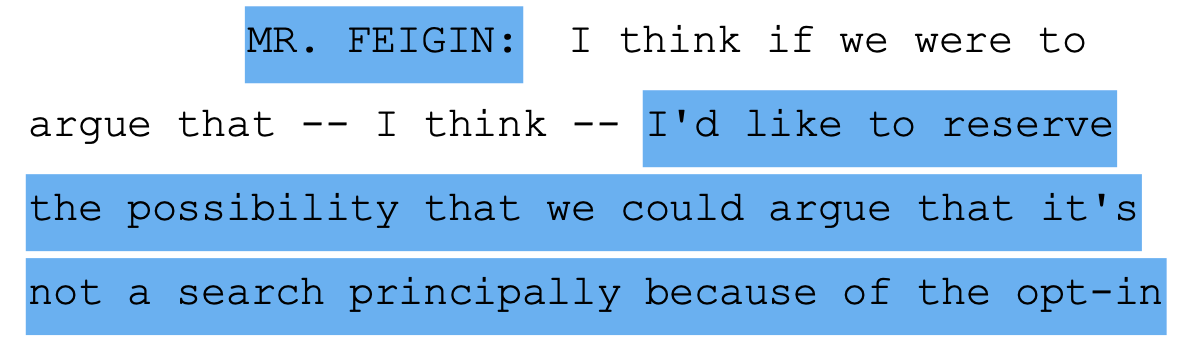
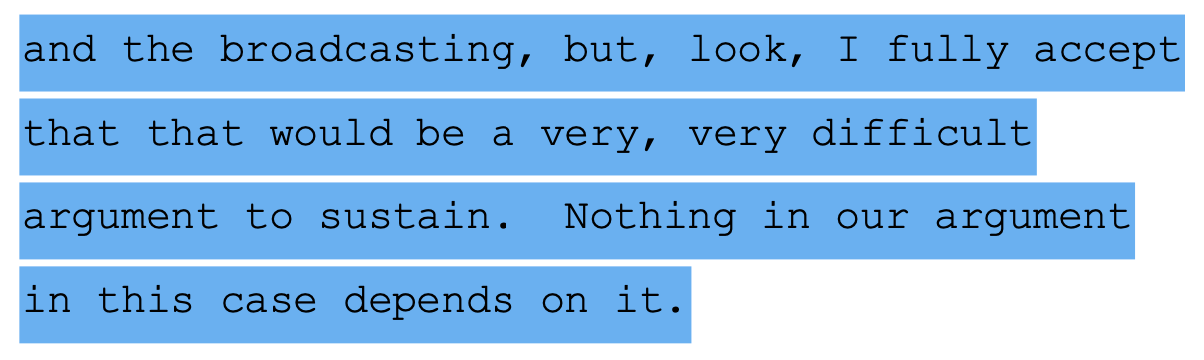
Feigin repeatedly insisted that the decision by users to “opt in” to the Google location tracking with a cloud-based history at issue in the warrant was key. “I do think that what really matters here is that people have affirmatively opted in,“ he told Roberts at one point.
At that point, it was an attempt to blunt the harm that has already come to his position. Although Roberts had asked Unikowsky about the opt-in aspect of the case, the mirror questions from Roberts to Feigin were more aggressive and got a worse response.
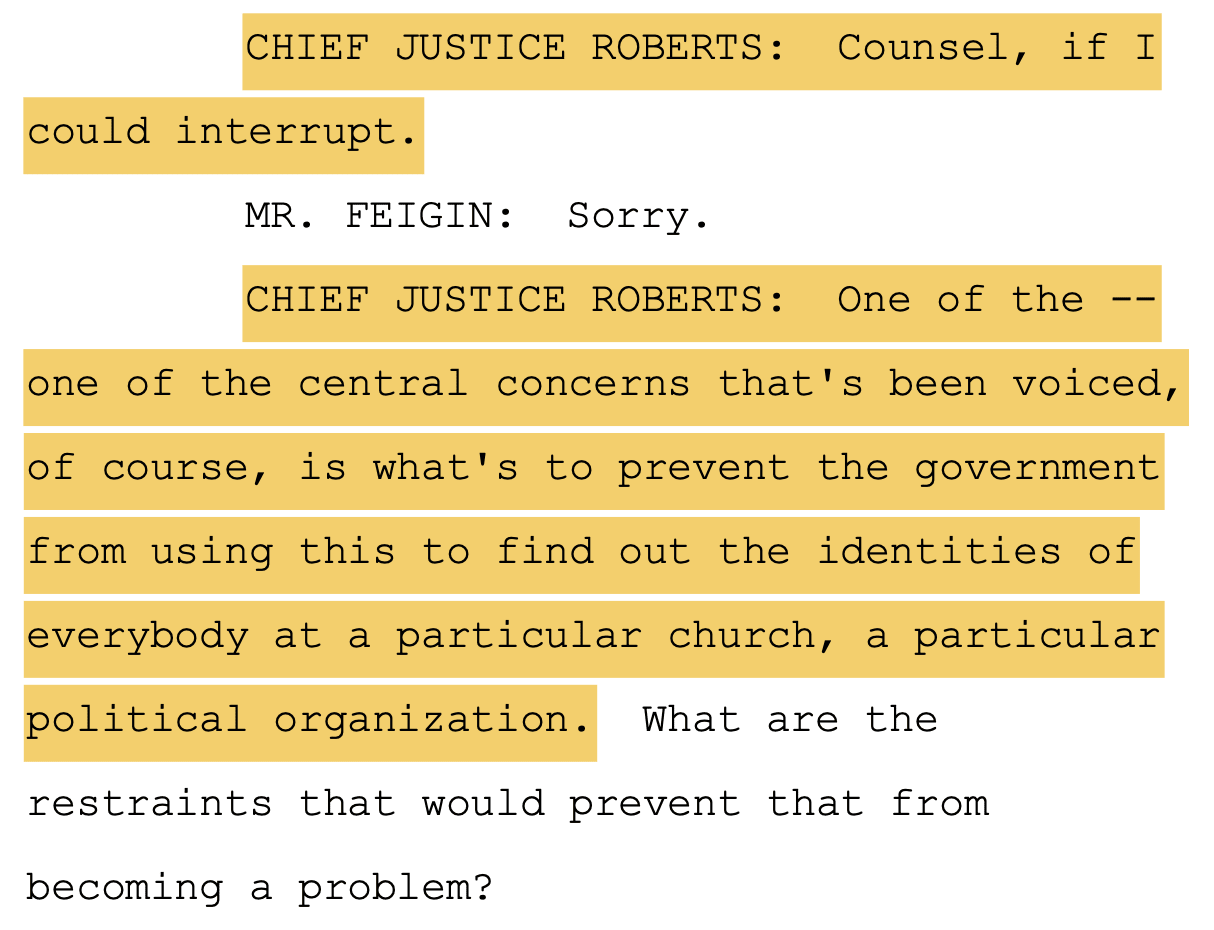
Far from assuaging those concerns, Feigin first tried to talk around them, then tried to say the “opt-in” aspect made all the difference.
Within a short time, Roberts had moved to a far more aggressive position:
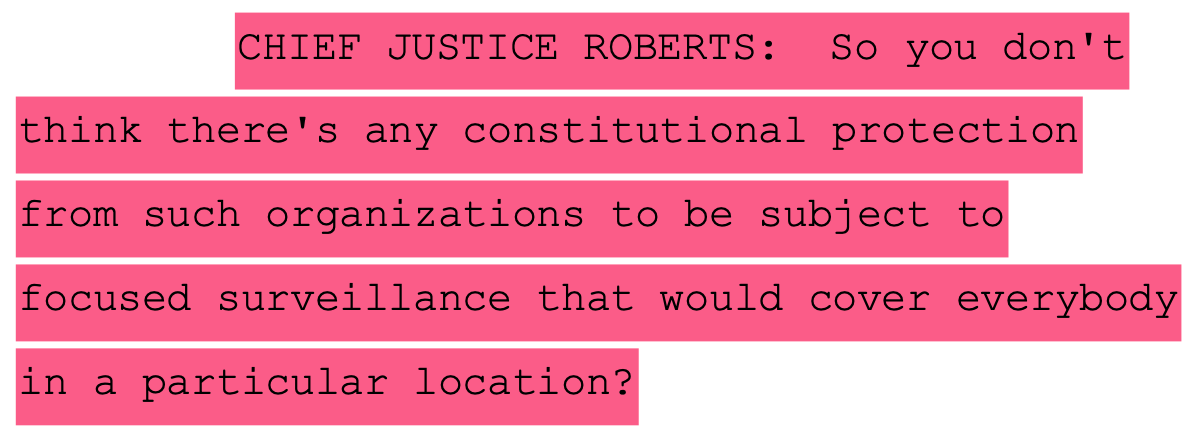
It went substantially downhill from there when Feigin soon responded:
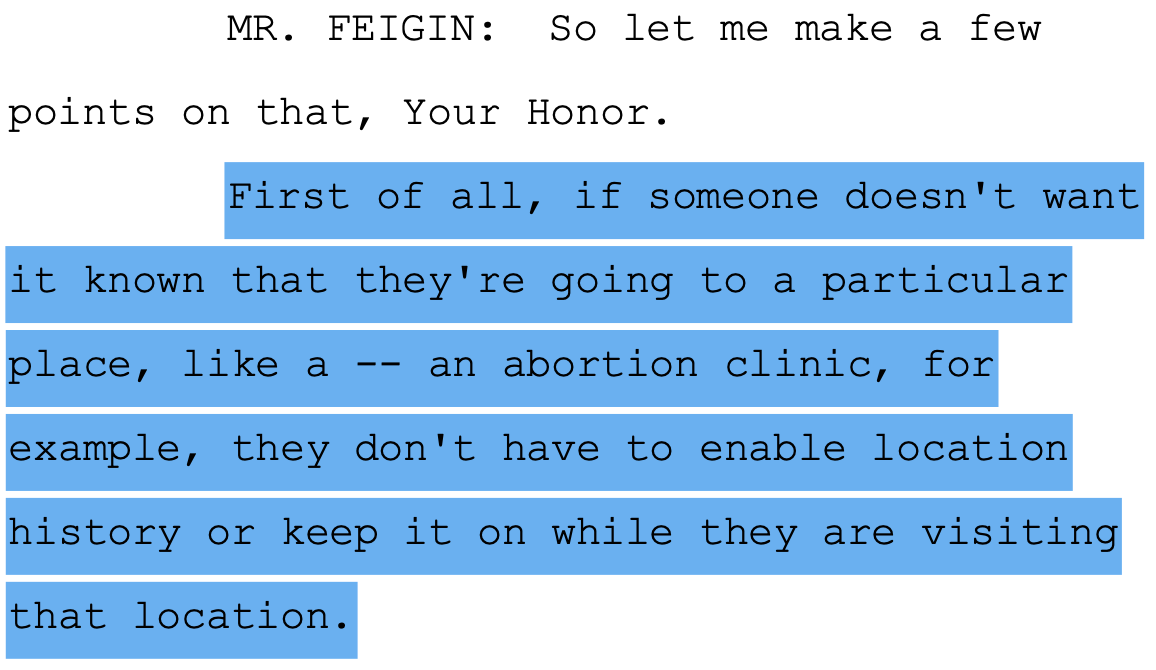
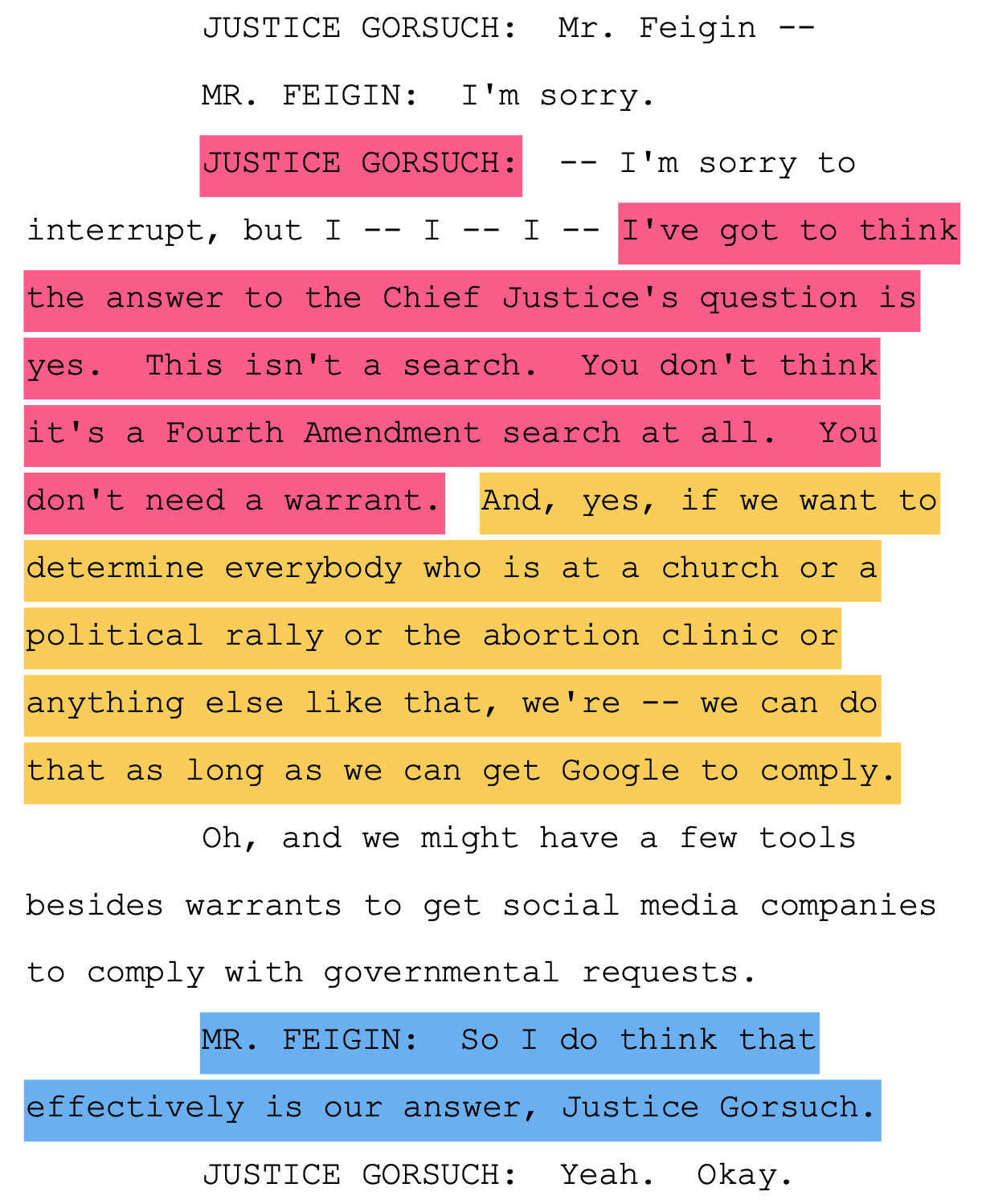
Roberts soon shot back, “So, to prevent surveillance of sensitive locations, you have to rely on the fact that people are going to turn off something that many if not most people find is an important service?“
When Feigin tried to push back, Gorsuch — who had been skeptical of the government’s position all morning — stepped in.
After Justice Elena Kagan asked if the government’s position would be “the same if [they] had picked up Mr. Chatrie in his home,” that became Barrett’s skepticism cue.
After Feigin initially tried to get away from the question by saying that the government “couldn’t locate which of the houses was his,“ Barrett jumped in.
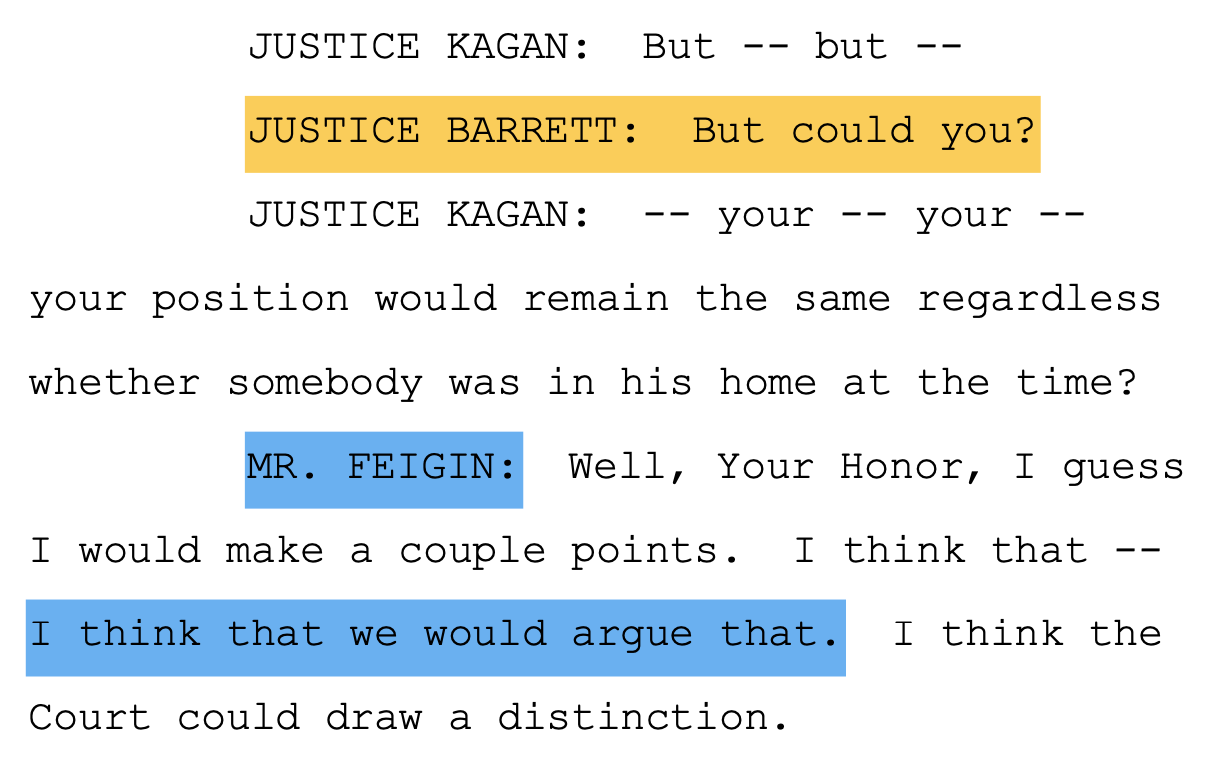
After a few unsuccessful efforts to blunt her question, Barrett summed things up:
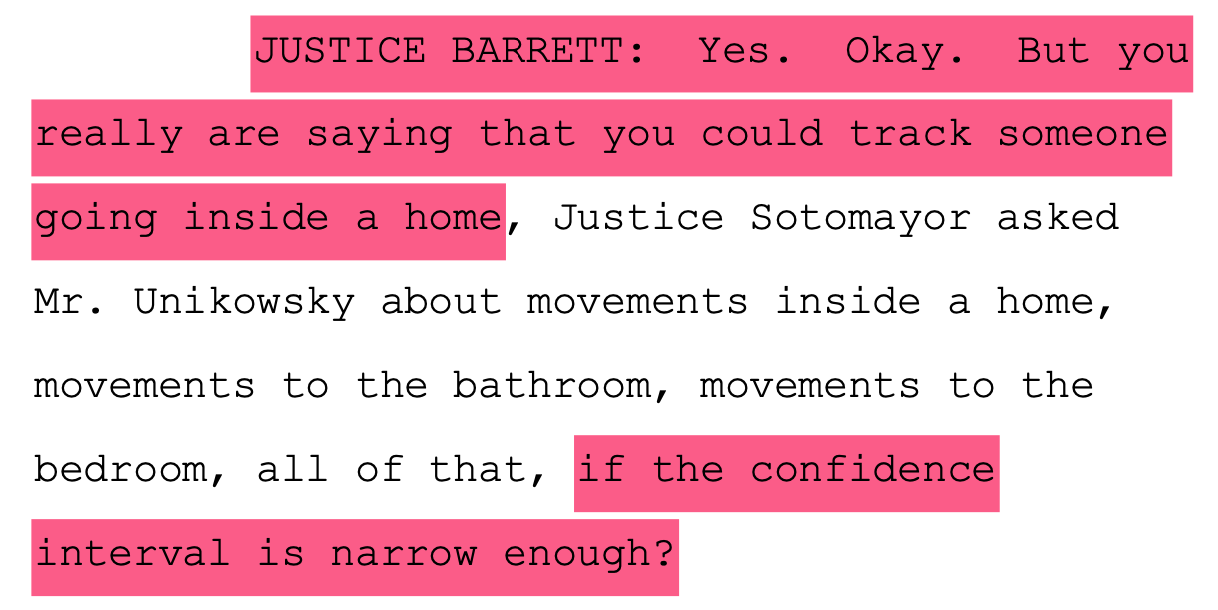
And Feigin was left acknowledging that the government wanted to be able to argue in the future that the government could track you into your home and it wouldn’t be a search so long as you opted in to that tracking.
Meanwhile, Justice Sam Alito — perhaps appearing ready for [an extended?] vacation — asked Unikowsky why the court was even hearing the case.
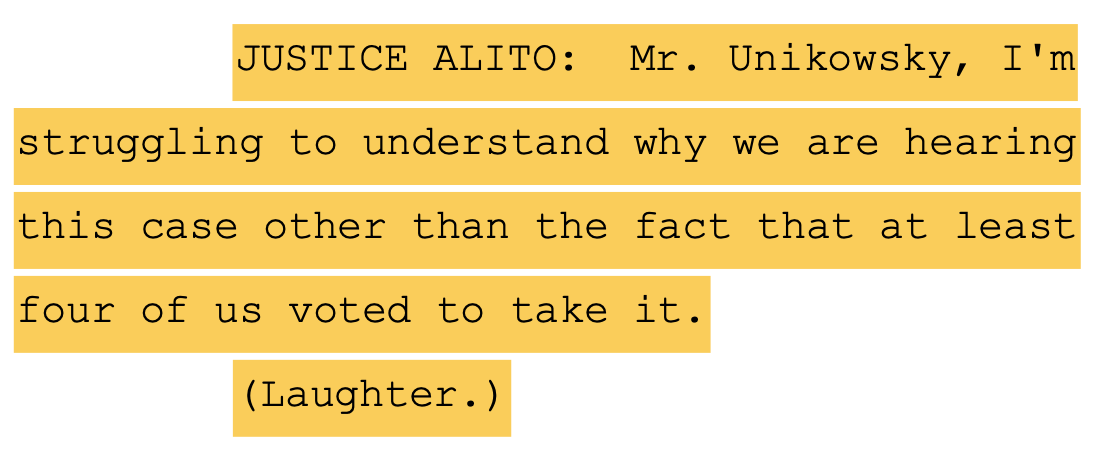
He went on to explain to Unikowsky that, in his view, it seemed that, given the posture of the case and lower court ruling, “what you’re asking for is an advisory opinion.“
Despite that, it did appear that the other justices, perhaps with the exception of Justice Clarence Thomas, were planning to resolve the case as granted.
The Supreme Court is CORRUPT!
They’ve aided and abetted and been accessories after the fact in service of crimes against humanity against everyday Americans with their casual desecrations of the Rule of Law in the United States