

Following SCOTUS ruling on Trump admin moves to end immigration protections, harm and fear spreads
An appeals court on Wednesday allowed DHS's ending of TPS for Ethiopia to proceed. Immigrant communities affected, meanwhile, are facing impossible choices and a hateful DHS.

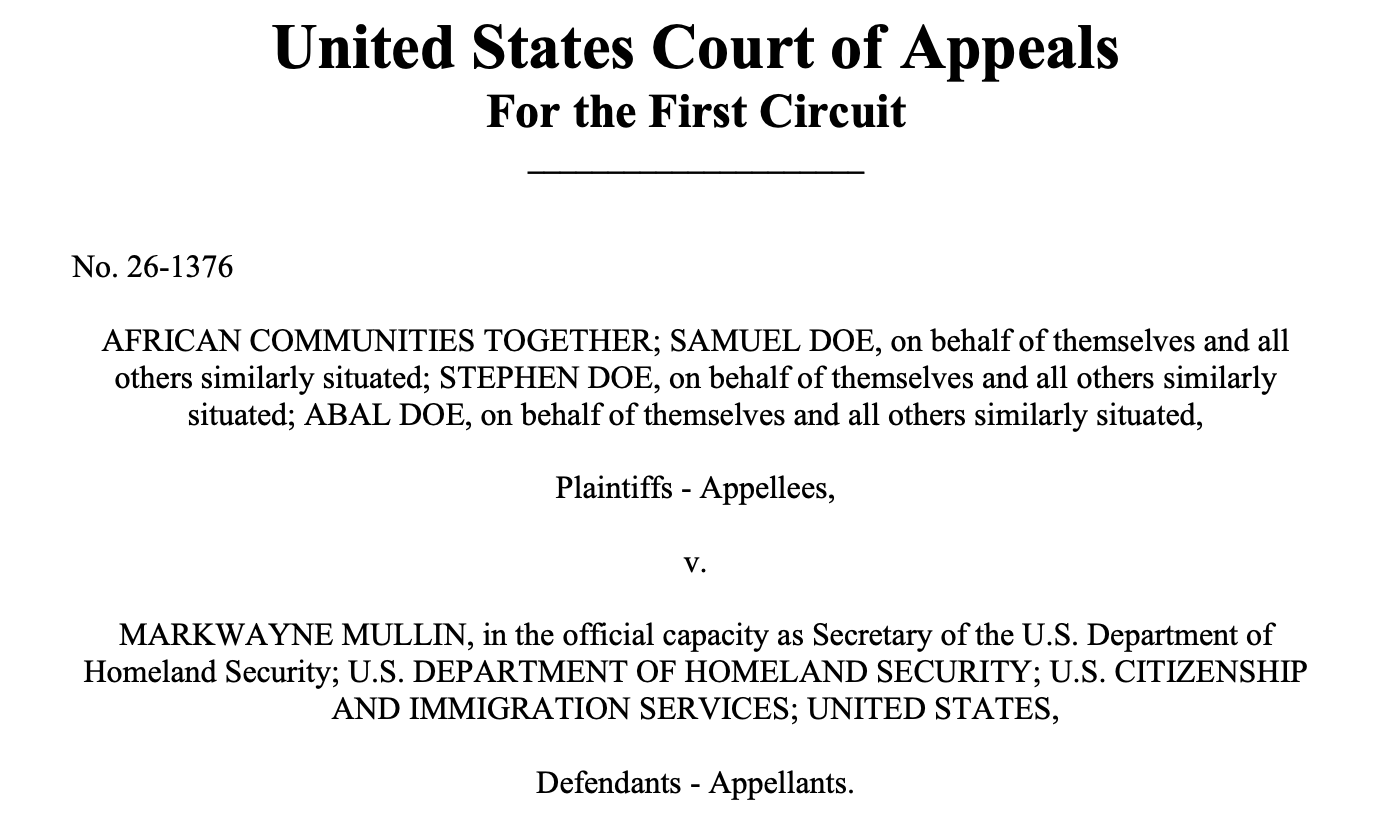
The Trump administration’s effort to end temporary protected status for more than 4,500 people in the United States from Ethiopia was allowed to go forward on Wednesday, continued fallout from the U.S. Supreme Court’s June decision severely limiting challenges to efforts to end TPS protections.
The brief order from the U.S. Court of Appeals for the First Circuit on Wednesday reversed a district court order that had put the administration’s Ethiopia-related plans on hold.
Noting that the Supreme Court held that “non-constitutional claims” based on a decision to end a TPS designation were not allowed, the unsigned order stated, “Claims of that nature were the only basis for the postponement order on appeal“ here. As such, the lower court’s order was reversed.
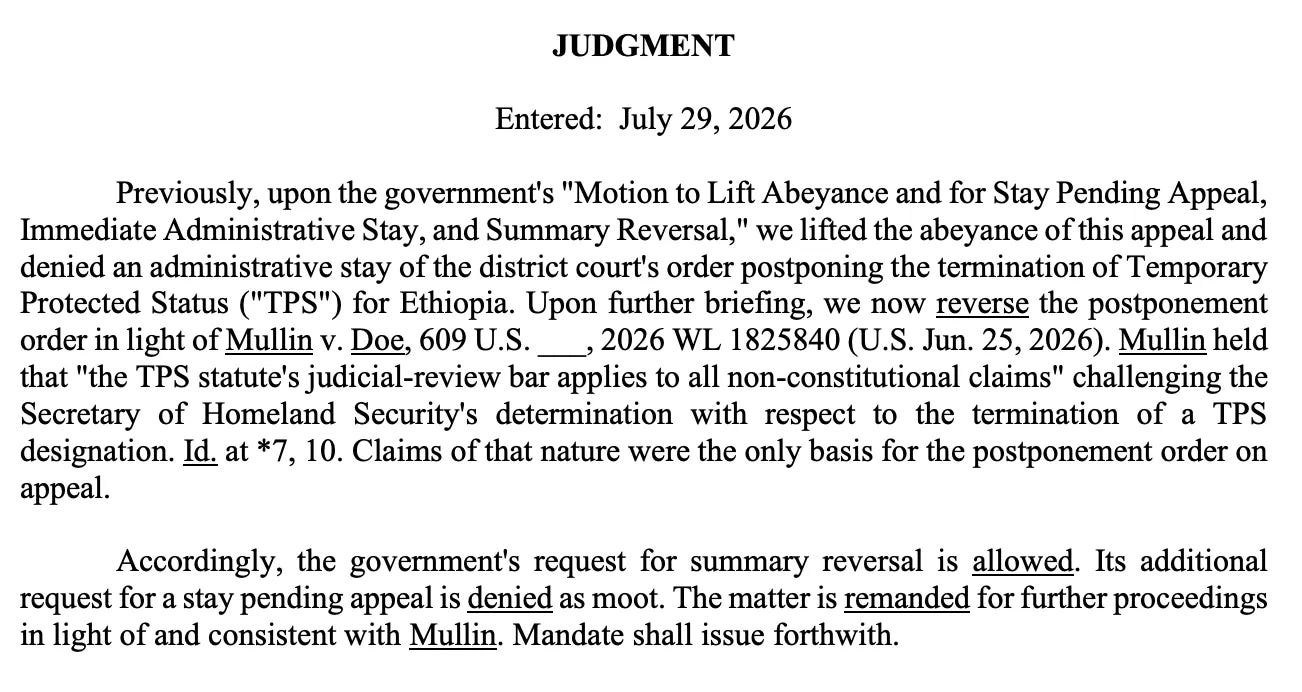
The order was issued on behalf of Judges Julie Rikelman (Biden), Seth Aframe (Biden), and Joshua Dunlap (Trump) — the three newest judges on the New England-based appeals court.
The roughly 4,500 people directly affected from Ethiopia is not as big a number as the more than 350,000 people affected by the termination of Haiti’s TPS or the 7,000 people involved in the ending of Syria TPS — the two countries at issue in the Supreme Court’s decision — but it shows the continued and expanding harm that will likely befall any group the Trump administration decides to treat this way.
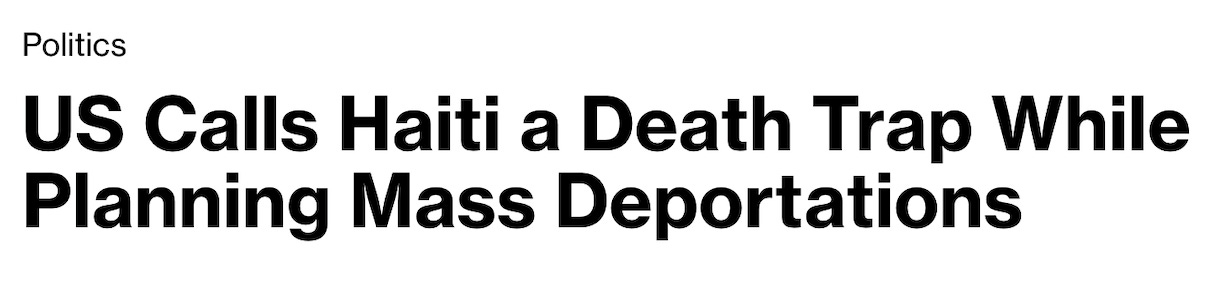
As CBS News made clear on July 26, through Trump administration sources, the plan is “to ramp up operations to arrest and deport Haitian migrants“ now that they are free to do so. The issue, as Bloomberg put it, is that:
Or, as the Trump administration’s own State Department put it, more than two weeks after the Supreme Court’s ruling:
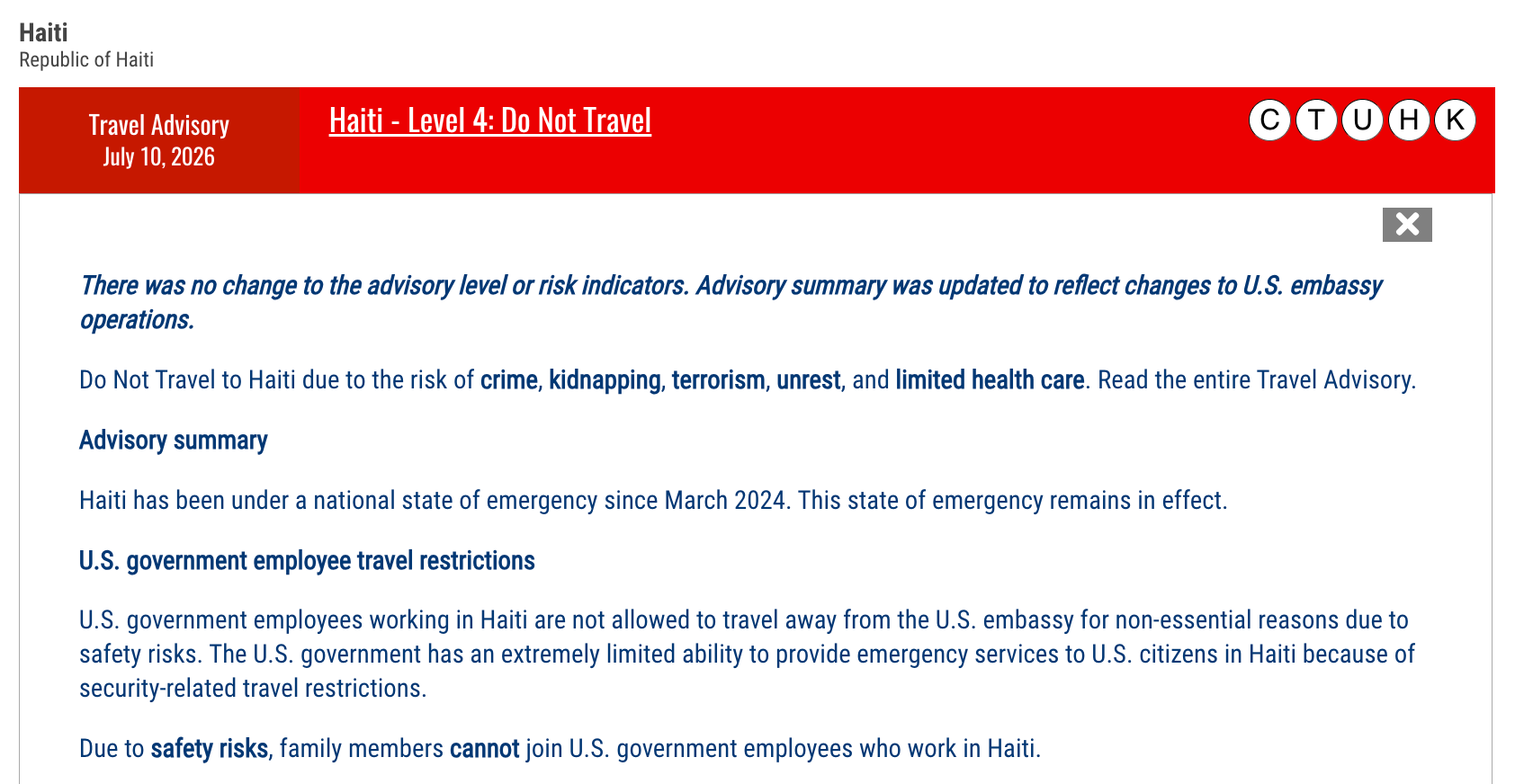
On the upper right, those aren’t subway lines. Those are highlighted warnings regarding crime, terrorism, civil unrest, health, and kidnapping/hostage taking.
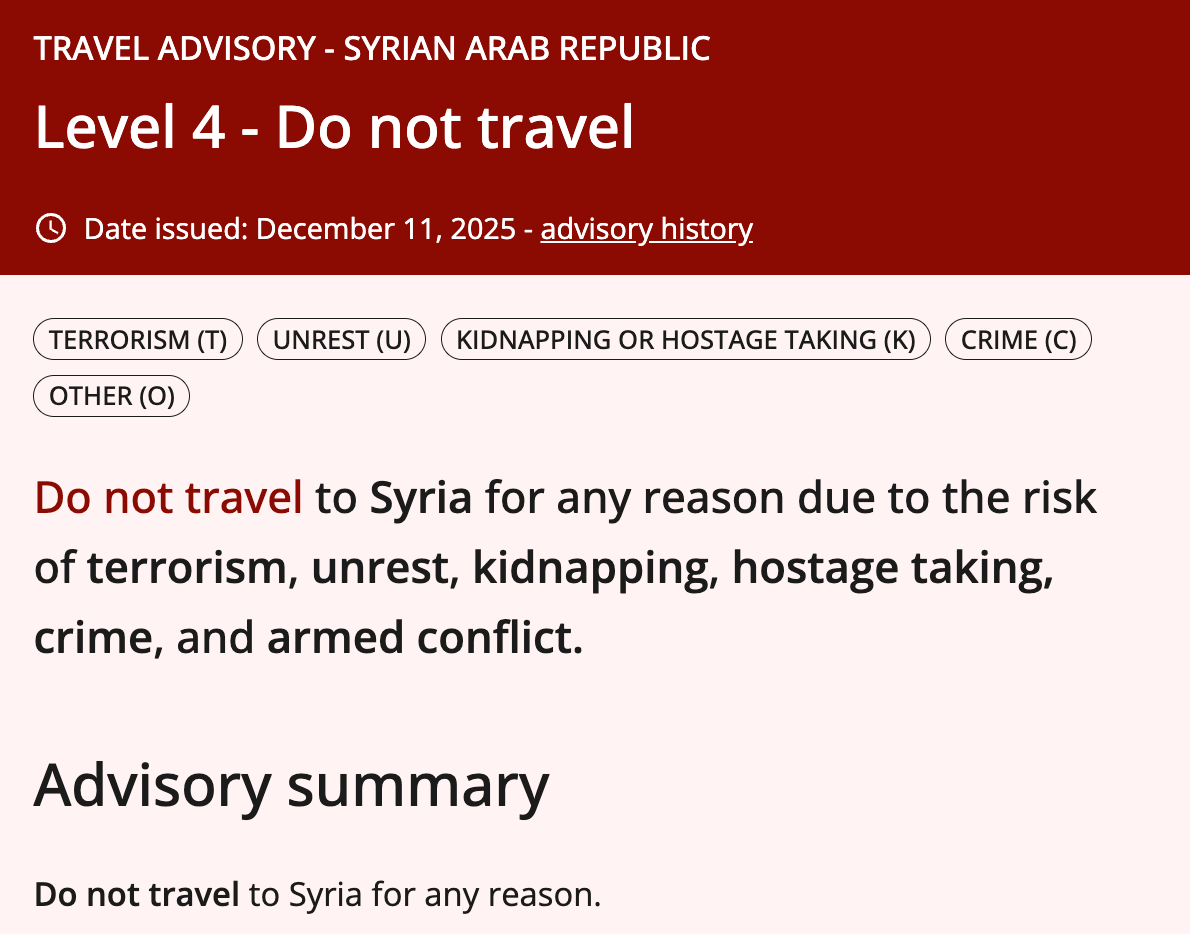
It is a similar picture for Syria:
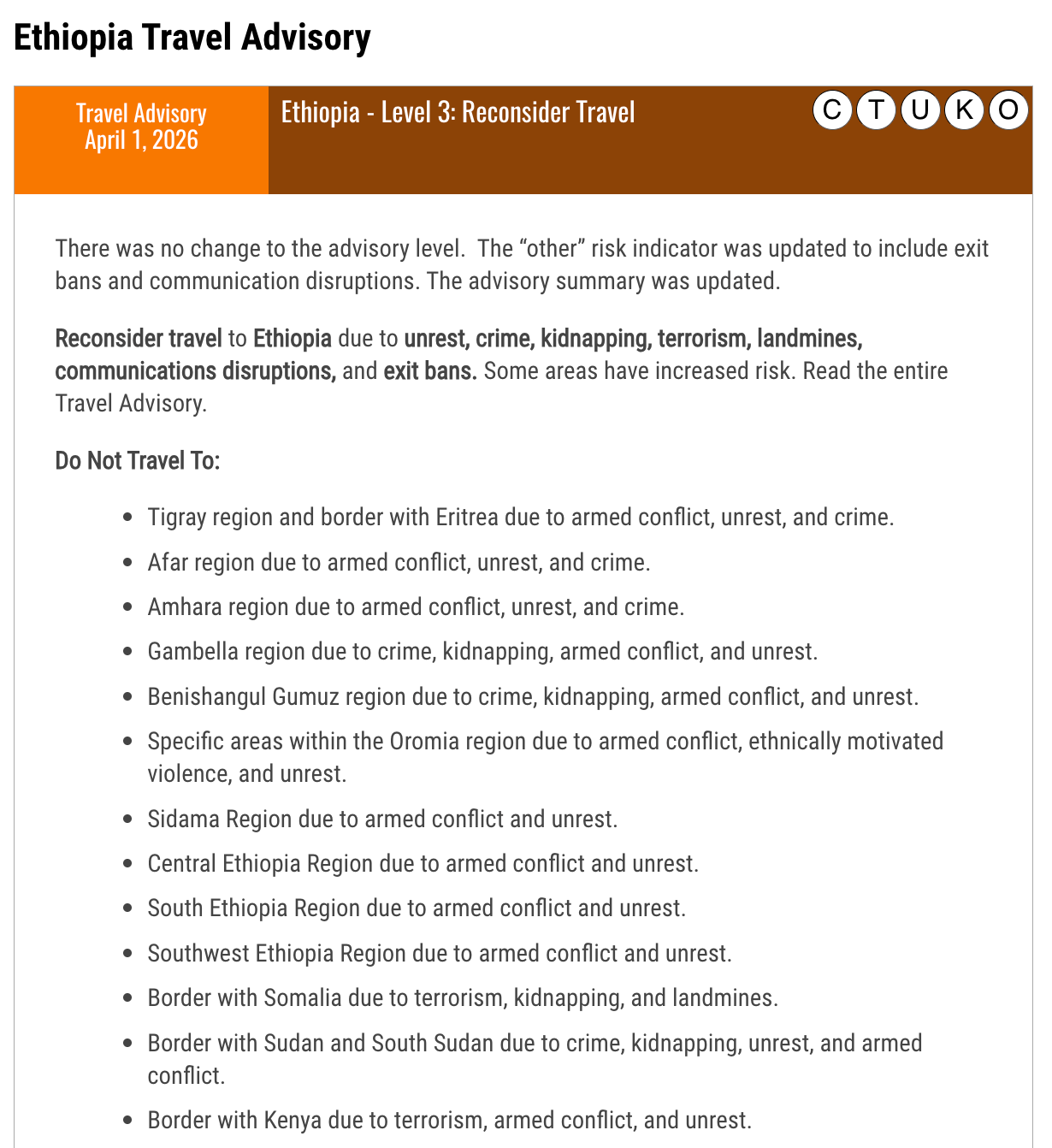
And, though the State Department provided the next lower risk level as to Ethiopia overall, it is important to note the highlighted crime, terrorism, civil unrest, kidnapping/hostage taking, and other risks and that the State Department does warn “Do Not Travel” to several regions throughout the country:
The horror of this is not only the global implications for those affected. Before that, there are first the inhumanity and impossible choices being forced upon these people in the United States.
As The Haitian Times covered on Monday, the questions are immediate:
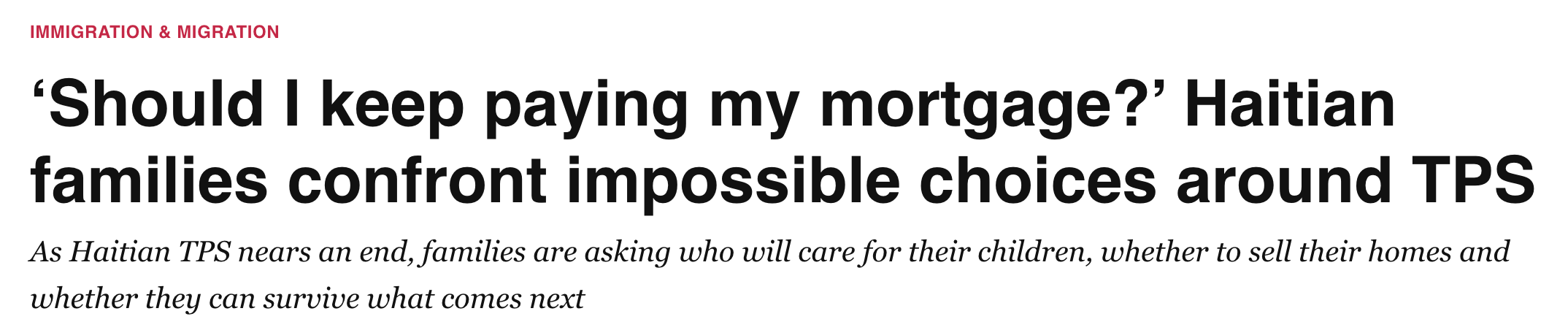
“What happens to my child going to school in September, if I go?” the story quoted one person as asking.
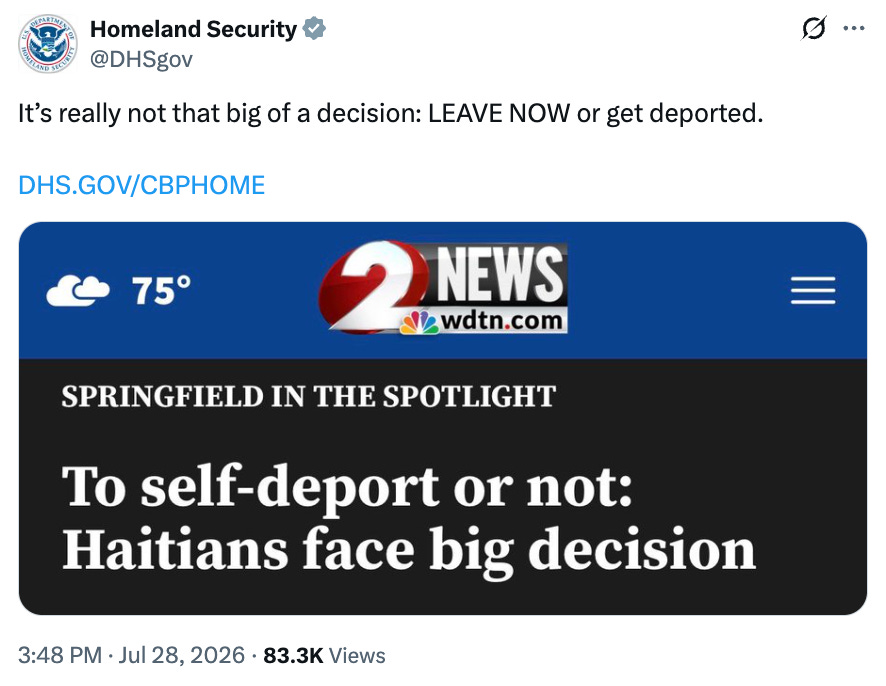
A Monday story from WDTN 2 News — the local NBC News station that covers Springfield, Ohio — discussed the question being faced by Haitians in the city about whether to “self-deport” in light of the administration’s plans.
The Department of Homeland Security responded with the sort of immoral hate for which its social channels have become known.
In Springfield, the city whose immigrant population has been viciously targeted by President Donald Trump and Vice President J.D. Vance, the response is different.
On Wednesday, WDTN’s latest report focused on how “local organizations are stepping up to help,” highlighting a gathering in which “faith leaders prayed for and expressed solidarity with those previously living under TPS” and how “G-92, the non-profit organization made up of area churches, is asking for money and food to help families previously living under TPS.“
So the folks that have tps are advised by the government to return to their home countries EVEN THOUGH THEY ARE MORE DANGEROUS THAN WHEN THEY LEFT!
WHAT KIND OF FUCKING BULLSHIT IS THIS!
Trump is not making any sense or any consistency period I guess it's a day ending in Y but it's still terrifying.