

Justices rule feds' prosecution of marijuana user for gun possession violates Second Amendment
There were no dissents, but the four divergent opinions on Thursday show continuing disagreement over how to judge the constitutionality of gun regulations.

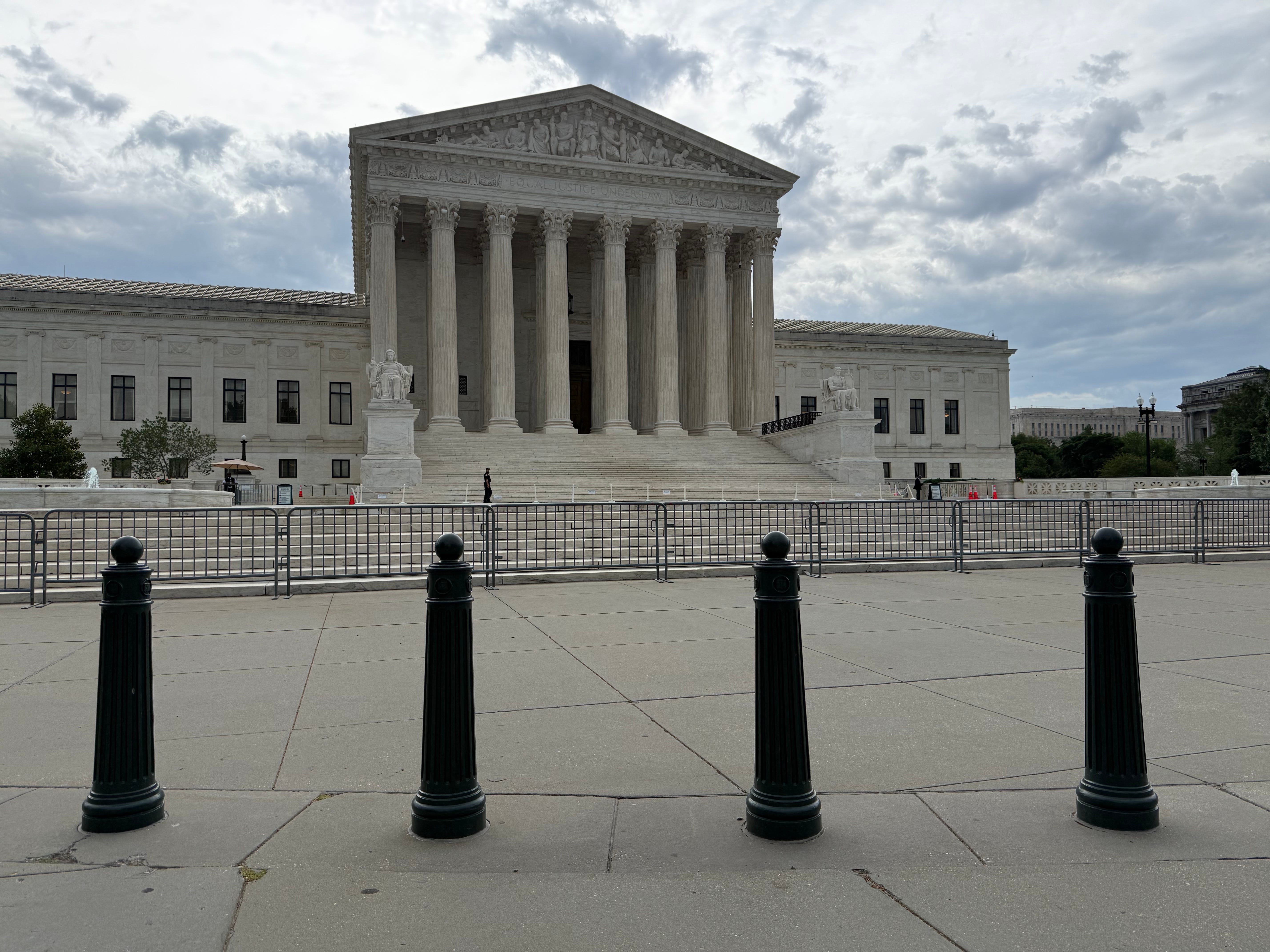
The U.S. Supreme Court on Thursday held that the federal government cannot, under the Second Amendment, use a federal criminal law to bar occasional marijuana users from possessing firearms.
There were no dissents, but, as is regularly so with gun cases, there was some underlying drama.
Every two years, it seems, the justices will take another stab at fixing Justice Clarence Thomas’s 2022 opinion for the court in New York State Rifle and Pistol Association v. Bruen, where he held for the court that gun regulations can be upheld only if they are “consistent with the Nation’s historical tradition of firearm regulation.”
On Thursday, it was Justice Neil Gorsuch’s go at it.
It does not appear he will be the last justice to do so.
Even in 2022, it was clear that Thomas’s Bruen majority would have difficulties going forward.
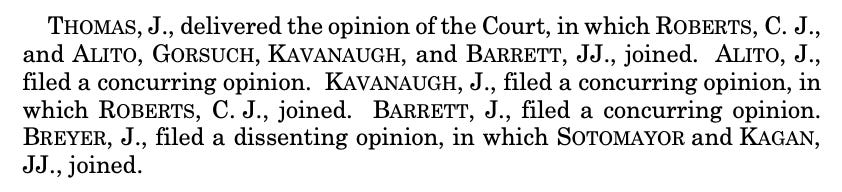
Given that it was a 6-3 decision, there was a majority. And yet, the concurrence from Justice Brett Kavanaugh, joined by Chief Justice John Roberts, suggested a limiting principle on Thomas’s opinion. Despite being a concurrence — meaning they were stating full agreement with Thomas’s opinion — their votes were necessary to making Thomas’s opinion a majority, so their writing on “two important points about the limits of the Court’s decision” was essential to understanding how the opinion should be read.
Some courts, including the U.S. Court of Appeals for the Fifth Circuit, ignored that.
And so, two years later, Roberts issued the court’s 2024 decision in U.S. v. Rahimi, reversing the Fifth Circuit and upholding the federal law (18 U. S. C. §922(g)(8)) banning firearm possession by a person with a domestic violence order out against them. Although Roberts insisted that “some courts have misunderstood the methodology of our recent Second Amendment cases,” Thomas — the author of Bruen — dissented that day, strongly suggesting Rahimi should at least be seen as a narrowing refinement of Bruen.
Although it was an 8-1 decision — so, a clear majority — there was, again, disagreement underlying the near-unanimity.
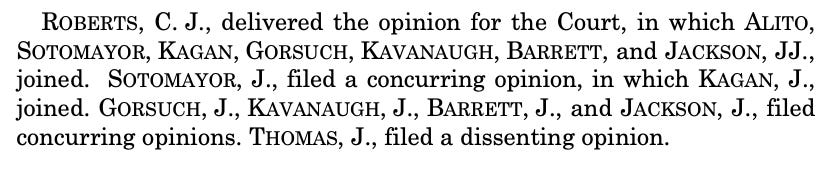
As I wrote at the time, “Beneath Roberts’s opinion presenting a united front against Thomas’s thinking, though, every justice in the majority, save for Justice Sam Alito, also wrote separately or joined one of the 49 pages of concurring opinions.“
On Thursday, Gorsuch was given his chance to help lower courts — and governments — that might “have misunderstood the methodology” of Bruen.
Addressing another part of the same federal law that was at issue in Rahimi, Gorsuch was writing in U.S. v. Hemani about 18 U. S. C. §922(g)(3), which bars any person from possessing a firearm:

This time, the case was about the government’s effort to use that law to prosecute Ali Hemani for possessing a gun while admitting to using marijuana “about every other day.” That was it. The government chose to pursue this prosecution, arguing that the ban as applied to someone like Hemani is sufficiently similar to “habitual drunkard” laws in existence from the nation’s founding to be upheld under the Second Amendment.
No court below agreed, and no justice bought the argument, either — meaning that, this time, the Fifth Circuit’s decision below was affirmed.
Gorsuch tried mightily to explain how the court “determine[s] when the government infringes the Second Amendment,“ drawing the contours of Bruen’s “historical tradition“ test and Rahimi’s clarification that no “historical twin” is needed and that “analogy” is sufficient to finding a “relevantly similar” historical regulation before adding his own peculiarity to the test:
![While we have not yet had cause to “exhaustive[ly] sur- vey” the features that may render a modern law “relevantly similar” to historical ones, we have said two play a “‘cen- tral’” role. Id., at 29. Call them the “why” and “how.” Ibid.; see also Rahimi, 602 U. S., at 692. The more closely a con- temporary law mirrors a well-established historical ana- logue in purpose and operation, the more likely it is to be upheld. Conversely, the more a modern law diverges from traditional laws in purpose and operation, the less likely it is to survive review. See Bruen, 597 U. S., at 29; Rahimi, 602 U. S., at 692.](https://substackcdn.com/image/fetch/$s_!0S4N!,f_auto,q_auto:good,fl_progressive:steep/https%3A%2F%2Fsubstack-post-media.s3.amazonaws.com%2Fpublic%2Fimages%2F4165d892-ff84-4b9f-bf06-f95eaa17f2e8_1100x524.png "While we have not yet had cause to “exhaustive[ly] sur- vey” the features that may render a modern law “relevantly similar” to historical ones, we have said two play a “‘cen- tral’” role. Id., at 29. Call them the “why” and “how.” Ibid.; see also Rahimi, 602 U. S., at 692. The more closely a con- temporary law mirrors a well-established historical ana- logue in purpose and operation, the more likely it is to be upheld. Conversely, the more a modern law diverges from traditional laws in purpose and operation, the less likely it is to survive review. See Bruen, 597 U. S., at 29; Rahimi, 602 U. S., at 692.")
In short, applying that to the prosecution of Hemani, Gorsuch wrote, means the government fails:
[T]he habitual drunkard laws on which the government relies here differ dramatically from §922(g)(3)’s unlawful user provision on every single metric the government invites us to consider: They targeted different kinds of people, did so for different purposes, and operated in different ways.
It is, as Gorsuch explained, a “narrow” decision. The court did not address any other part of §922(g); did not even address the “addict” part of §922(g)(3); and — further still, Gorsuch wrote — did “not even address whether the government could bring a prosecution under §922(g)(3) accompanied by individualized proof that the defendant’s use of marijuana (or any other drug) renders him a danger to himself or others.“
Nonetheless, and yet again, several divergent opinions were issued, signaling that, yet again, the majority opinion is more of a “for now” ruling than some settled resolution.
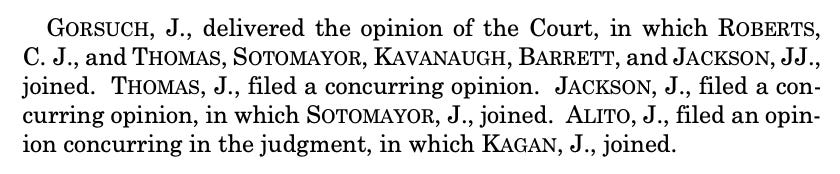
Notably, five justices issued or joined writings that offer a different path — now or in the future — than the one offered by Gorsuch on Thursday.
Two justices — Alito and Justice Elena Kagan — did not even join Gorsuch’s opinion, with Alito instead writing an opinion solely concurring in the judgment in the case (as in, affirming the Fifth Circuit). The pair essentially wrote that this is a pot case, it’s absurd for the government to claim this prosecution would be like the “habitual drunkard” laws, and that’s all the court needs to do here.
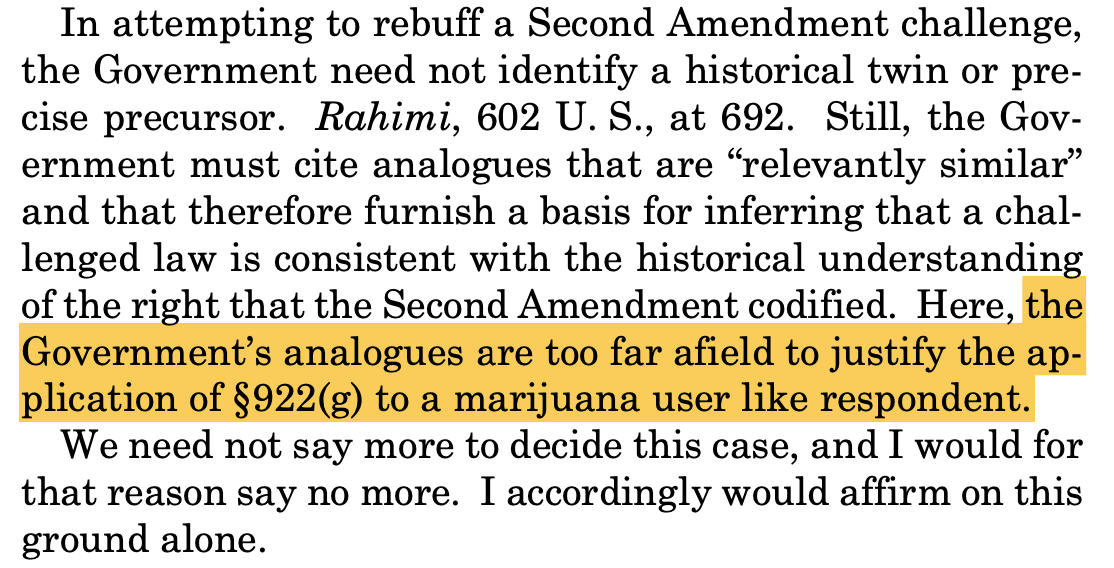
In short, neither Alito nor Kagan — and likely for different reasons — see a need to join Gorsuch’s Bruen-take-three take in order to resolve this case.
The two concurrences, representing the views of three justices, are somehow even more divergent from Gorsuch’s opinion — despite their having joined it.
Thomas, unsurprisingly, would go further. He wants a Commerce Clause case challenging all of §922(g):
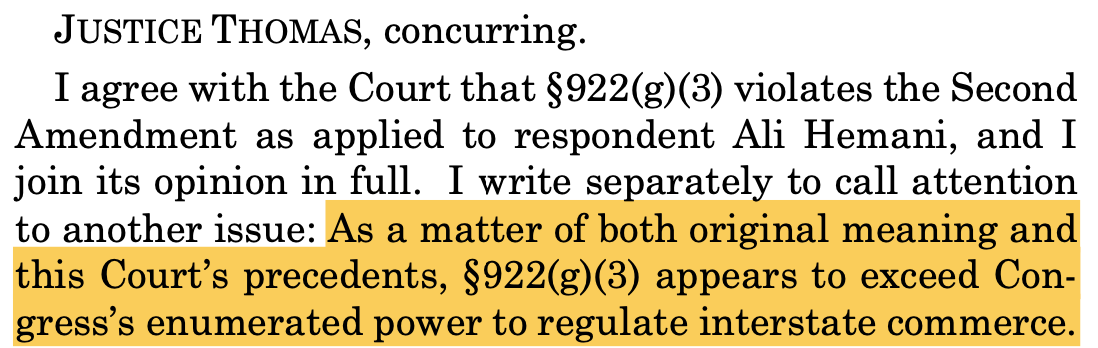
Calling for stricter application by the court of restrictions on Congress’s use of the Commerce Clause to justify legislation, Thomas lamented, referencing U.S. v. Morrison, “It has now been 26 years since a party has received relief in this Court based on a Commerce Clause challenge.”
In an “appropriate case,” Thomas wrote, “the Court, and lower courts, should revisit the constitutionality of §922(g).”
For her part, Justice Ketanji Brown Jackson, joined by Justice Sonia Sotomayor, would prefer to be done with the “unworkable” Bruen standard altogether. The pair are looking beyond Bruen:
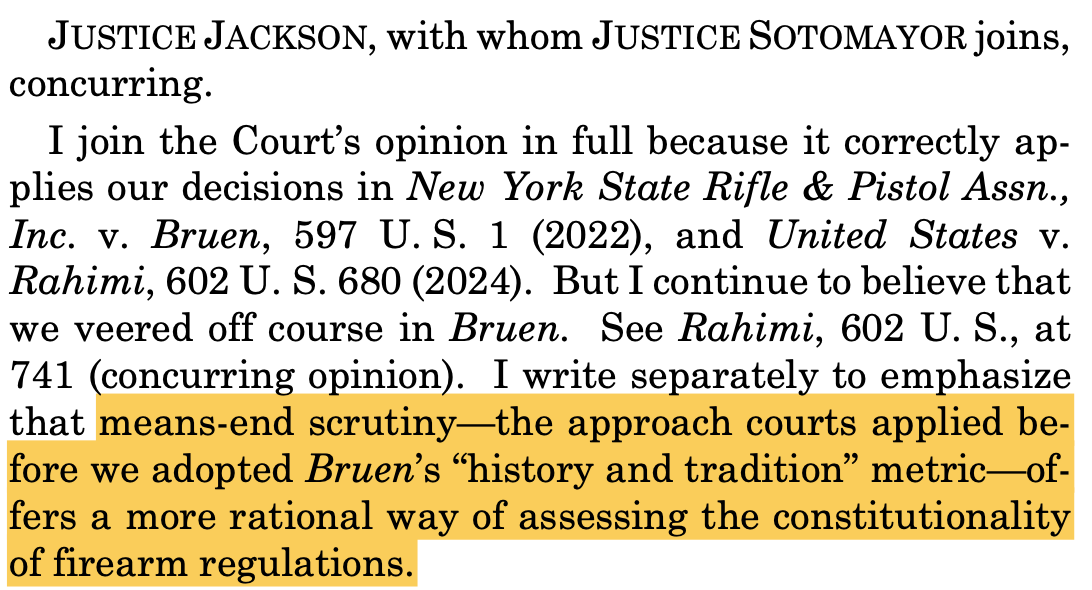
They, too, are looking toward “a future case” — but, for them, it would be one where the court could “consider whether to retire the failed Bruen experiment.”
On Thursday, though, there were no dissents, and Hemani’s prosecution is not allowed.
Very useful summary and analysis. And welcomingly free of histrionics. Thank you.
First pro gun rights decision I have ever celebrated!
Of course it’s because I am in favor of medical cannabis and this was a major impediment to the industry.