

Why Justice Sotomayor's apology to Justice Kavanaugh makes sense
There are just nine votes on the court, and each time they cast those votes they’re setting the rules that all of us need to live under for now. Sotomayor knows that.

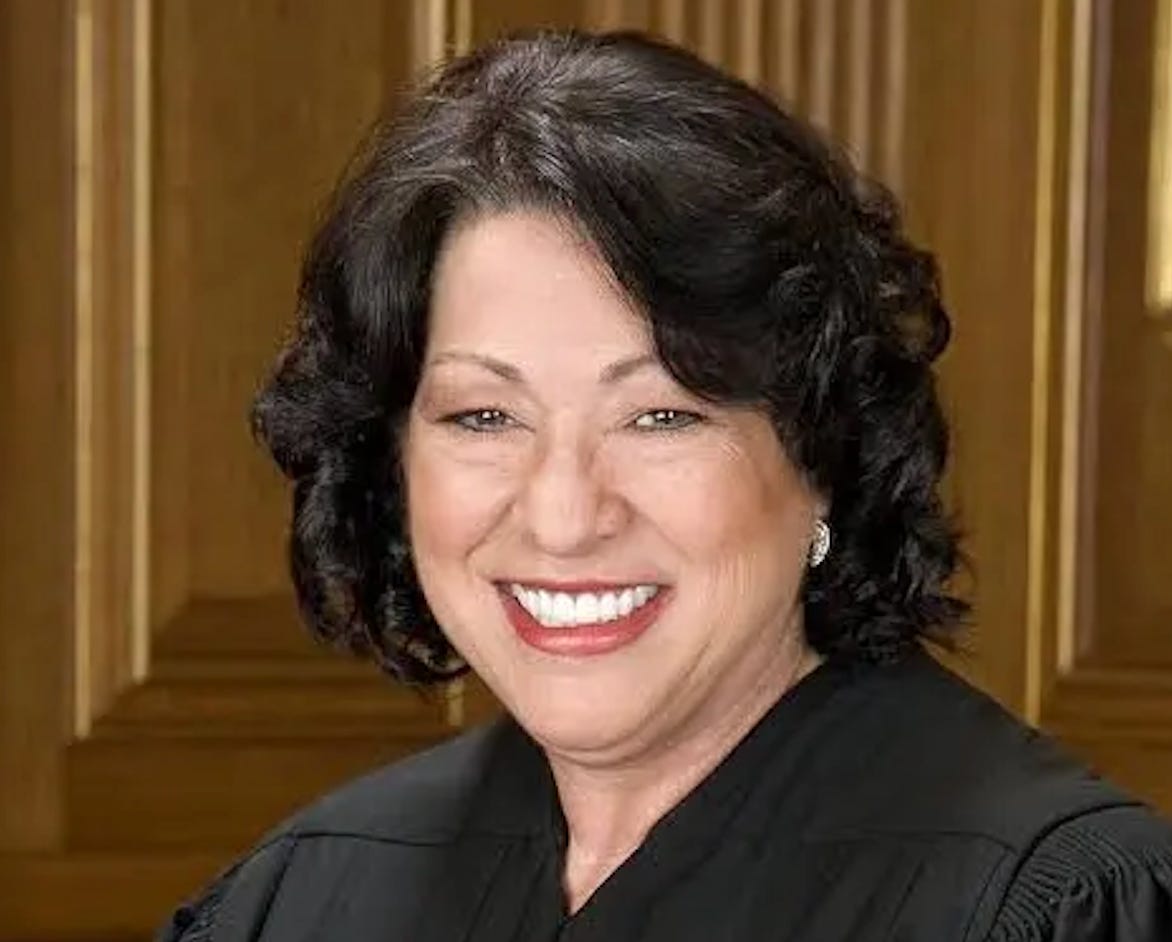
On Wednesday, the U.S. Supreme Court’s Public Information Office released the rarest of rare statements: An apology from a justice to another justice.
In the statement, Justice Sonia Sotomayor said, “At a recent appearance at the University of Kansas School of Law, I referred to a disagreement with one of my colleagues in a prior case, but I made remarks that were inappropriate. I regret my hurtful comments. I have apologized to my colleague.
In the comments made last week, Sotomayor had addressed — without naming him — Justice Brett Kavanuagh’s opinion from this past September in the case that allowed racial profiling in immigration enforcement. It was the opinion that led to the stops being referred to as “Kavanaugh stops,” and the consequences have been stark.
Sotomayor said as much.
“I had a colleague in that case who wrote, you know, these are only temporary stops. This is from a man whose parents were professionals. And probably doesn’t really know any person who works by the hour,” she said in an event at the University of Kansas, as reported by Bloomberg Law’s Jordan Fischer. “Those hours that they took you away, nobody’s paying that person. And that makes a difference between a meal for him and his kids that night and maybe just cold supper.”
The comments were, understandably, a hit with those who have criticized Kavanaugh’s opinion and the court’s order. I thought they were spot on.
It was a big deal. As Jay Willis wrote at Balls & Strikes, “[S]ingling out a colleague for having no idea what life is like for people who are not double Yalies is as close as a Supreme Court justice gets to publicly suggesting that another Supreme Court justice is full of shit.“
Sotomayor initially said nothing as stories were written and the message spread.
By Wednesday, though, Sotomayor announced that she had apologized to Kavanaugh for the “hurtful comments.”
This — understandably — didn’t sit well with some people (as I’ve seen in my mentions after sharing Sotomayor’s statement).
There certainly is a legitimate discussion to be had about whether this public apology was necessary — especially given that, for the most part, there is no doubting that she was correct in her assessment, as she was in her dissent back in September.
That said, I’d like to point to a different comment Sotomayor made in Kansas last week that helps to provide a good basis for understanding why she may have done so.
When asked about her role as the first Latina on the court, she said the following:
Life experiences teach you to think more broadly and to see things others may not. And when I have a moment where I can express that on behalf of people who have no other voice, then I’m being given a very rare privilege.
Sotomayor is one of three Democratic appointees on the Supreme Court. In order to stop rulings that she and Justices Elena Kagan and Ketanji Brown Jackson think are wrong under the law, they need to find at least two Republican appointees who will vote the same way. Even when they can’t win a case, the justices are often working to prevent what they see as worse outcomes.
It is difficult to be a Democratic appointee on the court right now, and if you agree with their legal aims, I think it’s important to see their job as a fundamentally different one from a member of Congress — or anyone outside of government. There are nine votes, and each time they cast those votes they’re setting the rules that all of us need to live under for now.
Re-reading her comment from last week with that reality in mind, it’s easy to see her apology as a selfless move — outside of any personal beliefs — aimed at maintaining her relationship with Kavanaugh for “people who have no other voice.“
The apology came as the justices are working on opinions in key cases addressing birthright citizenship, voting rights, transgender rights, presidential powers, and much more — and as the final arguments of the term are set to begin next week, including the arguments over the Trump administration’s efforts to cancel temporary protected status for immigrants from Haiti and Syria.
Kavanaugh could be key to any of the decisions in any of those cases.
I believe we all benefit from honest, public assessments from the justices about what’s going on at the Supreme Court.
We got that from Sotomayor last week. The comments were made, the stories were published, and we know what she thinks.
I also understand why Sotomayor decided to issue this statement on Wednesday — and think those who support Sotomayor’s legal goals for the nation should as well.
A class act from a smart woman.
Sure, Justice Sotomayor showed class, by extending a gesture of professional respect to a colleague. Somehow though, Justice Kavanaugh owes the whole nation an apology for enabling the stops that bear his name. If he has any class at all, maybe one day we might hear something from him.