

Donald Trump's effort to run his lawsuits out of Florida has hit a snag: the law
Trump v. BBC, Trump v. NYT, and Trump v. IRS all sent a message to Trump on Monday. And, for paid subscribers: Closing my tabs.

On Monday, a series of developments showed the difficulty, even for Donald Trump, of using the courts to threaten journalists and manipulate the federal government to his ends.
In a trio of cases that Trump brought in federal courts in Florida, the limits of Trump’s powers were made plain.
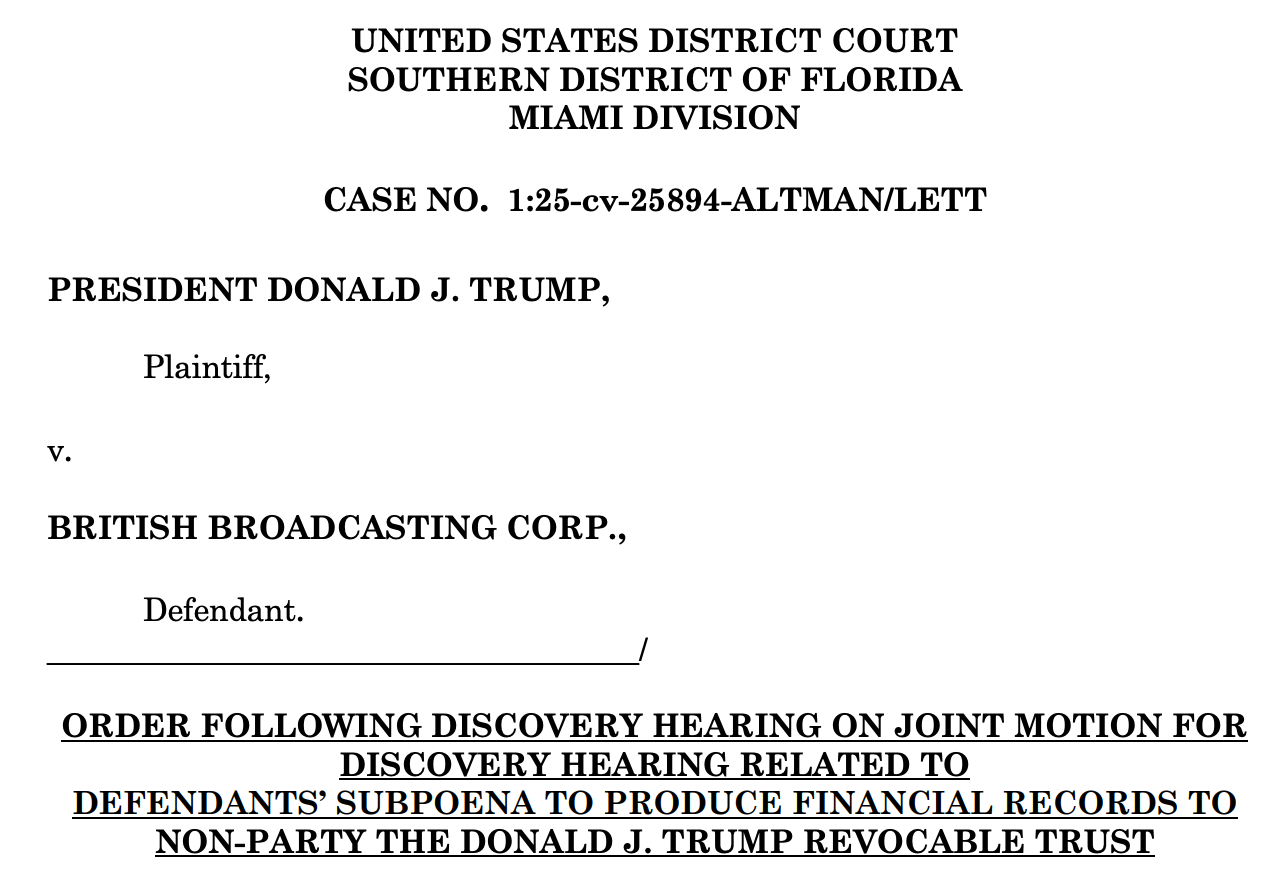
In his defamation lawsuit against the BBC, U.S. Magistrate Judge Enjoliqué Lett, in the Southern District of Florida, ordered the Donald J. Trump Revocable Trust to turn over significant financial information the BBC subpoenaed as part of discovery in the lawsuit. The trust challenged the subpoena, but Lett rejected the trust’s arguments on Monday. Finding that the subpoena was not improper, disproportionate, or unduly burdensome, Lett ordered that:
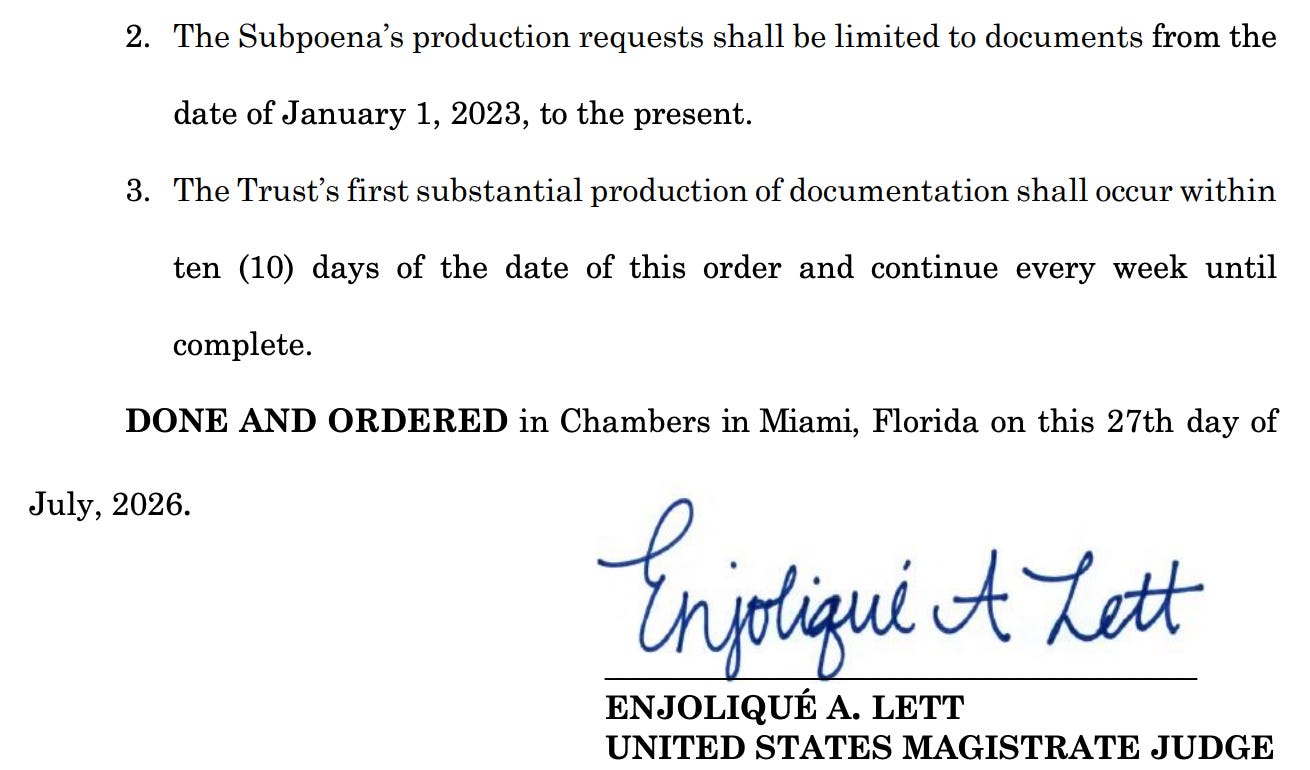
Per Lett, the subpoena seeks, among other documents, “financial documents that reflect the Trust’s holdings and value, including documents such as Trust instrument copies, documents relating to the Trust’s financial interests, the Trust’s schedules of assets, inventories, and lists of properties held, along with documents reflecting real property held.“
Under Lett’s order, the first “substantial” production is to happen in 10 days.
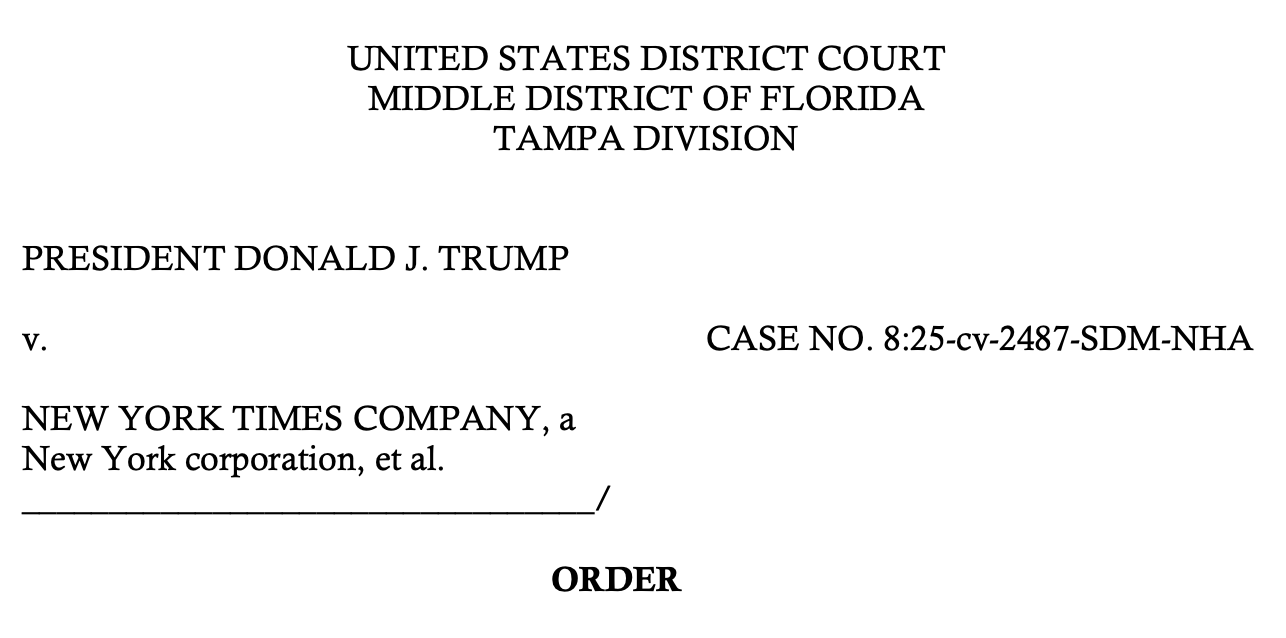
In Trump’s defamation lawsuit against The New York Times and others, Trump and his lawyers will have one last chance to save their case from being dismissed, following an order U.S. District Judge Steven Merryday issued Monday in the Middle District of Florida.
In opposing the Times’s motion to dismiss, Trump’s lawyers argued that “should the Court be inclined to grant Defendants’ Motion to Dismiss,” he should be allowed the chance to “amend his Complaint to cure any such deficiencies.“
Merryday, a George H.W. Bush appointee who already struck Trump’s initial complaint, took them up on that on Monday, citing that part of Trump’s opposition, and ordering:
The plaintiff’s motion for leave to amend the complaint is GRANTED, and no later than AUGUST 27, 2026, the plaintiff may amend the complaint.
After that, the Times will have three weeks to stand on their earlier arguments or supplement their motion to dismiss. If they supplement their motion, Trump will have two weeks to respond.
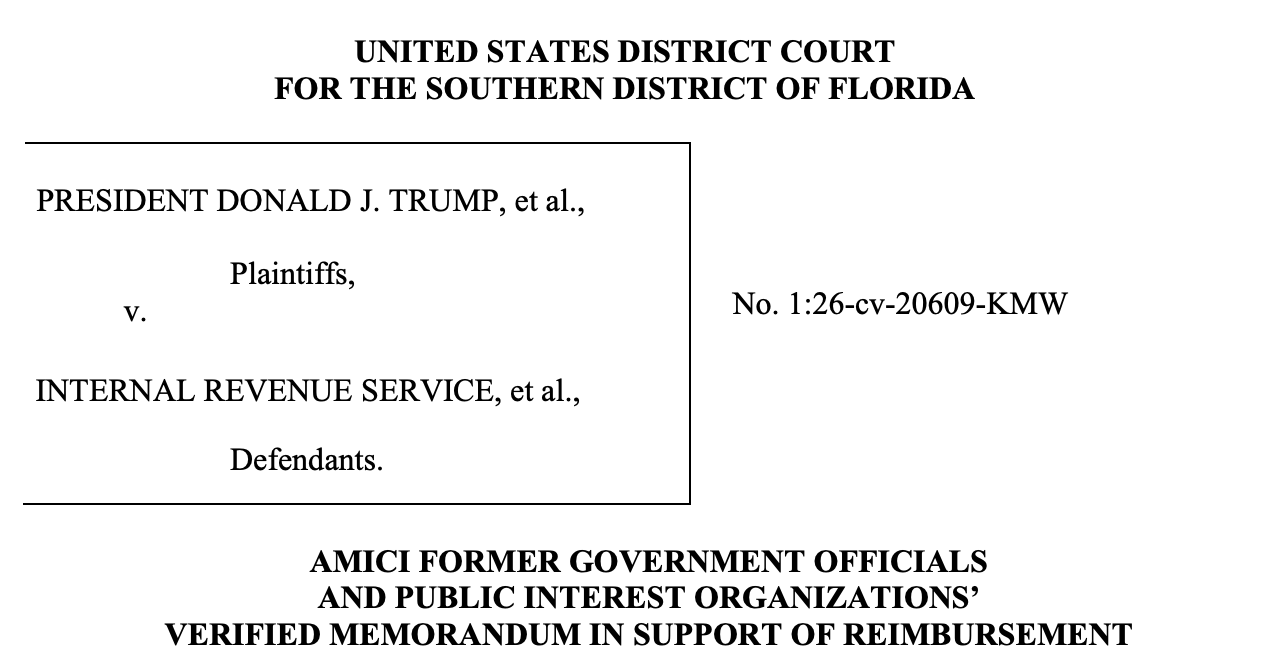
Finally, in Trump’s lawsuit against the Internal Revenue Service, the former government officials who challenged Trump’s attempted “settlement” of the lawsuit filed a motion asking the court to award “$39,000.00 in attorneys’ fees for work performed by counsel from Democracy Forward Foundation.”
This filing was a follow-on effect of U.S. District Judge Kathleen Williams’s July 13 sanctions order, as one element of the inherent sanctions she issued against Trump
Because “the Court expressly finds that Plaintiffs acted in bad faith,” Williams, an Obama appointee, concluded that “[t]he Court finds monetary sanctions appropriate under its inherent authority and prerogative to police the matters and litigants who avail themselves of its jurisdiction.” Specifically, she continued, two sets of amici — one group of former government officials and public interest organizations, as well as a group of former judges — “if they wish, may file, within fourteen (14) days of this Order, a memorandum regarding any appropriate reimbursement.”
One of those requests came in on Monday afternoon.
[Update, 10:25 p.m.: A second request, on behalf of the former federal judges amici, was filed on Monday night. They are seeking a smaller amount, including “nominal fees of $1 for each of the four firms that represented them,“ as well as $4,606.83 for out-of-pocket expenses incurred in the representation:
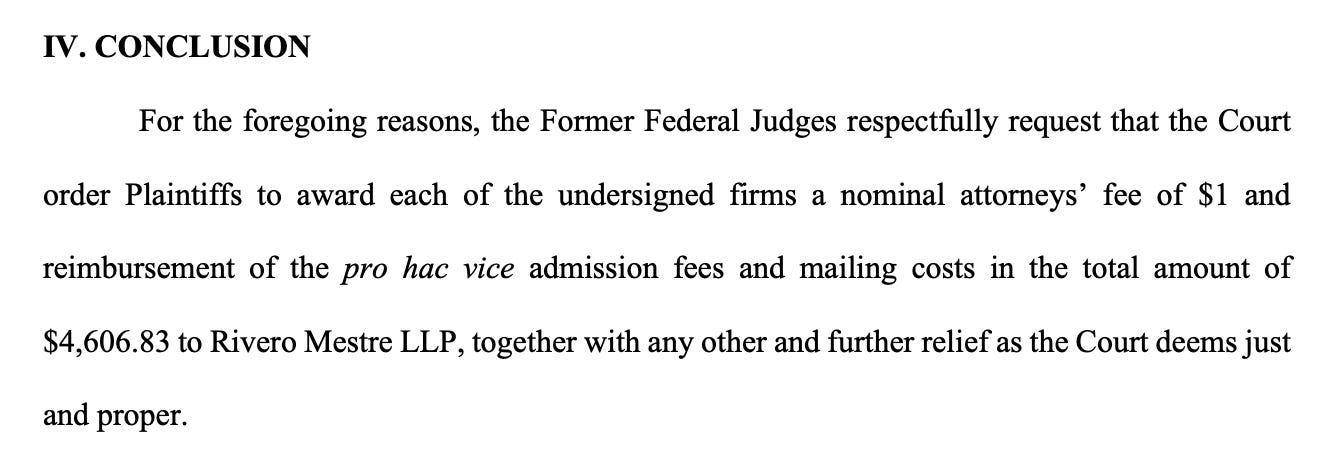
In their filing, they noted that “[a]n award is especially appropriate in this sui generis case, where there was a lack of adversity between the parties and the need for an independent entity to provide the Court with information and legal analysis is particularly acute.“]
Standing alone, these are just case developments like happen every day — although the order in the BBC case is significant and obviously Trump’s underlying actions in the IRS case are in a league of their own. But, Monday’s developments combined to serve as a reminder that, despite Trump’s dreams of intimidation and control, he can only do so much in our system unless the other branches help him along the way.
Closing my tabs
For those who don’t know what this is, it’s my effort to give a little thank you to paid subscribers. “Closing my tabs” is, literally, me looking through the stories and cases open — the tabs open — on my computer and sharing with you all some of those I was unable to cover during the week but that I nonetheless want to let you know that I have on my radar. Oftentimes, they are issues that will eventually find their way back into the newsletter as a case discussed moves forward or something new happens that provides me with a reason to cover the story more in depth.
This Monday, these are the tabs I am closing:
