

SCOTUS takes up cases over efforts to end protections for immigrants from Syria, Haiti
DHS Sec. Noem's efforts to end temporary protected status designations for those from Syria and Haiti will remain blocked for now — an important win for those challenging Noem.

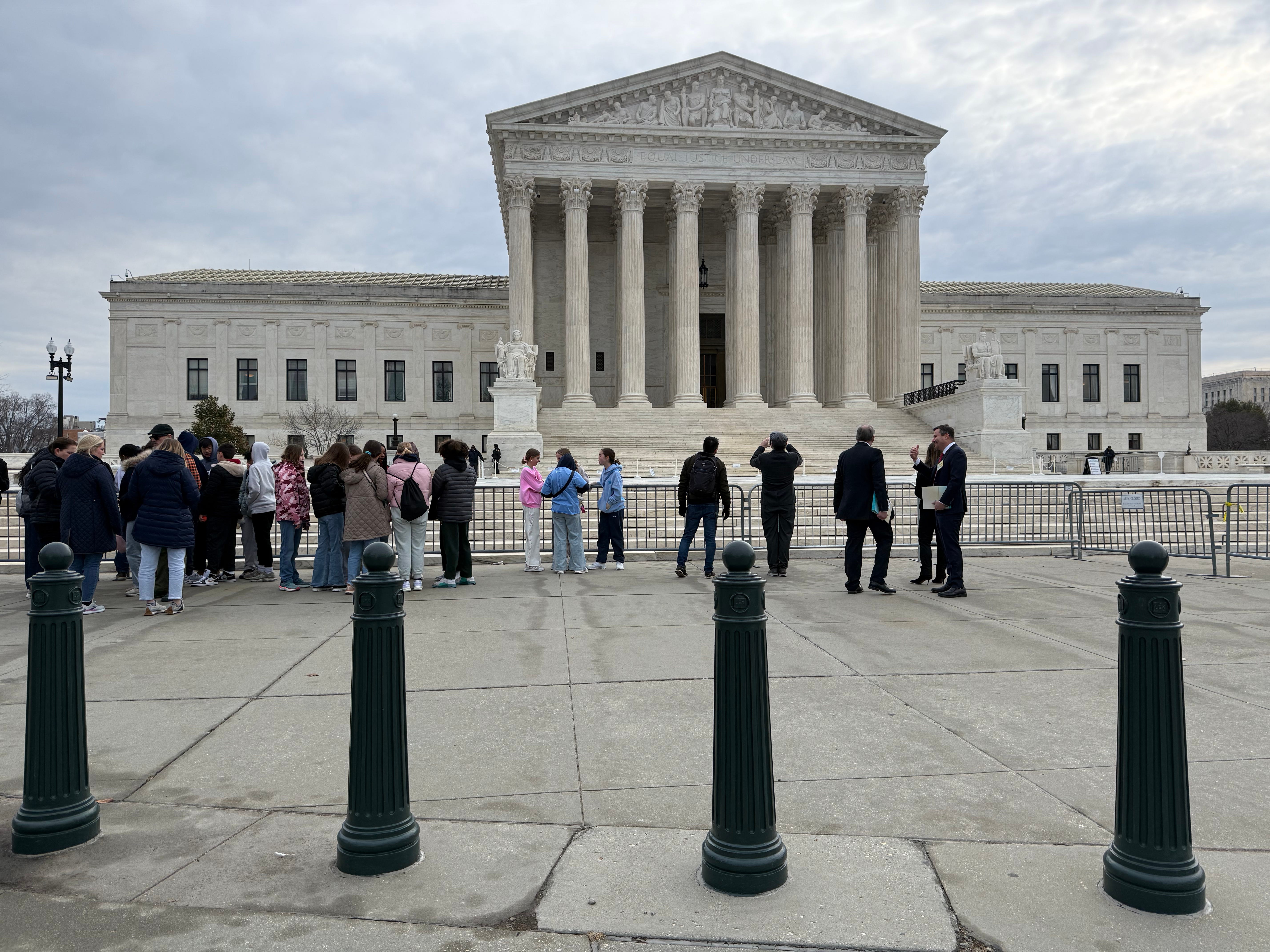
The U.S. Supreme Court announced on Monday afternoon that the justices will be taking up two major cases this spring to address whether the Trump administration’s effort to end legal protections for immigrants from Syria and Haiti will be allowed to go forward.
The cases are over Homeland Security Secretary Kristi Noem’s efforts to revoke temporary protected status (TPS) for people from Syria and Haiti. Lower courts had sided with the challengers, blocking Noem’s efforts during litigation, and — in an important win for the challengers — those rulings will stay in place while the justices consider the cases.
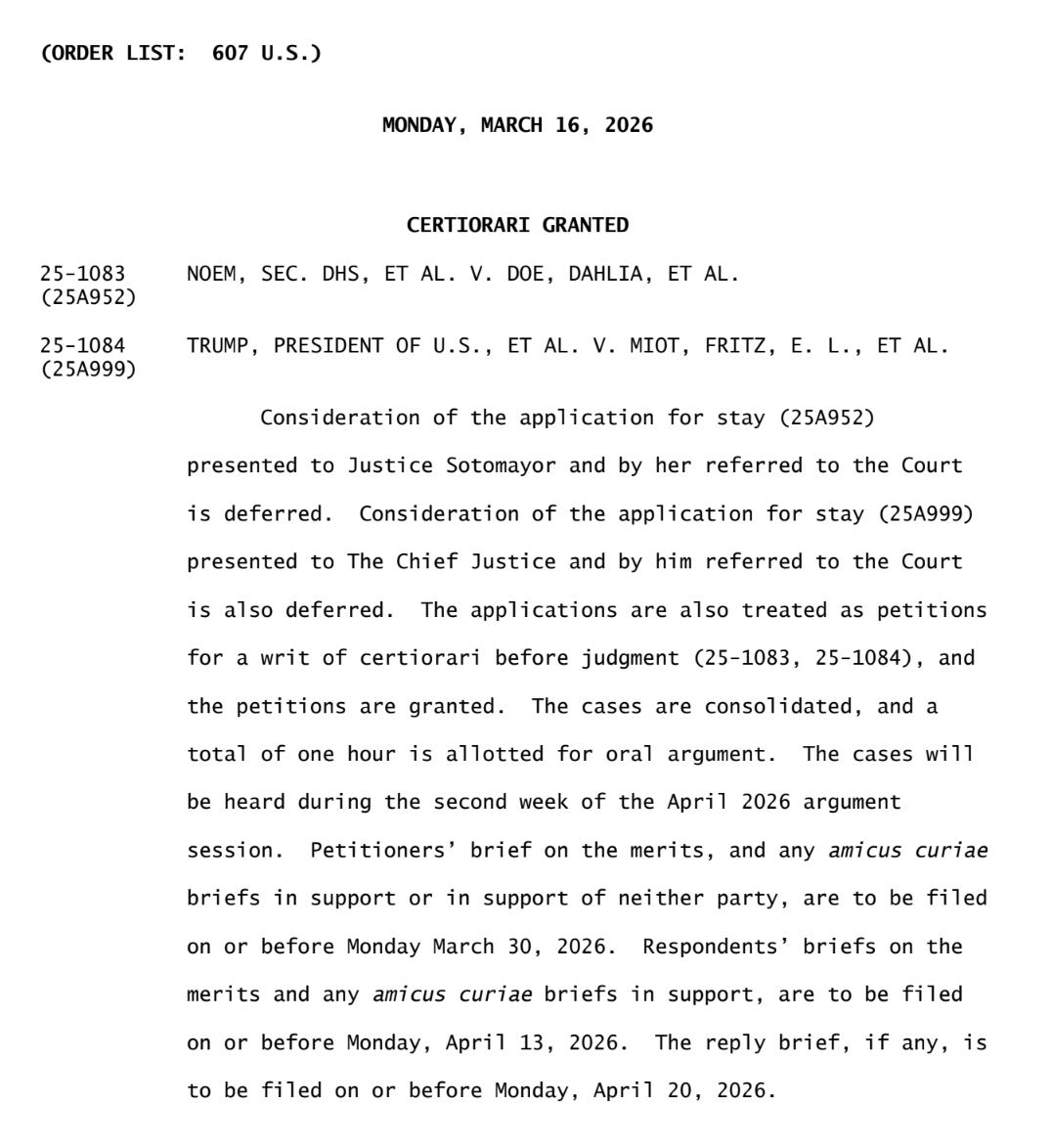
The Justice Department had asked the Supreme Court to stay those rulings — allowing the administration to implement the TPS revocations during litigation — but the Supreme Court did not grant the requests, deferring them for now. Instead, the court granted full merits review on an extremely expedited schedule, with arguments to be heard the last week of April — meaning a ruling would be expected by late June.
In DOJ’s requests, it had pointed to two prior Supreme Court shadow docket stays of lower court orders blocking TPS revocations — involving Venezuela — as proof that stays in these cases were not only obvious, but to claim that lower courts that had concluded otherwise were engaged in “persistent disregard for this Court’s stay orders.”
If justices agreed with that, they did not say so on Monday — and rejected DOJ’s request for now.
By granting full merits review now, moreover, the cases set the justices up for yet another major ruling this term on the power of the courts to review executive branch actions and “say what the law is,” as then-Chief Justice John Marshall put it more than 200 years ago.
Noem has sought to revoke TPS for people here from many nations over the course of the past 14 months, and, in many instances (as recently as March 13), judges have initially blocked her efforts as likely violating the Administrative Procedure Act, equal protection guarantees, or both. Throughout the cases, DOJ has argued that federal law bars judicial review of Noem’s decisions to end TPS, in addition to arguing that the APA and equal protection challenges should fail.
In two earlier instances — both relating to a challenge to Noem’s effort to end Venezuela TPS — the Supreme Court granted the administration’s requests for stays pending appeal over the course of last year.
In these two cases, DOJ asked for stays in part based on those shadow docket rulings. In the initial, Syria TPS filing, for example, Solicitor General John Sauer wrote that the U.S. Court of Appeals for the Second Circuit’s decision denying a stay pending appeal was “indefensible,” claiming, “It flouts this Court’s two prior stays of materially similar orders in materially similar postures ….”
In response, lawyers for those challenging the Syria TPS revocation, which they noted “preserves the immigration status of 6,132 people who have lived here lawfully for years,” argued that “those cases and factors are meaningfully distinct, as the Second Circuit found in denying the government’s stay application even before the U.S. strikes on Iran and regional war began.”
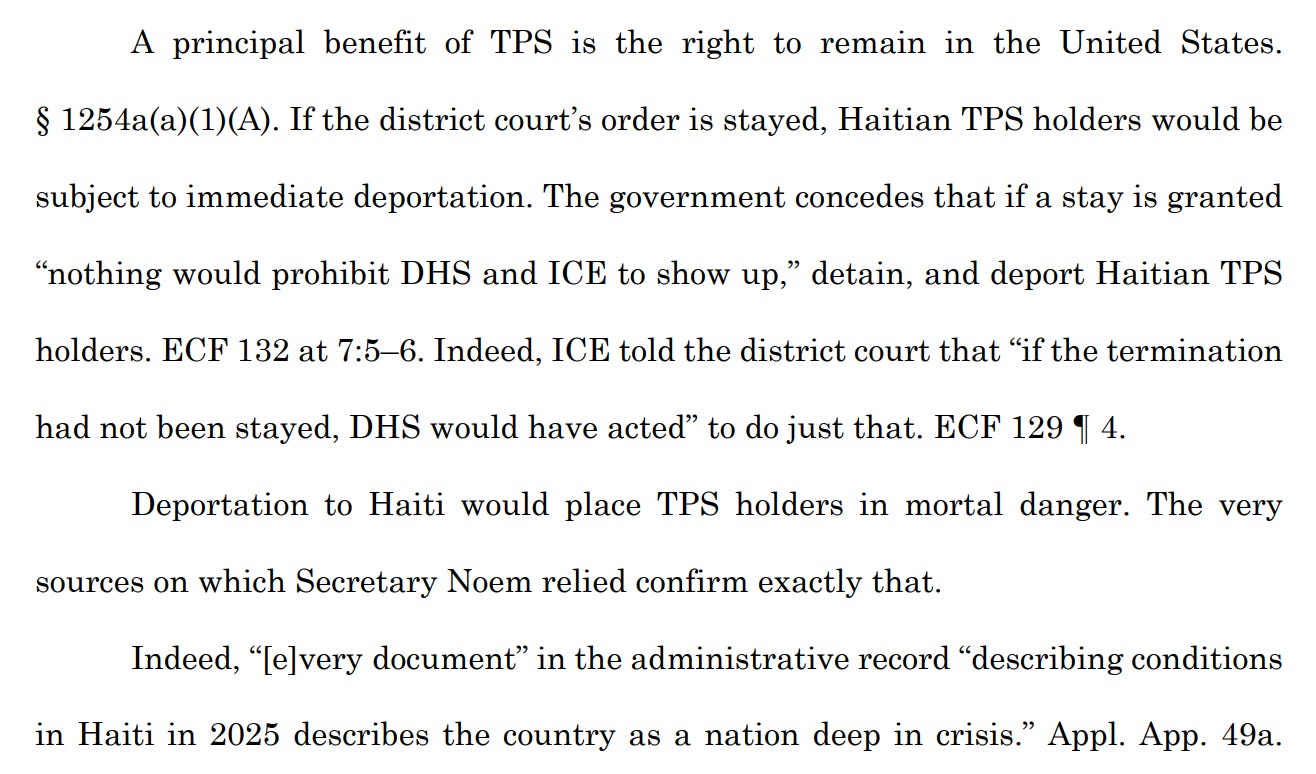
Similarly, the Haiti TPS revocation challengers, who opposed the government’s request in that case on Monday, wrote of the “mortal danger“ revoking their clients’ status could place those people in if, as expected, the Trump administration would seek to deport them “immediate[ly]” if allowed to do so:
As noted above, the Supreme Court did not grant those stay requests on Monday.
But, in addition to the stay requests, DOJ proposed that the court treat their shadow docket applications as requests for certiorari before judgment — leapfrogging the appeals courts to have the appeal heard directly at the Supreme Court.
In the Syria TPS case, DOJ argued:
[G]iven the lower courts’ persistent disregard for this Court’s stay orders, this Court should also grant certiorari before judgment. Otherwise, lower courts will continue to impermissibly bypass an unambiguous judicial-review bar and displace the Secretary’s judgment on matters committed to her unreviewable discretion by law; continue to twist APA review to substitute their own judgment for the Secretary’s; and continue to impede the termination of temporary protection that the Secretary has deemed contrary to the national interest, tying those decisions up in protracted litigation with no end in sight.
Both challengers opposed that. Beyond arguing that DOJ is wrong on the merits of the cases and that the prior stay orders do not control the outcomes in these cases, they argued that their respective cases would benefit from normal appellate review before being taken up, if needed, by the Supreme Court.
Despite that, however, there was a sign last week — that I noted over the weekend — that the grounds were shifting. In the Haiti TPS revocation case, the challengers filed their own “conditional” petition for certiorari before judgment, arguing that, if the Supreme Court took up the Syria TPS revocation case, it should take up the Haiti case as well.
In granting certiorari before judgment on Monday, the court did not state explicitly in the order what questions the parties are to address in their rapid-fire briefing over the next five weeks, but DOJ had included questions in both stay applications.
In the Syria TPS revocation case, DOJ had stated:
If the Court grants certiorari before judgment, the Court should review the following questions: (1) whether the judicial-review bar in the TPS statute, 8 U.S.C. 1254a(b)(5)(A), precludes respondents’ APA claims; and (2) if reviewable, whether respondents’ APA claims nonetheless fail on the merits.
In the Haiti TPS revocation case, DOJ had stated:
If the Court grants certiorari before judgment in this case, the Court should review the following questions: (1) whether the judicial-review bar in the TPS statute, 8 U.S.C. 1254a(b)(5)(A), precludes respondents’ APA claims; (2) if reviewable, whether respondents’ APA claims nonetheless fail on the merits; and (3) whether respondents’ equal-protection claim fails on the merits.
Arguments are to be set for the final week of oral arguments this term, the week of April 27, although a specific date is not yet set, so it is not yet reflected on the calendar. An amended argument calendar for the April sitting will be expected to be issued in short order, reflecting the date of arguments and any changes to other argument dates.
Not pointedly ironic, I guess (for irony is often too subtle) that DoJ whines about “the lower courts’ persistent disregard” of SCOTUS stays … when DoJ disregards those same courts’ rulings.
It’s all quite alarming and some of this I don’t even understand
what the basis of this right wing attack is originating from- Ex what is the reason for the anti-Haitian sentiments ?