

Opening up the Trump admin's attack on Minnesota refugees to greater public scrutiny
On Tuesday, Law Dork, with Public Justice, filed a motion to improve access to a key court case challenging ICE's new effort to detain thousands of law-abiding refugees.

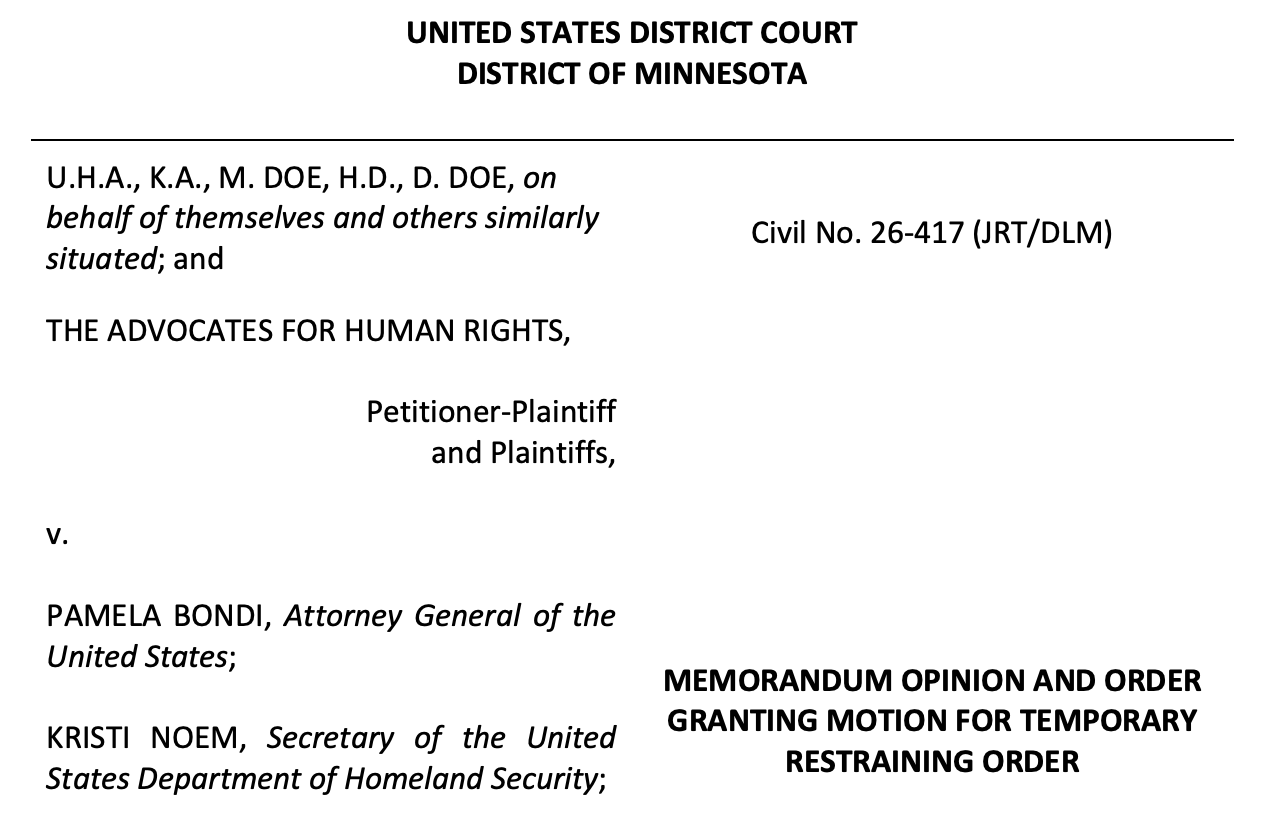
On January 18, refugees who had come to America legally in hopes of a better life filed a lawsuit because the Trump administration decided to start rounding up and detaining law-abiding refugees who have been in the U.S. for more than a year but have not yet obtained permanent resident status.
“For [the past] two weeks, refugees in Minnesota have been subject to an official policy of warrantless and often violent seizures by [Department of Homeland Security] agents, and their family members and neighbors who have not yet been seized have been living in a state of pervasive fear,“ the class-action habeas complaint began, detailing one plaintiff who was detained, another who was detained and eventually released out of state, and others who fear detention.
Nearly 25 days later, and despite emergency relief being given to a class of affected refugees, much remains unclear about the case due to transparency restrictions that run against the public’s interest in a matter of such significant public interest. Although documents can be obtained in person at the federal courthouse, a federal rule sets a default practice that restricts remote access to all documents in the case aside from judicial orders.
On Tuesday, Law Dork — with representation from Public Justice and support from Apollo Law in Minnesota — filed a motion to intervene in the case for the purpose of bringing more of this important case into the open.
The DHS effort leading to these detentions is a part of what is being called Operation PARRIS (Post-Admission Refugee Reverification and Integrity Strengthening). The “investigation” was announced by DHS on January 9 in a news release that acknowledged the initial focus would be targeting 5,600 refugees in Minnesota.
Nine days later, the lawsuit challenging the Minnesota refugee detentions was filed. That day, U.S. District Judge John Tunheim, a Clinton appointee, issued a brief order barring the government from moving the person who was detained, identified in papers as U.H.A., out of Minnesota. A few days later, he granted the plaintiffs request to proceed using pseudonyms in the case, and an amended complaint was filed two days after that.
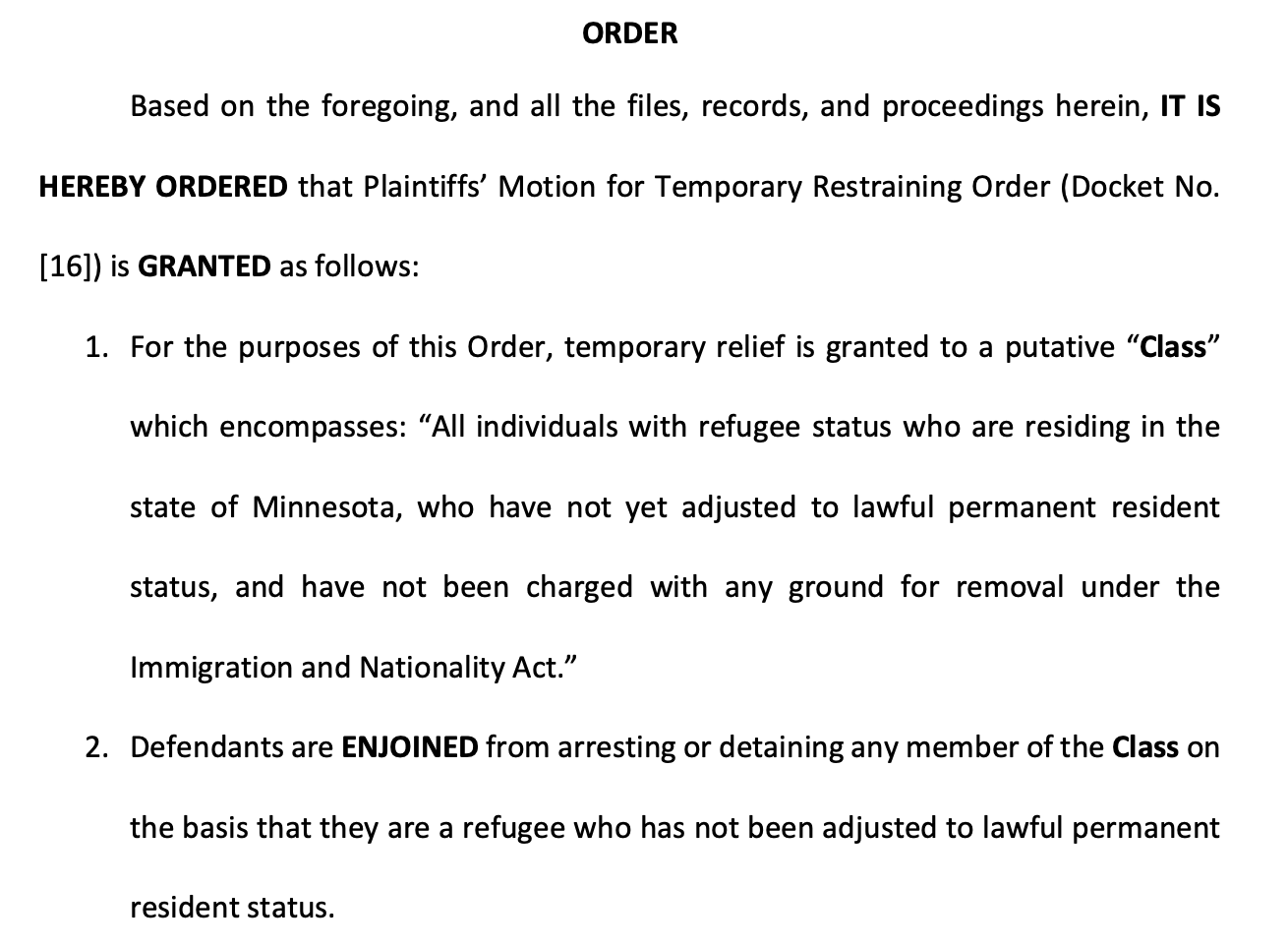
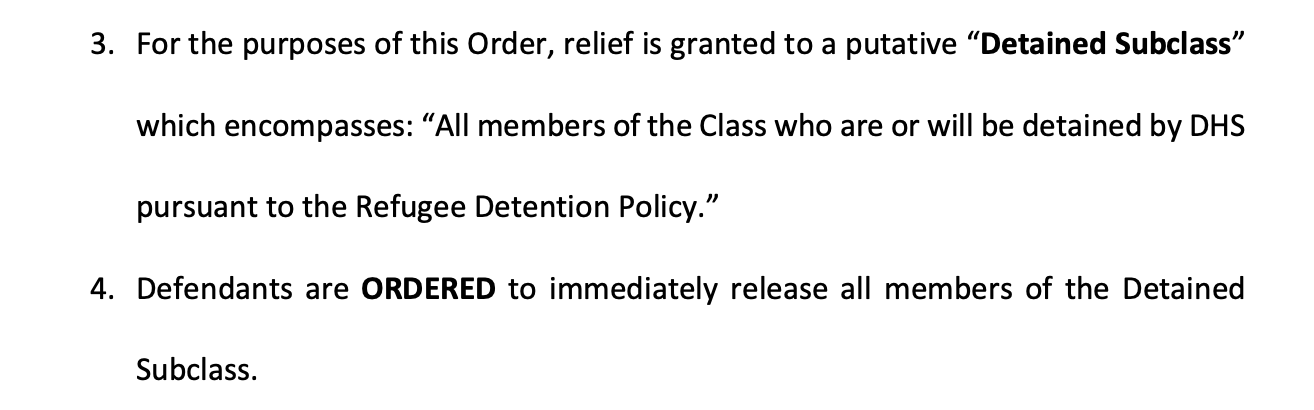
On January 28, Tunheim granted a temporary restraining order in the case, with a clarification issued the next day. Combining the two orders, Tunheim issued a TRO that will remain in place through February 25 that includes two key, class-based protections.
First, the detentions are blocked in Minnesota:
Second, those detained must be released:
On Monday, Tunheim denied DOJ’s request to dissolve the TRO.
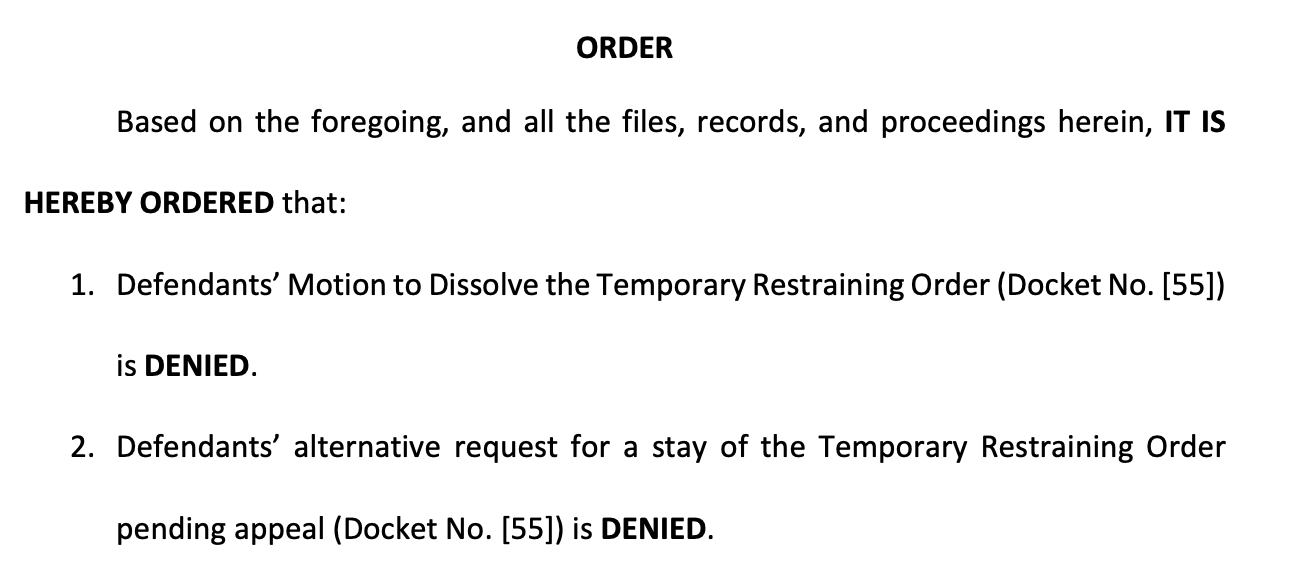
Because of the default rule, however, those are the only public documents in the case. Law Dork has obtained a number of the other documents in the case, but access should not be dependent on being able to go to a courthouse or get in touch with the right lawyer — particularly where, as here, class-wide relief has been granted.
For example, there is a contempt motion pending from the plaintiffs in the case, which DOJ responded to on Tuesday night.
Additionally, in Tunheim’s Monday order, he acknowledged an extremely important development, not just in the case but for all refugees who have not yet obtained LPR (green card) status. In addressing the relevant law at issue, Tunheim wrote:
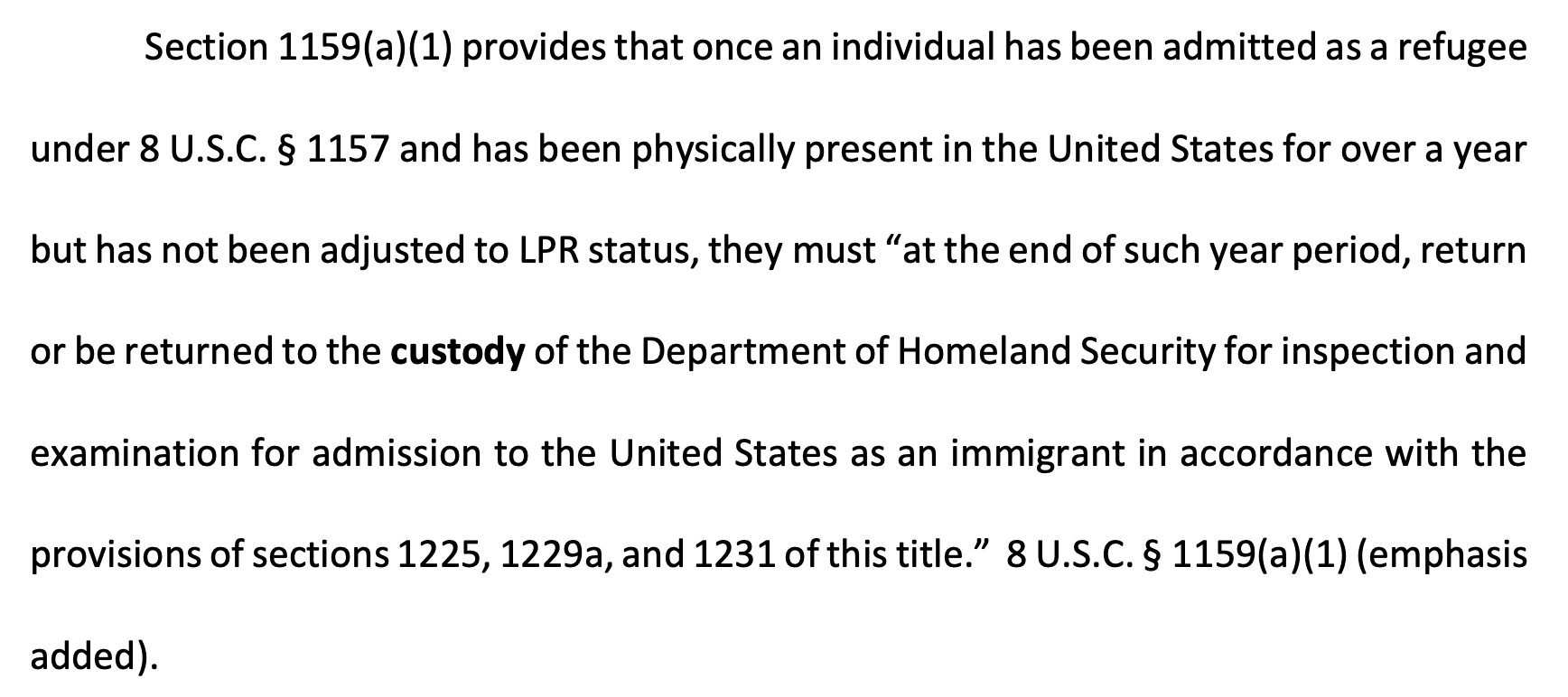
Of that provision in the Refugee Act of 1980 — 8 U.S.C. 1159 — he wrote, “Nothing in … early implementing regulations contemplated the arrest or detention of unadjusted refugees—let alone arrest without a warrant or notice.“
Then, however, he dropped a bombshell:
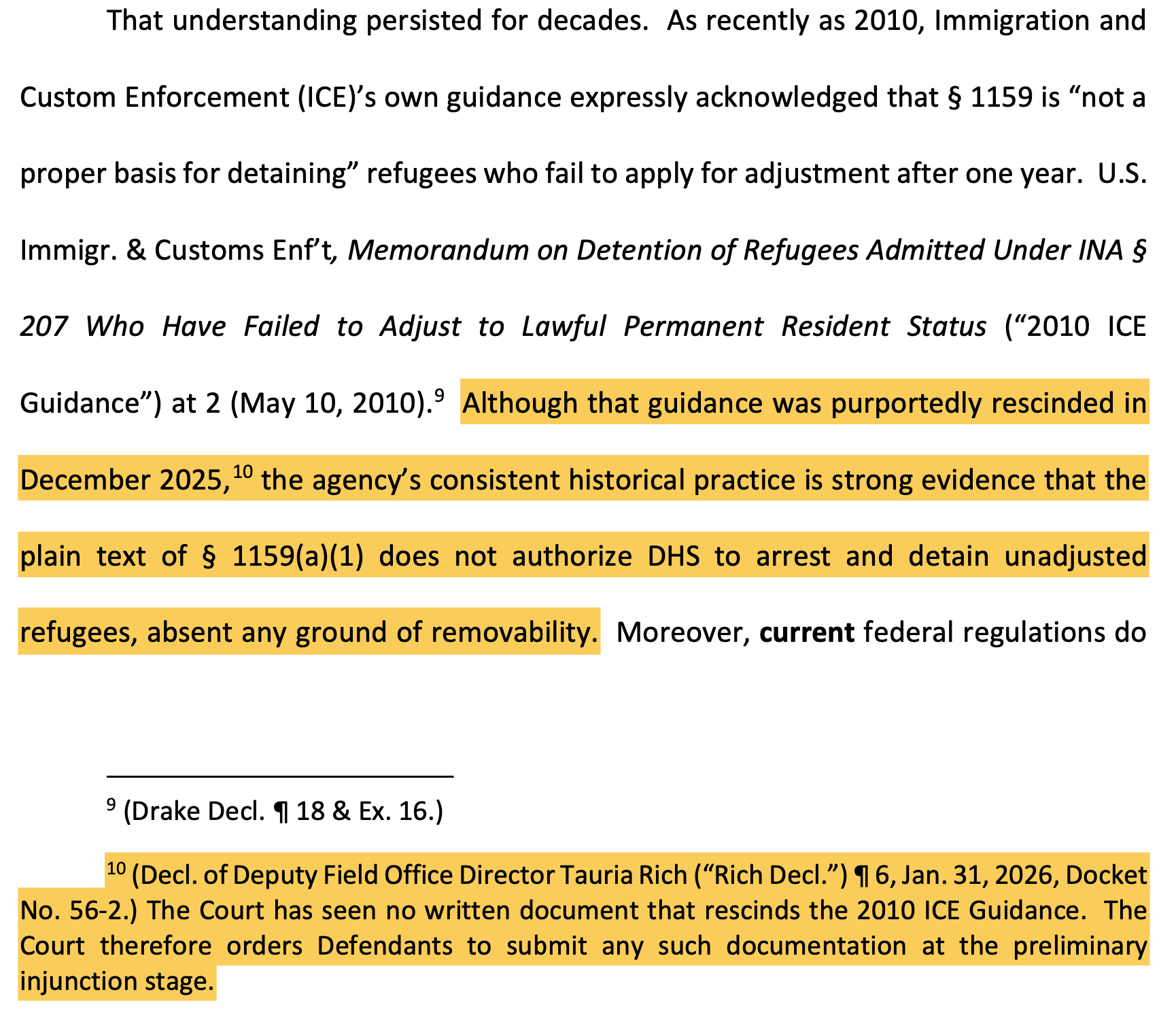
Tunheim explained that 15-year-old guidance prohibiting detention of the refugees in question was “purportedly rescinded“ — citing to a declaration the Trump administration filed in support of its motion to dissolve the TRO from a U.S. Immigration and Customs Enforcement official.
In a footnote, Tunheim explained his conditional language, noting, “The Court has seen no written document that rescinds the 2010 ICE Guidance.“
When Tunheim’s order was issued on February 9, the ICE official’s declaration was not available on the online docket due to default rule. After Law Dork was able to obtain Tauria Rich’s declaration the next day, the circumstances were more clear.
Rich is the deputy director of the St. Paul Field Office of ICE’s Enforcement and Removal Operations (ERO). In her declaration, she wrote:
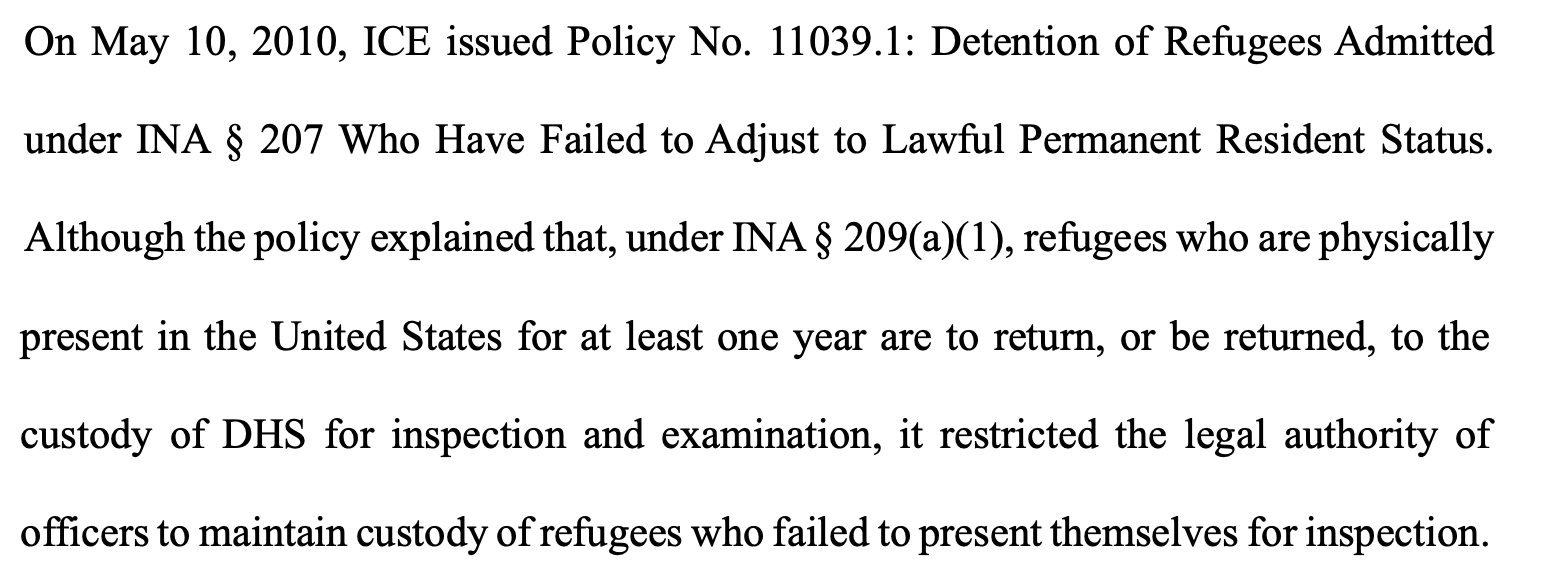
She then stated:
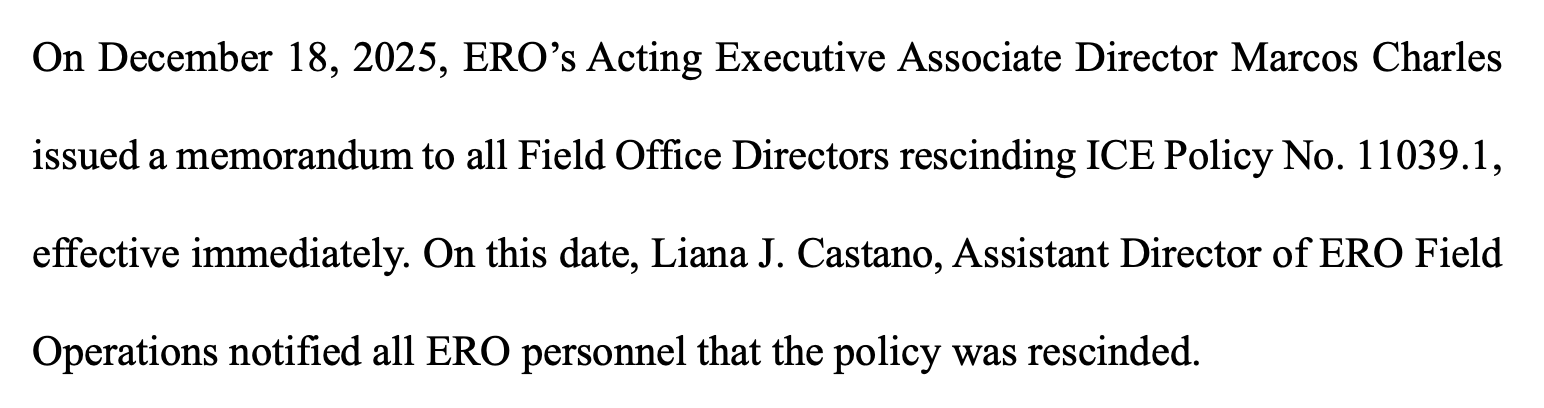
In addition to denying DOJ’s motion to dissolve the TRO on Monday, Tunheim also ordered DOJ to turn over the Charles memo. But, in doing so, Tunheim added more secrecy into the process, stating that:
Defendants shall produce and file under seal within 3 days all documents cited or relied on in Defendants’ Motion to Dissolve the Temporary Restraining Order (Docket No. [55]), including the ICE rescission memorandum regarding 8 U.S.C. § 1159, documents related to Defendants’ re-vetting and screening process, and documents related to Operation PARRIS.
No reason was given for why the documents — especially the ICE rescission memorandum — were to be filed under seal, which would make it inaccessible even to journalists or others able to get to the courthouse.
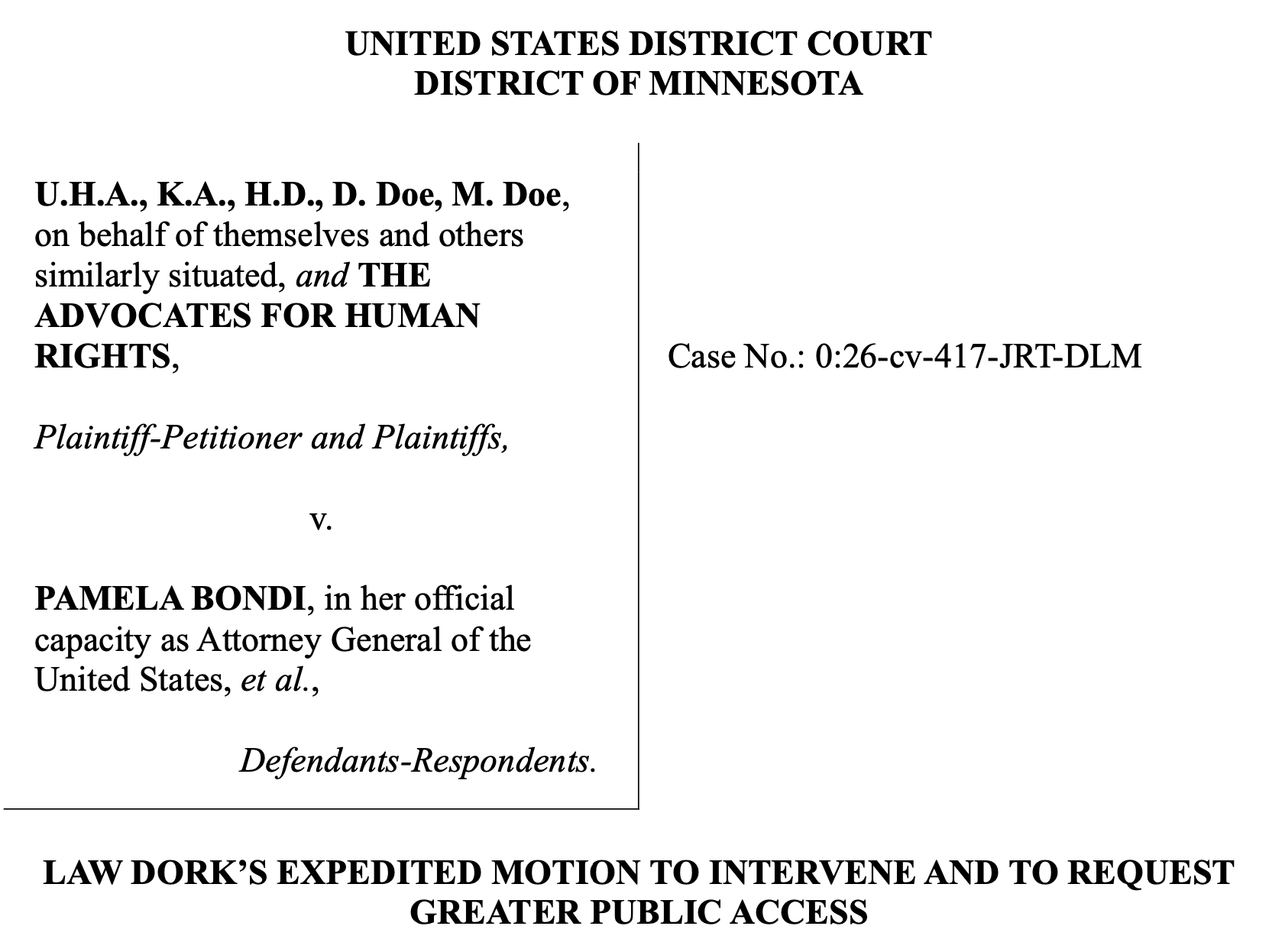
Because this case and the documents at issue in it are so important to the public, on Tuesday, Law Dork’s lawyers with Public Justice and Apollo Law filed a motion for Law Dork to intervene in the case.
In the motion, Law Dork is seeking three things:
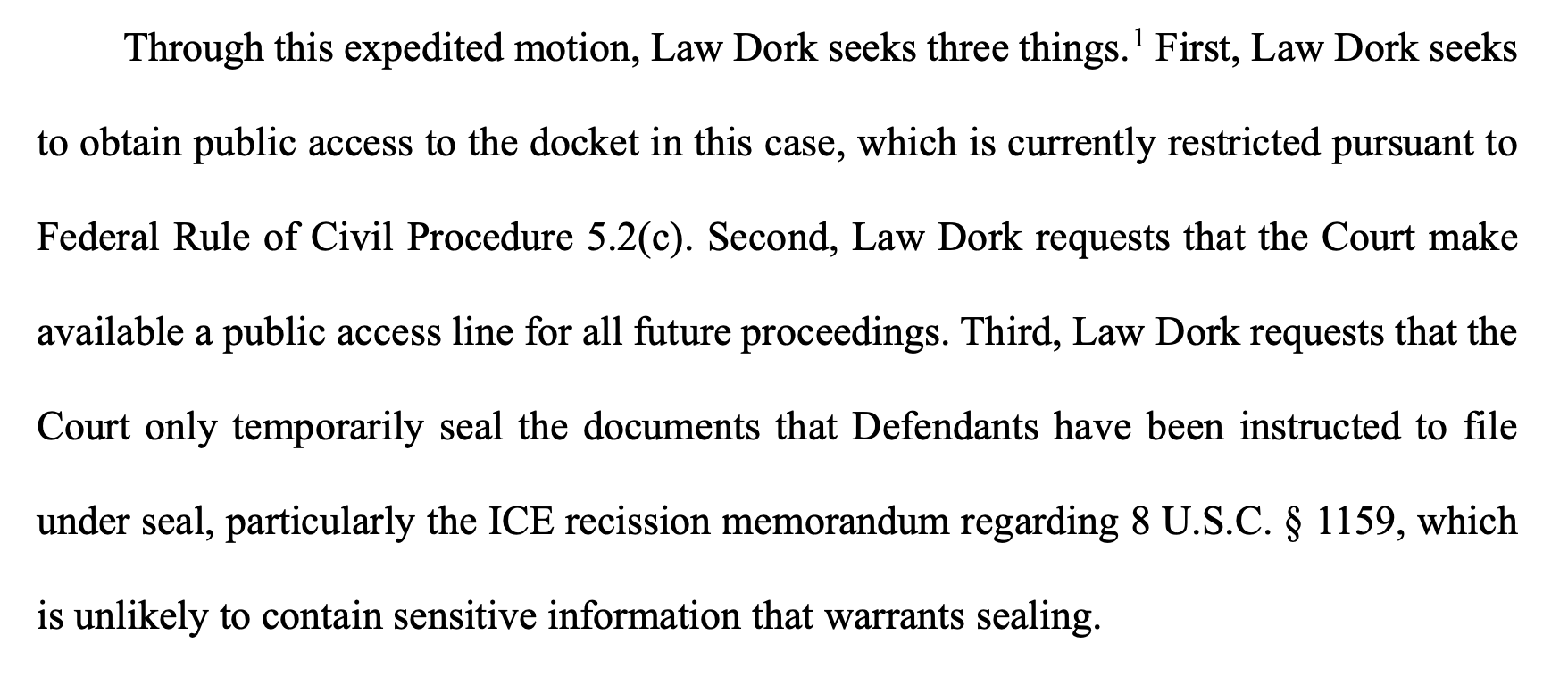
As Charles Moore, a senior attorney with Public Justice who is working on the matter, said in a statement in the news release, “The federal government is trying to get away with trampling on the rights of immigrants in the state of Minnesota. The public is entitled to see what is happening in this case so it can hold the government to account.”
As the motion concludes:
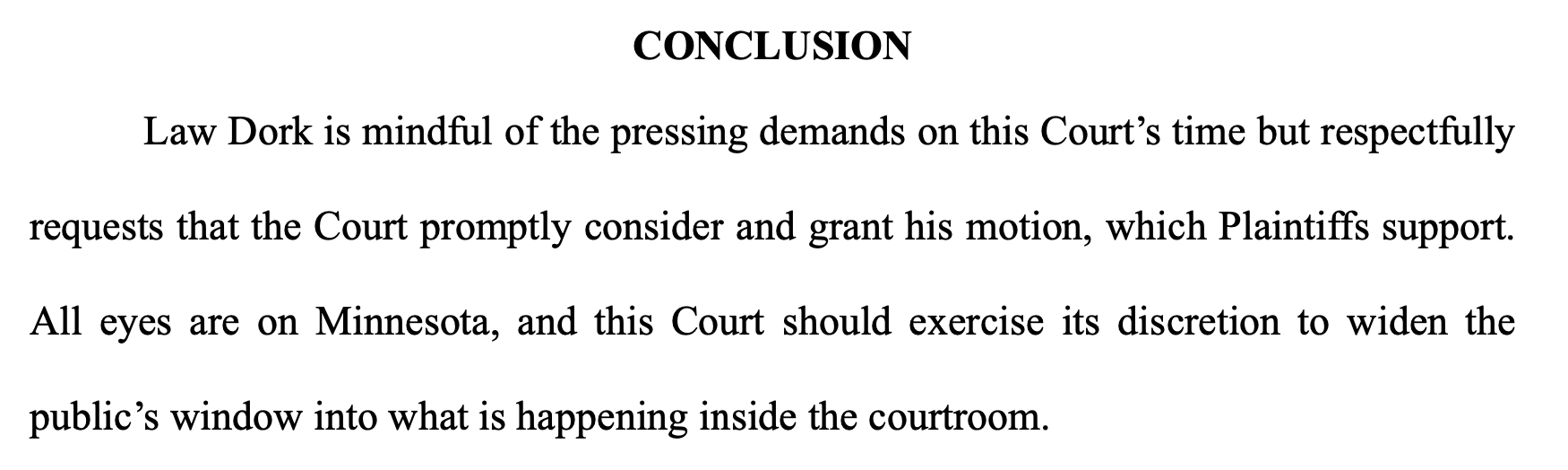
And, as I say in my declaration supporting the request, “One of the primary ways I perform the functions of Law Dork is by reviewing, analyzing, and posting court filings. I always link to the relevant filings in any case I am covering because I believe it is critical that the public have access to the primary sources at issue in any story.“
With this effort, I’d like to make that easier.
Thanks to Public Justice attorneys Charles Moore and Ana Builes and Adam Hansen at Apollo Law in Minnesota for their pro bono help on this.
Thank you for your legal work in this important matter, and for your reporting.
Thank you Chris. It is hard to focus on the horrors inflicded upon innocent law abiding refugees. We lost everything in the Eaton/Altadena fire and it is people like you and several others that give us hope that our country will be here and lawfully functional again when we come up for air and have a home again.