


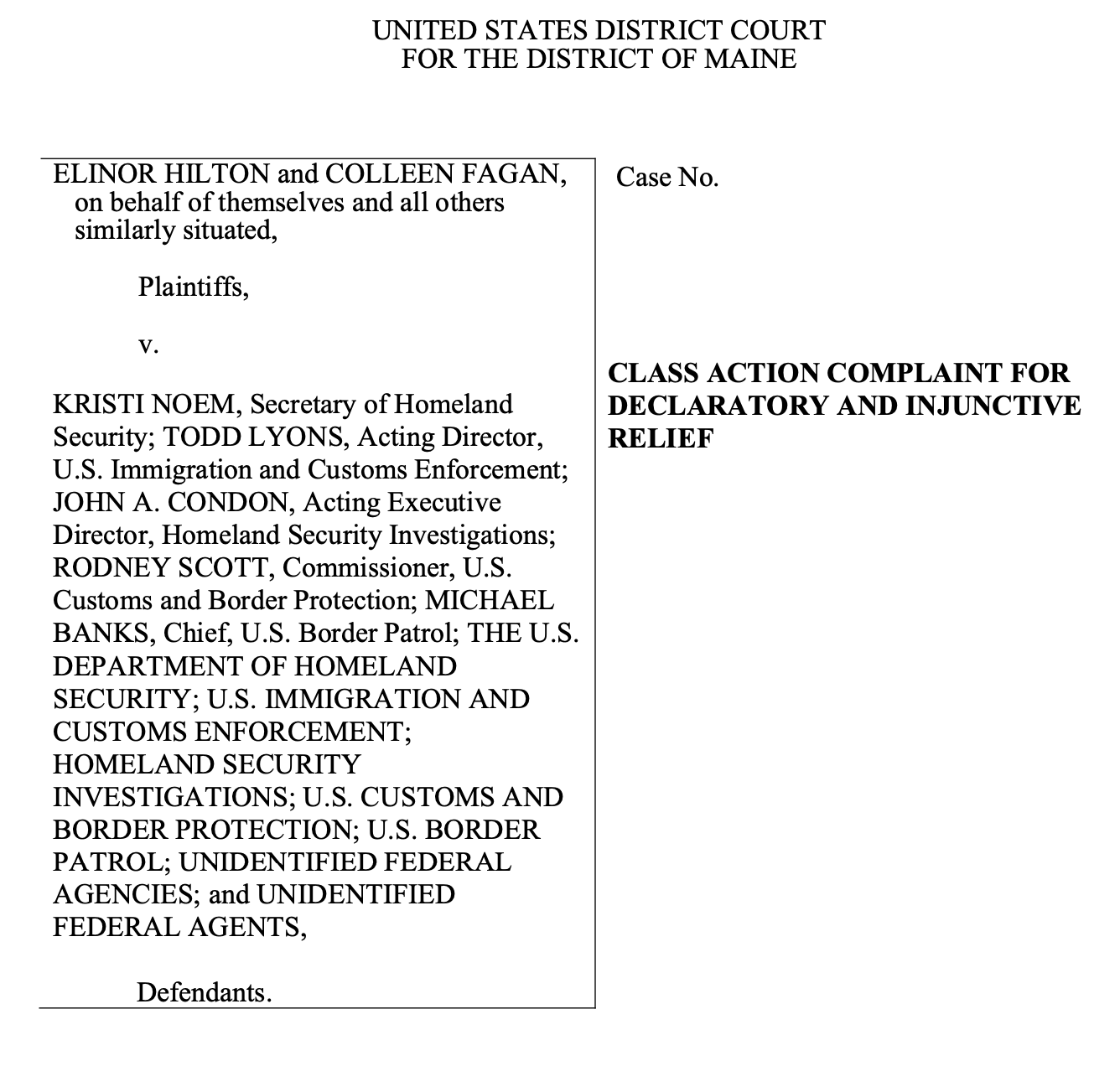
A new lawsuit in Maine seeks to stop the Trump administration from retaliating against people who are recording or otherwise observing immigration enforcement activities — specifically challenging immigration agents’ surveillance threats, often, ironically, caught on video.
“The federal government is pursuing a conscious course of action to silence and sideline Mainers and other Americans who choose to observe, record, and share information about the conduct of federal agents who have been deployed to their streets,“ the lawsuit, filed in federal court on Monday, alleges.
In the class-action complaint, backed by Protect Democracy with support from Drummond Woodsum and Dunn Isaacson Rhee LLP law firms, two “lifelong residents of Maine” allege that the claimed tracking violates their First Amendment rights of free speech, assembly, and association, as well as their First Amendment protection against retaliation for exercising those rights.
“Absent injunctive relief, Plaintiffs must either abandon their constitutional rights or accept being cataloged and branded as ‘domestic terrorists,’” the lawsuit claims. “That is a choice the Constitution does not require Plaintiffs, or anyone, to make.“
As to Elinor Hilton, one of the named plaintiffs, the lawsuit details how agents responded to her filming immigration enforcement activity in a parking lot of a Home Depot in South Portland, Maine.
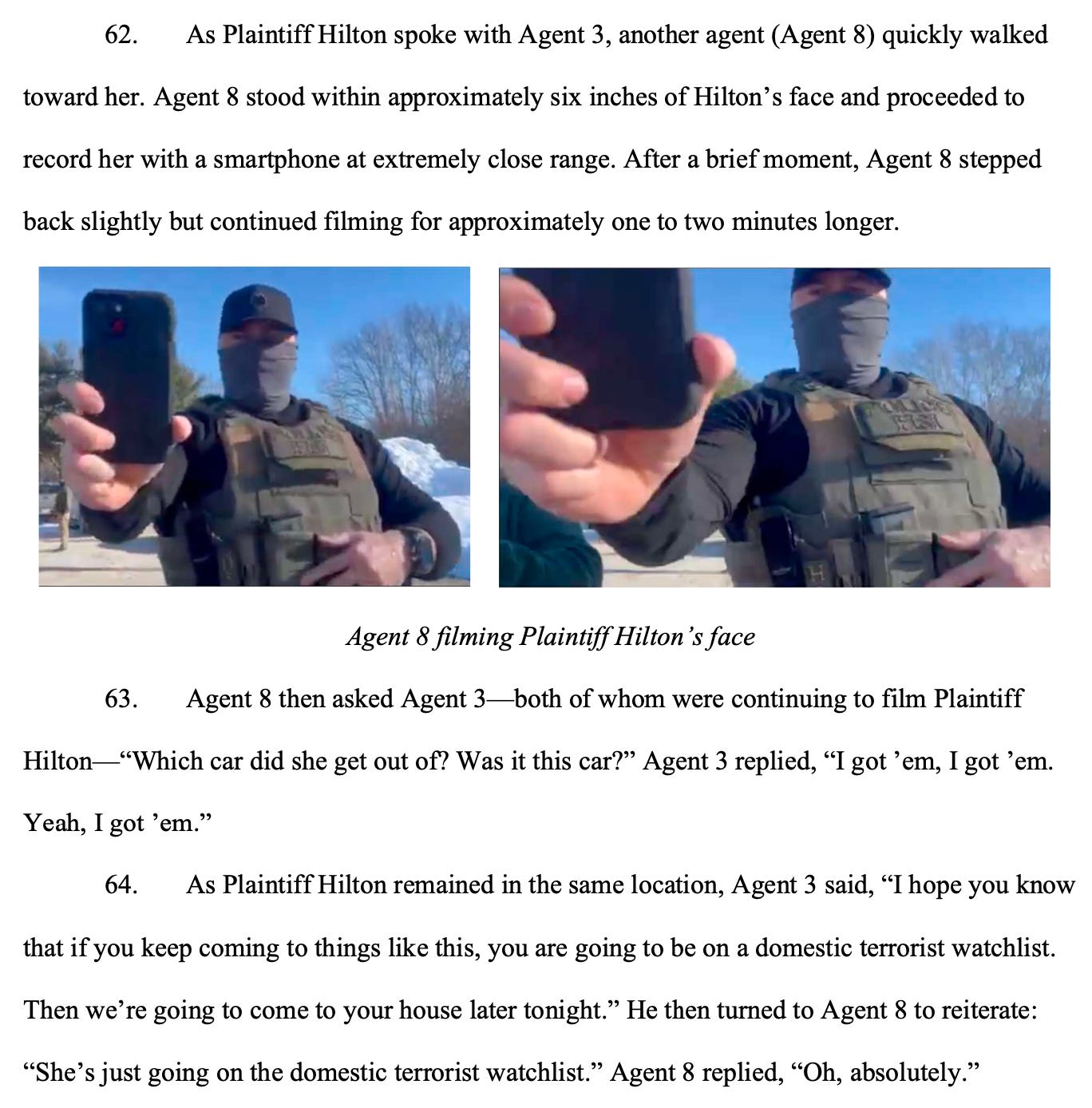
Addressing their interactions, the lawsuit put it bluntly, “[T]he message of intimidation was express and clear: Plaintiff Hilton’s lawfully protected First Amendment activity, and that of her fellow observer, would result in them having their personal data captured and being placed on a ‘domestic terrorist watchlist.’“
The lawsuit was assigned to U.S. District Judge John Woodcock Jr., a George W. Bush appointee who took senior status in 2017.
Initially, Hilton and Colleen Fagan, the other named plaintiff, are seeking a temporary restraining order to block government data collection or dissemination, threats, and retaliation against them.
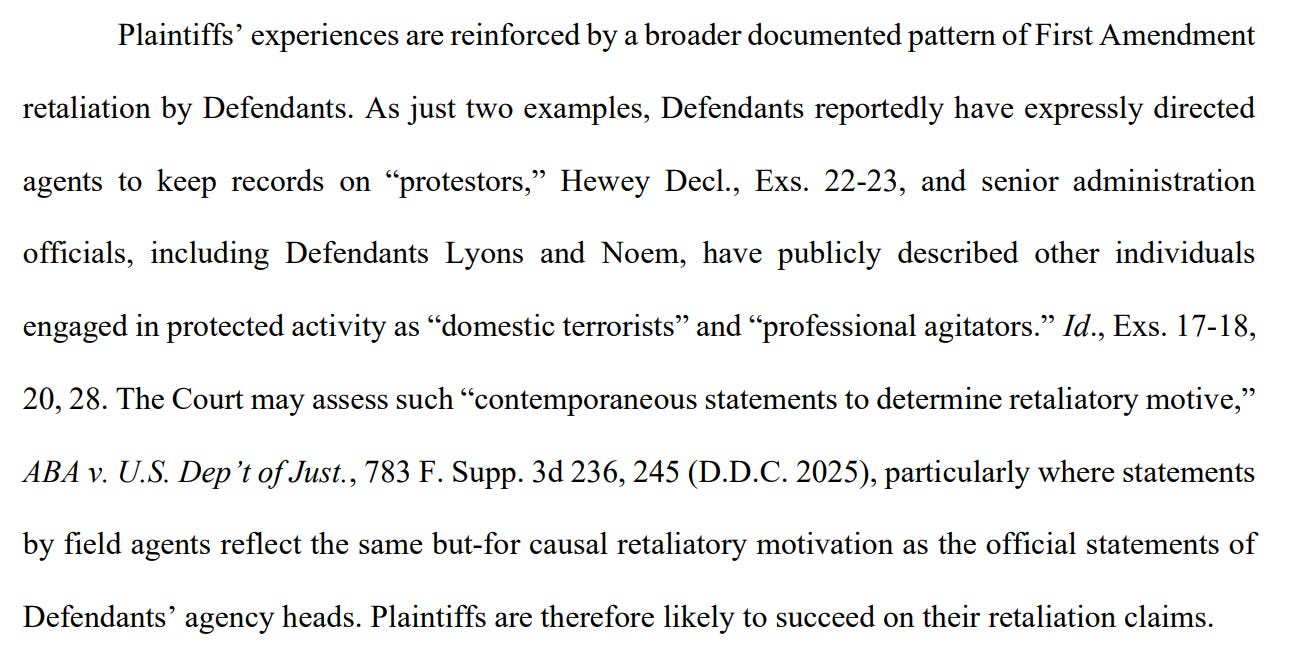
In putting forward their retaliation claims, lawyers argued, essentially, that the Trump administration is all but admitting that this is retaliatory:
As to their speech claims, the lawyers argued, “Defendants’ selective targeting of Plaintiffs constitutes content- and viewpoint-based discrimination” — findings, that, if reached by the trial court would subject the government actions to strict scrutiny and render them “presumptively unconstitutional.”
Here, they argued:
Defendants’ policy of collecting and maintaining records about Plaintiffs and other observers (challenged in Count II) is, at minimum, content-discriminatory. Defendants are “singl[ing] out specific subject matter for differential treatment,” id. at 169—i.e., collecting and keeping records on Plaintiffs’ protected activity because it concerns the observation and documentation of immigration enforcement operations. And Defendants’ other actions, including labeling Plaintiffs “domestic terrorists” and threatening further harassment, constitute paradigmatic viewpoint discrimination: they are directed solely at observers perceived to be opposed to their actions, not those perceived as supporting the Administration.
Although the TRO request is only addressing actions regarding them, the request noted that “Plaintiffs later intend to seek relief on a classwide basis.“
Supreme Court takes up climate case
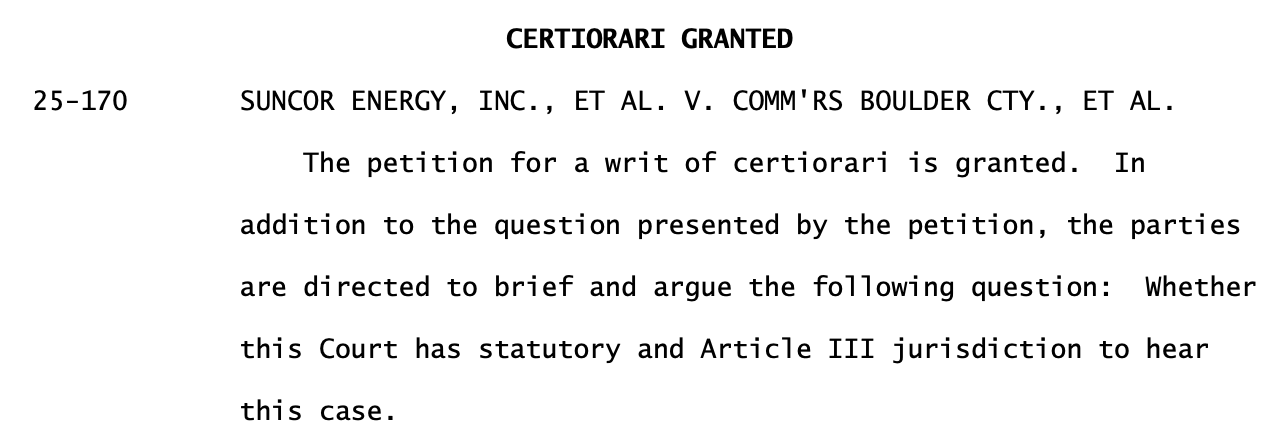
The U.S. Supreme Court announced on Monday morning that it will be hearing an important case next term over whether federal law precludes state-law claims over greenhouse-gas injuries.
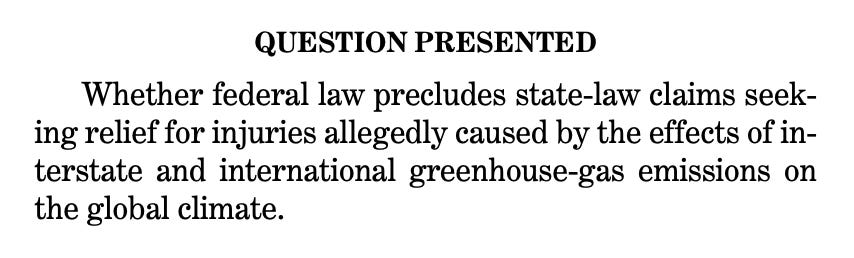
While taking up the case out of Colorado, however, the justices also added a question over whether the Supreme Court even has jurisdiction to hear the case.
Counsel of record for the oil companies: Kannon Shanmugam, a Paul Weiss partner who has argued 39 cases before the Supreme Court and is a key Supreme Court lawyer on the right.
Closing my tabs
For those who don’t know what this is, it’s my effort to give a little thank you to paid subscribers. “Closing my tabs” is, literally, me looking through the stories and cases open — the tabs open — on my computer and sharing with you all some of those I was unable to cover during the week but that I nonetheless want to let you know that I have on my radar. Oftentimes, they are issues that will eventually find their way back into the newsletter as a case discussed moves forward or something new happens that provides me with a reason to cover the story more in depth.
This Monday, these are the tabs I am closing:
