

Federal judge ends Kennedy Center name change, bars two-year closure plans for now
“Congress gave the Kennedy Center its name, and only Congress can change it.” Trump responded ... as one would expect.

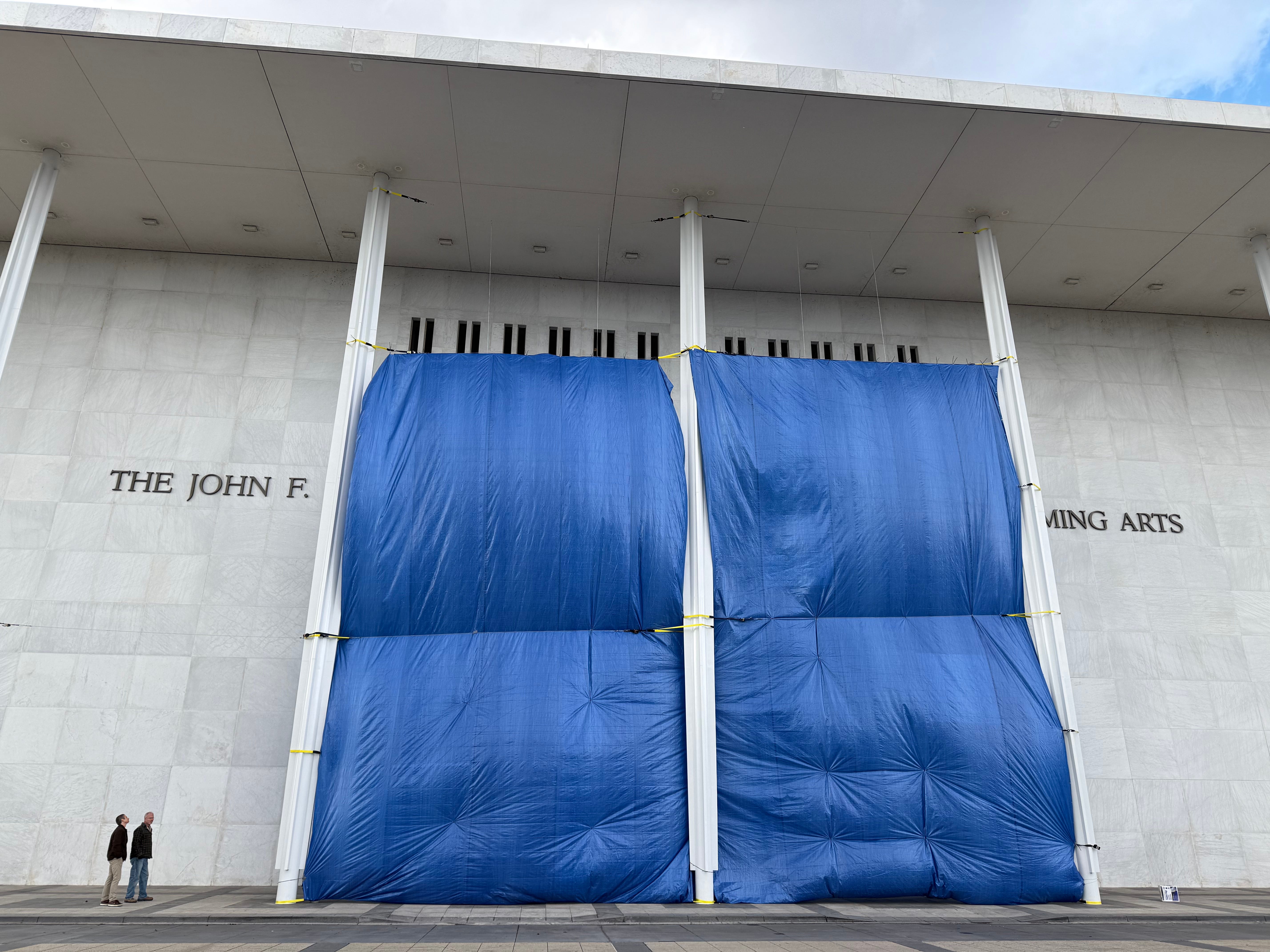
On Friday, U.S. District Judge Christopher Cooper blocked, for now, the Trump administration’s plans to close the John F. Kennedy Center for the Performing Arts for two years and ordered the center to — quite literally — take President Donald Trump’s name off of the building.
“Congress gave the Kennedy Center its name, and only Congress can change it,” Cooper, an Obama appointee, wrote of the federal law establishing the Kennedy Center in his 94-page opinion. In issuing a permanent injunction in the lawsuit brought by Rep. Joyce Beatty, an ex officio member of the Kennedy Center’s board of trustees, Cooper stopped the renaming absent congressional action.
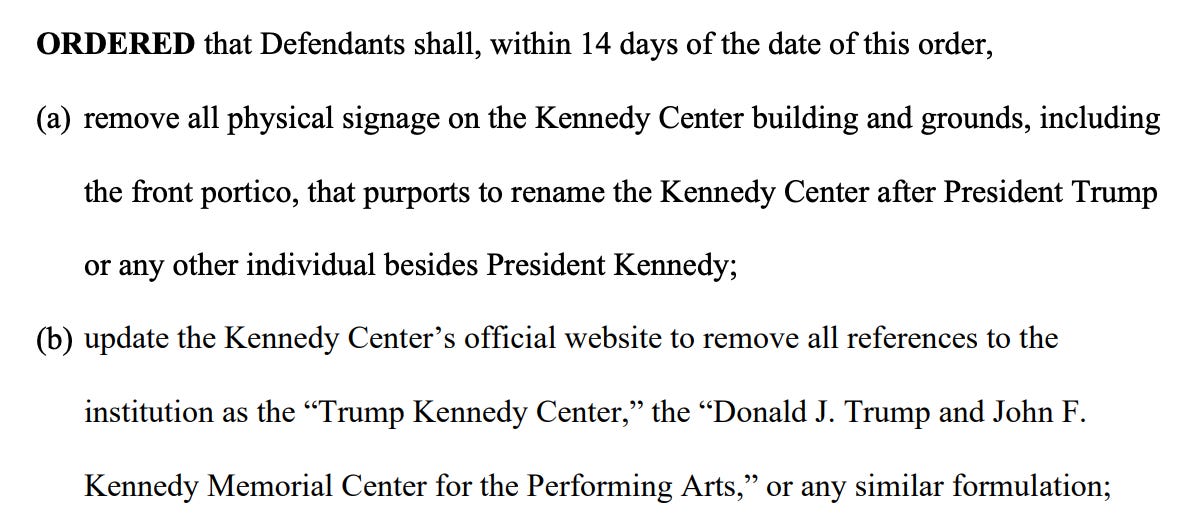
Additionally, the addition of Trump’s name to the building is to be physically removed from the building within 14 days, per Cooper’s order issued along with his opinion:
It was a blunt reminder of the powers and roles of all three branches of our federal government. As such, yes, Trump has reacted angrily and dramatically.
But first, Cooper’s ruling.
Cooper also found that the Trump administration-reconstituted board improperly voted to take away the voting rights of Beatty, an Ohio congresswoman, and other ex officio members.
“The Center’s organic statute makes no distinction between the powers of general and ex officio trustees,“ he wrote of the underlying law. “Nothing in the statute permits the Board to discriminate categorically between the two as to fundamental trustee rights. And stripping ex officio trustees of their voting rights runs afoul of common-law trust principles incorporated into the statute, principles which presumptively place trustees on equal footing when it comes to participating in the trust’s administration.”
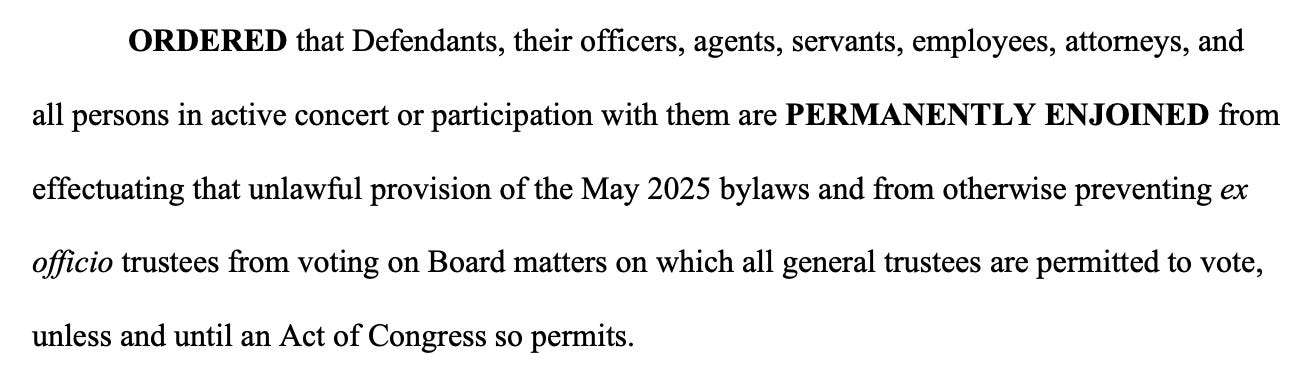
As such, Cooper also permanently enjoined the board from giving effect to the efforts to make ex officio members non-voting members absent congressional action.
As to the closure, however, Beatty was only seeking a preliminary injunction at this time — an order stopping closure while the lawsuit proceeds. As such, the key determination is whether Beatty is likely to succeed in his lawsuit on this front — and Cooper found that she was.
“[T]he Congresswoman is likely to succeed on her claim that the Board violated its fiduciary duty in approving the closure plan at the March 16 Board meeting,“ he wrote. “Even accepting, for the purpose of this final [discussion], that the Board has the discretion to close the Kennedy Center for some period of time without Congressional or other regulatory approval, the evidence in the record strongly suggests that the Board’s decision to do so here was an abuse of discretion.“
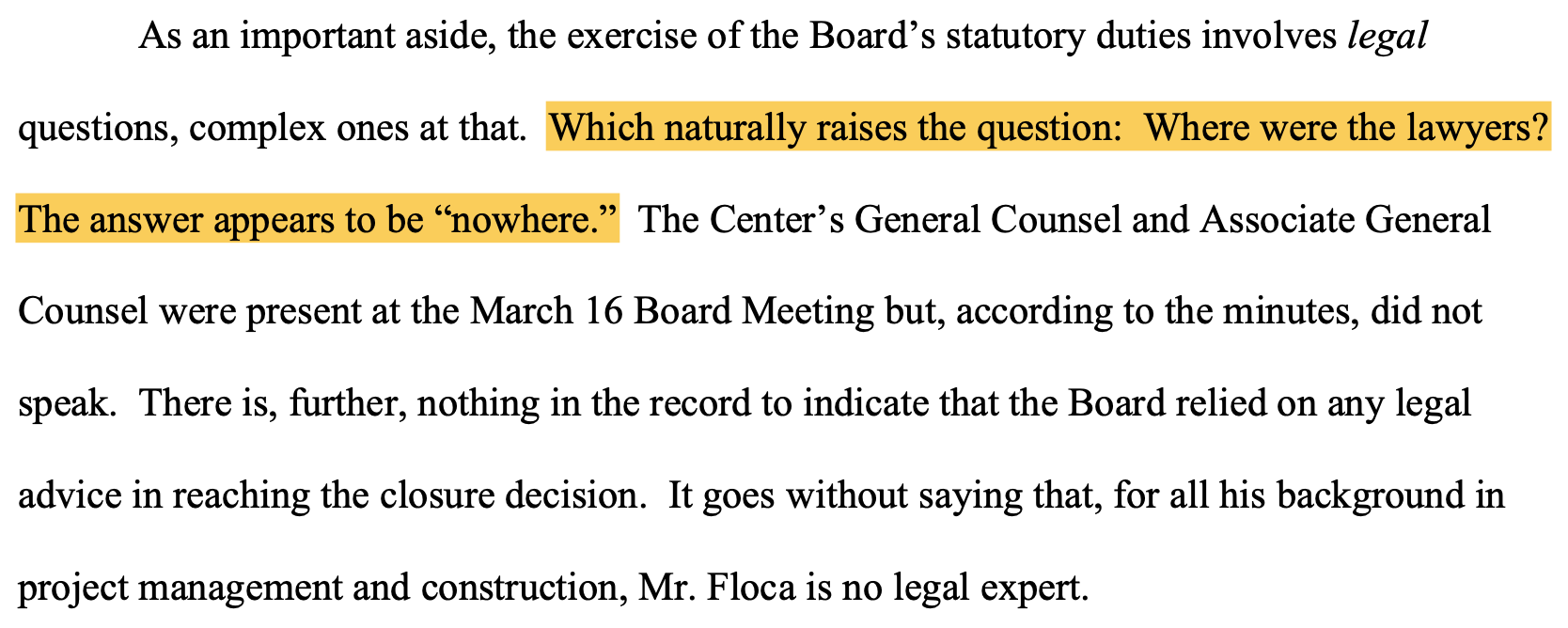
When it came to assessing whether the board properly considered what its legal duties were as it related to the closure decision, Cooper noted that the board’s reliance on discussions from Matt Floca — the former vice president for Facilities and Operations at the Kennedy Center who became the Kennedy Center’s executive director and chief operating officer after the departure of Ric Grenell — was likely insufficient because, “for all his background in project management and construction,” Floca “is no legal expert.“
Later, Cooper added, “[B]y his own admission, Floca was focused solely on the ‘needs of the building’; arts programming was simply ‘not a factor.’ He considered only the benefits of full closure and none of the costs.“
Considering the evidence, Cooper concluded:
[T]he one-sidedness of Floca’s approach and resulting presentation to the Board are plain. Whatever “analysis” Floca undertook in advance of February—evidence of which is nonexistent apart from his own description—entirely sidelined programming concerns. And critically, he is no expert in arts management. He had served in the role of Kennedy Center Executive Director for all of a few minutes before suggesting that the institution be shut down for years. … The evidence before the Court contradicts a conclusion that the Board’s reliance on Floca’s recommendation alone was reasonable under the circumstances.
Ultimately, Cooper blocked the closure with two caveats.
He granted a preliminary injunction “that prohibits the Board from implementing its March 16 decision to ‘conduct an orderly wind-down of programming activities through the Spring of 2026, and close [the Center’s] doors entirely effective July 6, 2026.’“
But, he also noted that “this preliminary relief should not be understood to enjoin the necessary maintenance and repair work that Congress authorized last June through its [$257 million repair] appropriation.“
Then, and more importantly for the situation going forward, Cooper also noted:
Second, although the Board may not take steps to operationalize the March 16 decision, this ruling does not mean that it is necessarily barred from closing the Kennedy Center while renovations take place. Beatty has only shown a likelihood of success on her claim that the Board acted imprudently in reaching a closure decision based on the circumstances of that vote. The Court is not persuaded that the closure is categorically unwarranted or impermissible under the U.S. Code. The Court’s preliminary injunction thus does not bar the Board from reconsidering the closure issue in a prudent manner.
In other words, if the board — with its full voting membership — can find a proper path toward closure, that remains a possibility.
As expected, Trump took the ruling in the careful spirit with which it was offered.
No. No, he did not.
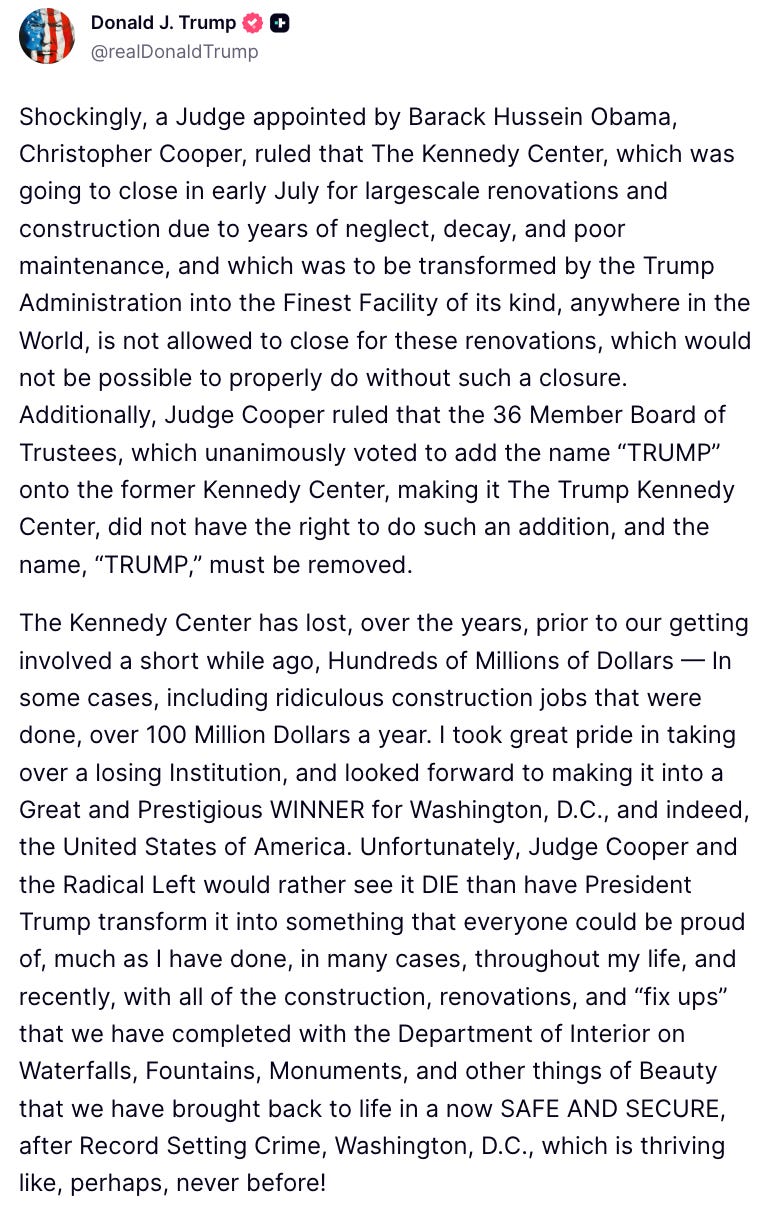
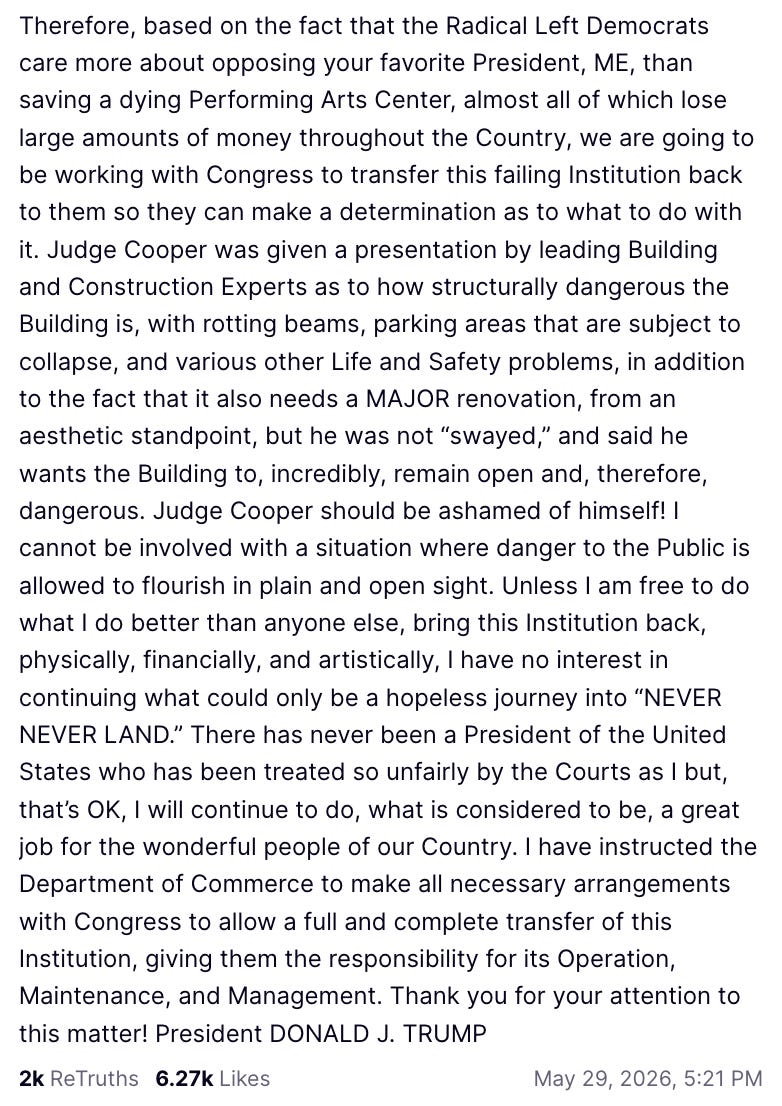
“Judge Cooper should be ashamed of himself!” Trump wrote in a Truth social post that claimed he is “going to be working with Congress to transfer this failing Institution back to them so they can make a determination as to what to do with it.”
In other words, Trump, who has sought to take over Congress’s powers during his second administration, is now seeking to “transfer” the literal execution of the laws to the legislature.
That is not how any of this works.
With that, and for now, it’s another weekend in America.
I'm pleased that a Judge appointed by Barack Hussein Obama stopped Donald Jeffrey Epstein Trump from achieving his goal of adding his undesired name to the Kennedy Center. Thank you for your attention to this matter.
Struggling through that screed, one has to wonder who wrote it. My guess is Miller … who seems adamant in writing down words Trump himself doesn’t understand. Compare Trump’s eight year old vocabulary with this neo gothic purple prose: got the whine right, but too many syllables.