

With nine justices, every vote matters. In Monday's argument, the ground began shifting.
Justice Ketanji Brown Jackson is bringing legislative history back to the Supreme Court. Also: It's World AIDS Day, regardless of what the Trump administration says.

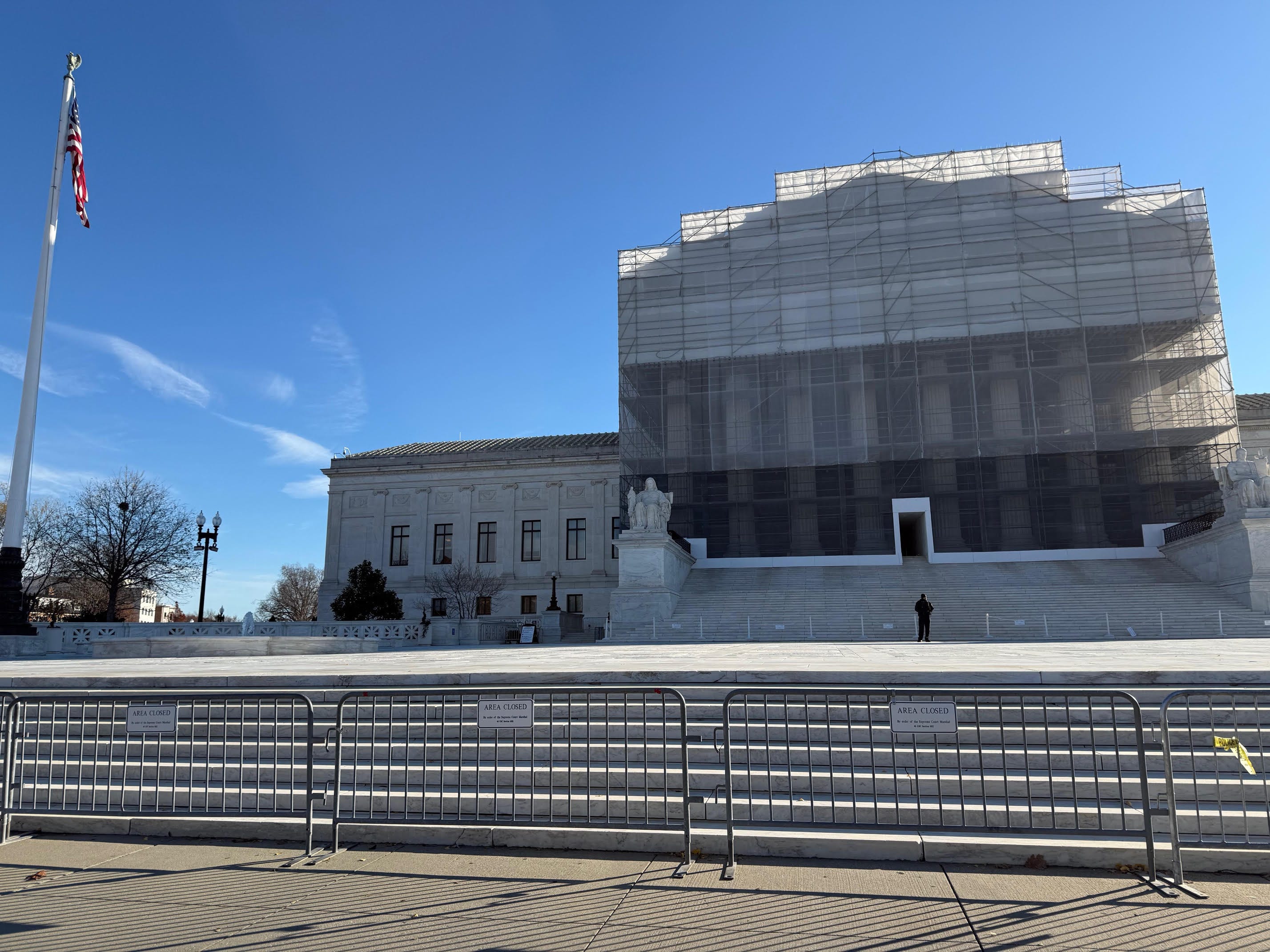
The key to understanding the U.S. Supreme Court is ultimately very simple — and has been on full display in recent years: You need to count to five.
Get five votes, and you’ve got a majority.
This was most sharply seen in recent years when a five-justice majority of Republican appointees overturned Roe v. Wade in 2022, despite Chief Justice John Roberts’s unwillingness to join Justice Sam Alito’s majority opinion in Dobbs v. Jackson Women’s Health Organization.
But a corollary of that is just as important to understand, and to significant effect: Every vote matters.
Particularly in less obviously ideologically split cases, a good advocate is going to do everything possible to win over every justice’s vote that they can. A justice can begin changing the landscape long before they have five votes. They just need to wield their own vote, clearly and smartly.
Which brings us to Monday morning’s arguments in Cox Communications v. Sony Music Entertainment — a case in which Sony alleged that Cox was “materially contributing” to copyright infringement because it knew that users of its internet service were infringing and did not cancel their service.
The arguments were focused primarily on the level of Cox’s awareness of the wrongdoing that should be required under the copyright infringement law.
Cox and the Justice Department argued that Sony should have to show that Cox’s “purpose” was to contribute to the infringement — by inducing infringement or taking some “affirmative conduct,” such as creating a service “uniquely designed” to support infringement. Sony, on the other hand, was arguing that “knowledge” should be enough if Sony could show that Cox knew that specific customers were “substantially certain to infringe.” Cox1 and DOJ pointed toward patent law, while Sony pointed to trademark law.
In discussion about a “safe harbor” provision in the law that protected providers from the type of liability at issue here if they take certain actions, the lawyer for Cox, Joshua Rosenkranz, eventually agreed — following repeated questioning from Justice Elena Kagan — that his position would render the safe harbor provision superfluous here.
At that point, Justice Ketanji Brown Jackson spoke up:

Legislative history has been on the outs at the Supreme Court in recent decades, as the textualism movement took over. A 2016 Federalist Society panel discussed “the demise of legislative history.”
Jackson, though, has made it clear that she is not on board with ignoring legislative history altogether. In a story in The New Yorker this summer, Ruth Marcus noted Jackson’s June dust-up with Justice Neil Gorsuch over legislative history in a disability law case.
“Too often, this Court closes its eyes to context, enactment history, and the legislature’s goals when assessing statutory meaning,” Jackson wrote in a dissent in the case. “I cannot abide that narrow-minded approach.“
Jackson continued forward, then, raising legislative history again on Monday. Later, she told Rosencranz that she raised it because she was “pointing to … the part of the legislative history in which Congress said we are setting this [safe harbor] up as an incentive for these ISPs to actually do things to address copyright infringement.“
When Justice Brett Kavanaugh asked Sony’s lawyer, Paul Clement, about the fact that Congress did not pass a statute explicitly creating secondary liability here, Clement — a key Republican Supreme Court lawyer who was solicitor general during the George W. Bush administration — was pushing back on all cylinders.
In addition to pushing back on Kavanuagh’s claim that it would be an implied right of action, Clement said, “I think, at this point, it’s too late to say that Congress hasn’t endorsed it.“ He then began a multi-part response, but I want to focus on the first response:

Paul Clement — the Republican lawyer who has left law firms now multiple times to continue representation of conservative causes — was highlighting legislative history in oral argument because Jackson made it necessary.
Every vote matters, and Clement was trying to count to five.
It is just Jackson saying this now, but — as Clement showed on Monday — it is already changing the court.
World AIDS Day
The Trump administration has already made it clear that it is OK allowing people to die due to its anti-science, anti-foreign aid policies. Robert F. Kennedy Jr. has previously expressed anti-science AIDS denialist views.
Those two facts alone left me less surprised than I otherwise might have been by the news that the Trump administration would not be recognizing World AIDS Day — the first time since 1988.
That said, the administration can’t end the day.
Monday, December 1, is World AIDS Day.
Just like it was on Friday, December 1, 1995.
I was in the process of coming out, a first-year student at American University, flirting with the guy who would become my first boyfriend by volunteering for a World AIDS Day dance at which he was the volunteer coordinator.
Thirty years later, he is still one of my closest friends.
He is involved in his community, as I am in mine. So are thousands of others, whose actions this World AIDS Day are not lessened because President Donald Trump says the government doesn’t commemorate the day any longer.
If anything, communities are further animated because of his administration’s failure to act.
I have learned from many who came before me that oftentimes — always, some of them would say — the government needs to be pressured — or shamed — for its inaction in protecting vulnerable populations.
This time is no different.
This was corrected after initial publication to correct an errant double-mention of Sony. The update was made at 9:30 p.m.
Your knowledge is astounding., you remind me of Marc Elias. Best constitutional lawyer ever. Please keep us informed, as we must know the truth. Jolly good job !!
I did not realize you are a fellow Eagle. No wonder you're so good at what you do!